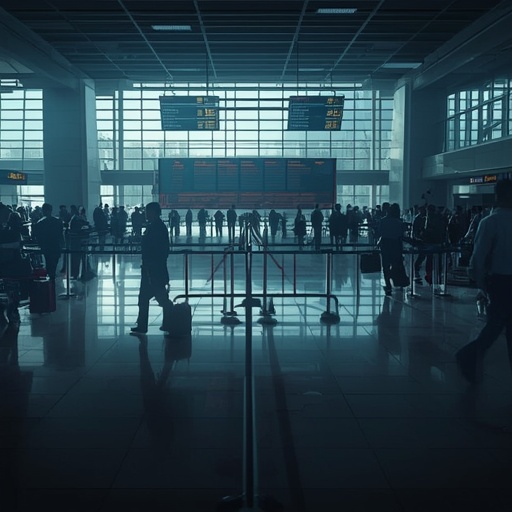
The Department of Homeland Security’s recent initiative to potentially reduce or restrict customs operations in airports located within sanctuary cities has sparked significant debate and industry concern. While on the surface this policy adjustment may appear to be a localized enforcement measure, aviation experts and airline executives warn that its effects could reverberate throughout the national air travel system. By diminishing customs resources in key urban hubs—many of which serve as major international gateways—the department risks creating intricate logistical bottlenecks that would inevitably cascade across interconnected flight networks and scheduling systems.
Leading airline representatives have conveyed that such limitations would not merely influence a handful of metropolitan airports but could disrupt the efficiency of the broader aviation ecosystem. With a substantial portion of international passengers funneling through these major ports of entry, even modest reductions in customs personnel or available processing lanes could dramatically slow immigration and baggage clearance procedures. The consequences would include longer wait times at destinations nationwide, increased delays for connecting flights, and a general reduction in overall travel reliability. When customs services are constrained at crucial transit points, the resulting gridlock can ripple outward, affecting regional and even transcontinental operations.
Beyond the logistical implications, this policy shift raises profound economic and political questions. Airlines have indicated that travel uncertainty of this scale could lead to measurable financial losses within the tourism and hospitality industries, sectors already sensitive to variations in passenger flow. Cities dependent on international markets might experience a decline in visitor spending, while freight and cargo shipments—often processed through similar channels—could encounter additional bureaucratic slowdowns. Consequently, what begins as an attempt to enforce immigration policy locally may inadvertently hinder both national commerce and international mobility.
Moreover, the proposed measure exemplifies how local governance and federal directives often intersect in unpredictable ways. Sanctuary jurisdictions, characterized by their limited cooperation with federal immigration enforcement, may find that transportation and trade become the arenas where those tensions manifest most visibly. This unfolding situation underscores the far-reaching influence of bureaucratic decisions made in Washington, D.C.—choices that may seem administrative but in practice bear consequences for millions of travelers, businesses, and regional economies.
Ultimately, the aviation community’s apprehension serves as a reminder that air travel operates as an intricate, interdependent system. A single policy alteration, particularly one involving customs operations, seldom remains confined to its point of origin. Instead, it extends outward through networks of flights, routes, and economic relationships, producing a domino effect felt from local terminals to international destinations. Whether the DHS proceeds with these adjustments or reconsiders them following industry feedback, one truth remains evident: actions aimed at specific jurisdictions can transform swiftly into nationwide turbulence, affecting not only the movement of people but also the rhythm of commerce and communication that sustains global connectivity.
Sourse: https://www.businessinsider.com/dhs-sanctuary-city-customs-airlines-international-travel-chaos-flight-delays-2026-5