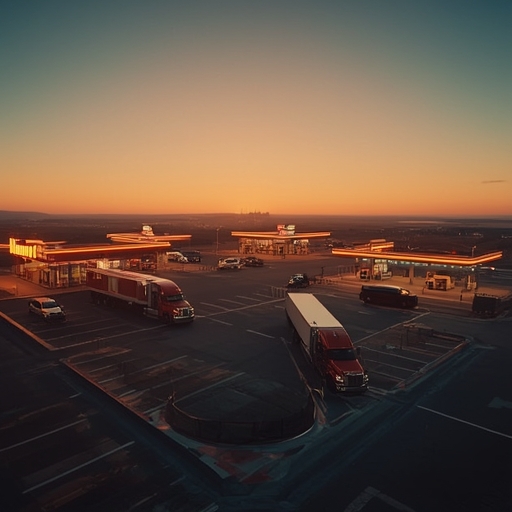
Trucking remains one of the most demanding and unforgiving industries in the modern American economy—an occupation characterized by long, grueling hours and a remarkably high rate of turnover that consistently ranks among the worst across all sectors in the United States. For every new driver drawn to the profession in hopes of freedom on the open road or financial independence, there is another who abandons it entirely or moves restlessly from one company to the next. Representatives from the Owner-Operator Independent Drivers Association (OOIDA) explained that this perpetual churn arises from a combination of systemic challenges: wages that often fail to reflect the intensity and duration of the work, the absence of overtime compensation despite excessive hours behind the wheel, and the relentless demands of schedules that leave little time for rest or personal life. These factors together paint a picture of an industry where endurance, not comfort, dictates survival.
Amid this harsh professional landscape stands Lisa Otto, a veteran driver whose career speaks volumes about commitment and perseverance. Over the course of more than two decades, she has traversed all forty-eight contiguous states and accumulated an astonishing three million miles. Her routine exemplifies the physical and mental rigor of the job: within seven days, she can easily log seventy hours of driving time, often while navigating complex routes and unpredictable weather conditions. Her truck, which she personally invested $230,000 to purchase, functions not merely as a vehicle but as her home for weeks at a stretch. Despite lacking basic amenities such as a toilet or shower—comforts many might consider essential—Lisa has adapted to a lifestyle defined by mobility and self-reliance. Companionship, however, is not absent; she travels with her two beloved dachshunds, Clarice and Phoebe, whose presence transforms her truck from a workspace into something closer to a moving household.
When I first met Lisa, I couldn’t help but feel concern for the emotional toll such an isolated life might take. The thought of being away from family, friends, and familiar surroundings for extended periods seemed to me both lonely and exhausting. Yet Lisa’s perspective offered a surprising counterpoint. She explained that, for her, the open road represents not isolation but freedom, a place where solitude becomes a source of peace rather than emptiness. Deeply introverted by nature, she finds comfort in her own company and even confessed that she sleeps more soundly on the memory foam mattress tucked in the cab of her truck than in her own bed at home. Whenever homesickness flickers, technology bridges the distance—she regularly uses FaceTime to stay connected with her adult children, ensuring that even across hundreds of miles, family ties remain intact.
Out on the endless stretches of highway, Lisa’s two dogs play a vital emotional role. They are her constant companions, a source of affection and stability amid the ever-changing scenery of the road. She admitted that she could hardly imagine coping with the solitude of her profession without them. At night, when darkness settles over remote rest areas or quiet stretches of interstate, their presence makes her feel secure and grounded. The gentle sounds of their breathing and their watchful loyalty provide both comfort and a subtle sense of protection—small but profound anchors in a life defined by movement. In Lisa’s world, where the horizon is always shifting, her dogs represent something enduring and heartfelt: companionship, courage, and the reassurance that even in solitude, one is never truly alone.
Sourse: https://www.businessinsider.com/worlds-largest-truck-stop-iowa-80-food-truckers-sightseeing-2025-12