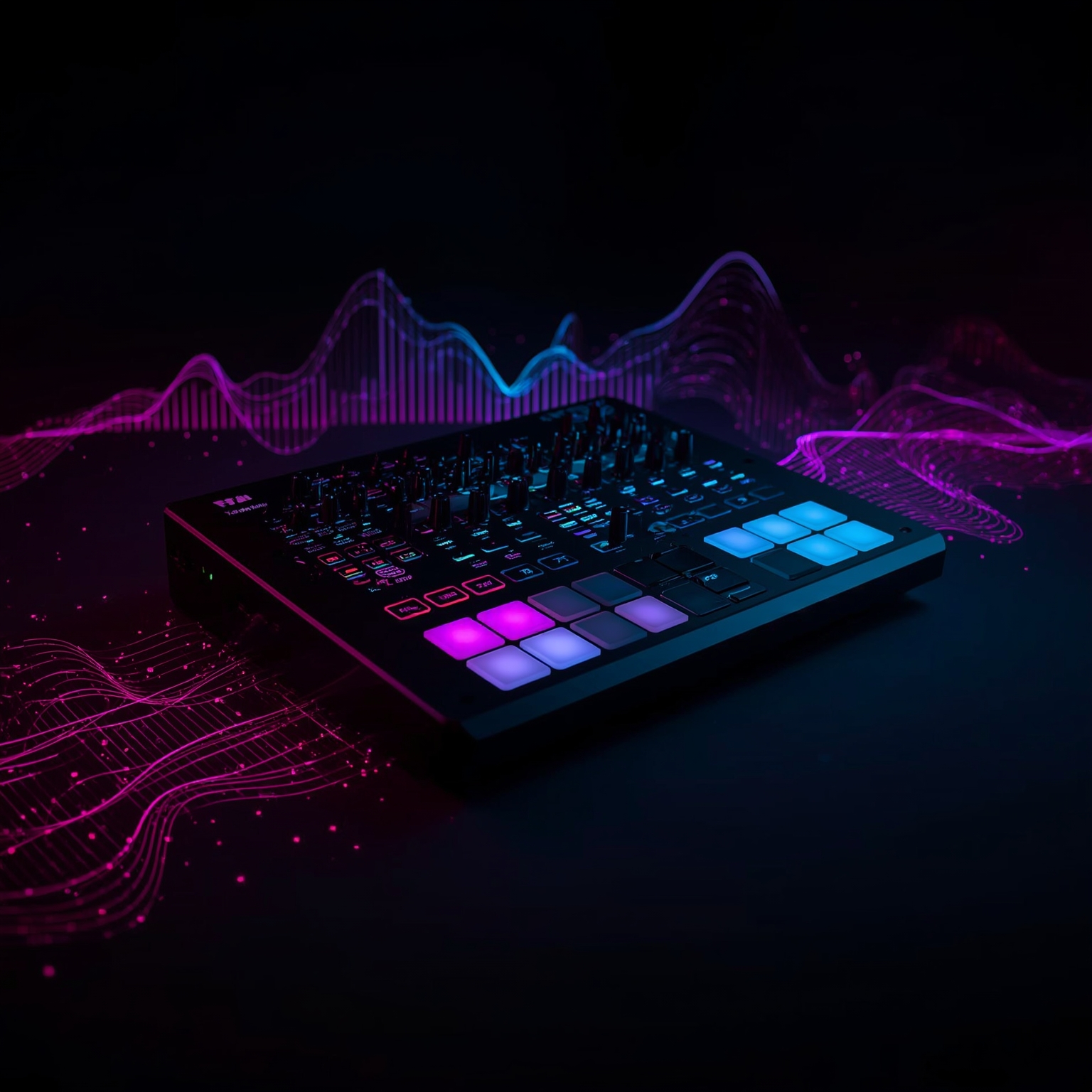
Over the years, Elektron has cultivated a reputation that borders on cult-like devotion, earning this loyalty through its unconventional and sometimes cryptically complex approach to designing electronic musical instruments. Rather than adhering to mainstream trends, the company has consistently embraced idiosyncratic design philosophies that both inspire enthusiasm and challenge musicians to think differently about sound creation. Within this lineage, the newly unveiled Tonverk stands out as the latest embodiment of that ethos—a machine that, at least when described on paper, appears almost excessive in capability. It is more than a simple sampler; it is a formidable creative tool that expands the paradigm of what hardware samplers can accomplish.
Tonverk distinguishes itself from the average device by serving as one of the rare hardware units capable of generating multisampled instruments independently, without dependence on additional software. In practice, this means it can take what begins as a single track of sampled audio and evolve it into an elaborate, layered structure—a sonic nesting doll—that organizes and rearranges multiple samples inside a single framework. This alone elevates it to the category of a sound designer’s playground. Moreover, it comes equipped with an almost overwhelming arsenal of routing possibilities and audio processing parameters, ensuring that musicians who thrive on sound manipulation have nearly limitless depth to explore. While the sampler is fully competent in producing conventional electronic tracks, it is particularly enticing for adventurous artists who wish to blur boundaries and embrace sonic experimentation.
At its technological core lies an eight-track polyphonic sampler engine, which offers a trio of specialized playback architectures known as “machines”: Single Player, Multi Player, and Subtracks. The Single Player mode functions in a relatively traditional manner—it is a straightforward one-shot engine that can map any chosen sample chromatically across a keyboard, allowing notes to be played melodically from a single source. Multi Player, however, takes things a step further by layering multiple different samples of the same instrument—such as several recordings of piano notes or drum hits—into one composite voice, in order to achieve more authentic and realistic recreations of acoustic textures. The real innovation here is that Tonverk can generate such multisampled collections automatically: by sending a series of MIDI notes to an external synthesizer or sound module, and then recording back the results, the instrument essentially builds its own playable sampled instrument from scratch. Unfortunately, in its current firmware, those captured recordings cannot be edited directly inside the device, which can be frustrating if a take ends prematurely or if timing imperfections like latency creep into the sound.
Subtracks, the third machine type, expand upon Elektron’s already famously intricate workflows by opening entirely new compositional possibilities. Within a single track, an artist can now load up to eight different samples as a kit, effectively consolidating key sound elements into one cohesive playable channel. For example, whereas on a conventional sampler one might be forced to allocate separate tracks to the kick drum, snare, and hi-hats unless employing workarounds, Subtracks conveniently merges them into one consolidated environment. The trade-off, however, is that effects processing cannot be individualized for each component. If a reverb effect is applied to one sound within the Subtrack, every other sound inside that set receives the same treatment, which may limit specificity for producers who rely on distinct soundscapes for each instrument.
There are, curiously, other omissions as well. A particularly noticeable one is the absence of a dedicated sample-chopping workflow, a feature that has been present in Elektron’s earlier products such as the popular Digitakt. As a result, the Tonverk may prove less accommodating for hip-hop producers or sample-based artists who delight in dissecting vintage soul records into new rhythmic collages. Yet, the company’s official demonstrations hint at longer-term plans: the phrasing mentions “initially three fresh machines,” strongly suggesting that the platform is designed with scalability in mind and will likely expand with additional sonic engines in the future.
Beyond sampling functionality, Tonverk arrives fully packed with creative tools aimed at sound sculpting. Musicians gain access to no fewer than 17 high-quality onboard effects, three discrete effects sends, and flexible routing options that permit integration with external effects processors for hybrid hardware setups. Tonverk also offers a surplus of modulatory control, including multiple LFOs and a wide array of envelopes, ensuring that any audio signal can be shaped dynamically over time. Naturally, the device continues Elektron’s tradition of exceptional sequencing capabilities: its powerful sequencer stretches to 256 steps, provides individual track lengths for polymetric arrangements, supports parameter-locks that engrain sound design directly into sequences, and incorporates Trig conditions for introducing randomness, probability, and generative flourishes into compositions.
In truth, Tonverk represents significantly more than just another instrument in Elektron’s catalog. According to the company’s positioning, this device is the inaugural member of a completely new hardware architecture, paving the path for an entire ecosystem of future products. While Elektron has avoided revealing precise details on what will follow, it has clearly stated that Tonverk is “the first device and certainly not the last,” implying that this machine inaugurates a broader, forward-looking platform strategy. For consumers, however, it is important to note that this innovation does not coincide with a repositioning toward budget-friendly products. With a retail price of $1,599, Tonverk is firmly situated in the premium market segment and reflects the company’s commitment to delivering uncompromising tools rather than entry-level options. In fact, demand appears immediate and robust: the first production run has already sold out directly from Elektron, though those eager to secure a unit can still pre-order through established retailers including Perfect Circuit and B&H.
With Tonverk, Elektron has not only engineered a sampler that challenges conventional expectations; it has introduced a versatile centerpiece capable of redefining sampling workflows for professionals and experimentalists alike. It presents both opportunities and constraints, but most importantly, it signals the start of what could evolve into an exciting new chapter for Elektron’s ever-expanding universe of musical innovation.
Sourse: https://www.theverge.com/news/776487/elektron-tonverk-polyphonic-sampler-groovebox