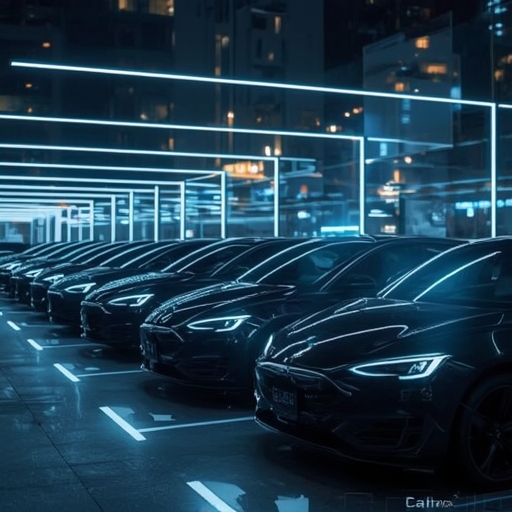
In a significant and somewhat unsettling revelation that has captured global attention, Elon Musk has announced that millions of Tesla owners—specifically those whose vehicles are equipped with the company’s HW3 hardware—will not be receiving access to truly unsupervised Full Self-Driving capabilities. This disclosure is far more than a routine software update notice; it represents a critical juncture in the technological and ethical narrative of autonomous vehicles, sparking renewed conversations regarding transparency, the rapid pace of innovation, and the delicate balance between consumer expectations and engineering limitations.
The implications of this decision are manifold. For the approximately four million Tesla owners impacted, the news is deeply consequential. Many of these individuals were among the automaker’s earliest and most enthusiastic supporters, often paying substantial sums in anticipation of a future where their vehicles could navigate roads independently without human intervention. The recent statement by Musk effectively redefines that promise, acknowledging that the older HW3 systems—once considered cutting-edge—simply do not possess the computational power or architectural capacity to safely achieve unsupervised driving performance without human oversight.
From a technological perspective, this announcement underscores a fundamental reality of progress in the artificial intelligence and autonomous driving industries: innovation is both relentless and unforgiving. Hardware that was state-of-the-art just a few years ago can now be rendered obsolete by newer architectures capable of processing vastly larger datasets and responding to complex real‑world scenarios that earlier generations cannot manage with comparable reliability. The HW4 and subsequent systems, for example, integrate improved neural‑network inference capabilities and enhanced sensor fusion, features that are indispensable for true self‑governed navigation.
Yet beyond the technical discourse lies a human narrative—one centered on expectation and trust. For early adopters who believed in Tesla’s vision of autonomy, this development invites introspection about the nature of progress in fast‑moving industries. Should consumers expect lifetime upgradability of technological products, or does technological obsolescence remain an inevitable cost of innovation? The emotional response across Tesla’s vast community is therefore varied: a mixture of disappointment, curiosity, and cautious optimism that future advancements may still trickle down to legacy systems in some form.
From an ethical and business standpoint, the situation raises crucial questions about corporate communication and the responsibilities of market leaders when defining product capabilities. Musk’s trademark transparency—often expressed directly through social media interactions—has set Tesla apart from traditional automakers, but it also amplifies scrutiny when promises evolve or shift. The distinction between supervised and unsupervised Full Self‑Driving is not merely semantic; it represents the boundary between advanced driver assistance and genuine autonomy, a threshold that carries both regulatory complexity and moral responsibility.
Strategically, Tesla’s disclosure aligns with a broader industry trend acknowledging that full automation remains an extraordinarily difficult objective. Even as artificial intelligence accelerates, achieving Level 5 autonomy under all environmental and legal conditions remains technically unsolved. By clarifying that HW3‑based vehicles will remain in the supervised category, Tesla is implicitly emphasizing safety, accountability, and realism—three principles increasingly demanded by regulators and the public alike.
In the larger context of technological evolution, this moment may come to signify a turning point in consumer understanding of innovation itself. Progress, while exciting, often entails recalibration of prior expectations. Just as smartphones, computers, and renewable energy systems transition through hardware generations, so too must autonomous vehicles adapt to new intelligence frameworks. For the automotive industry, this announcement offers an important reminder that transparency about limitations can coexist with visionary ambition—and that true innovation is defined not only by what is newly possible, but also by how responsibly that progress is communicated.
Ultimately, Elon Musk’s statement about unsupervised Full Self‑Driving serves as both a technical update and a philosophical reflection. It illuminates how extraordinary technological aspirations are bound by the realities of current engineering capacity while reaffirming that the pursuit of genuine autonomy remains ongoing. For Tesla, this decision will inevitably shape perceptions of its brand and underscore the continuing dialogue between visionary promise and pragmatic implementation. It is a story of progress—measured not by perfection but by the willingness to confront complexity openly and evolve in the face of it.
Sourse: https://www.theverge.com/transportation/917167/elon-musk-tesla-hw3-fsd


