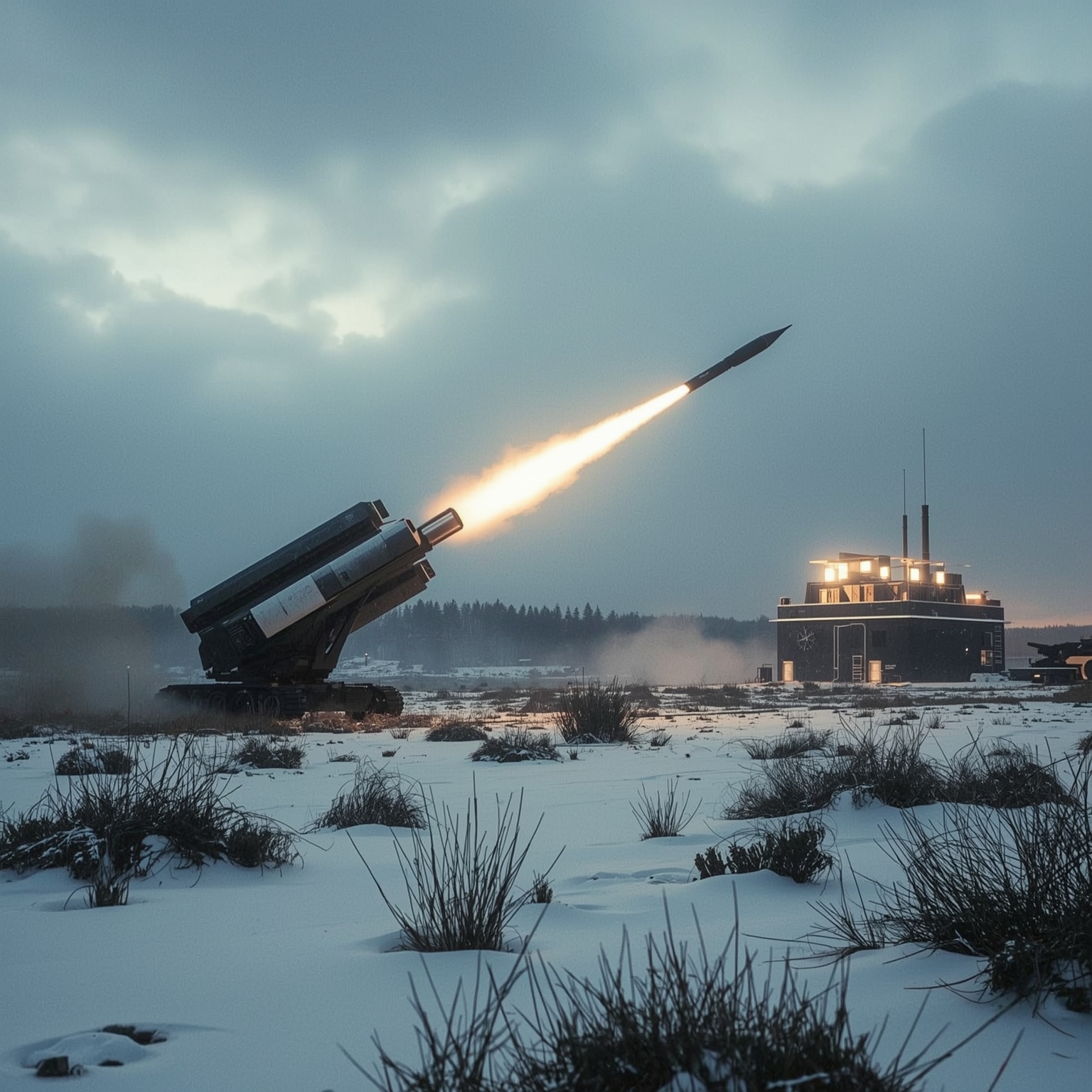
A NATO member that directly borders the Russian Federation is intensifying its commitment to strengthening its long-range artillery capabilities by expanding its arsenal of the U.S.-manufactured High Mobility Artillery Rocket System (HIMARS). This weapon, celebrated for its operational success in Ukraine’s counteroffensive against Russian forces, has become emblematic of modern precision warfare. Estonia, acutely aware of its geopolitical vulnerability and proximity to an unpredictable neighbor, has officially announced through its Ministry of Defense that it has reached an agreement with the United States to acquire six additional HIMARS launchers. While confirmation of the precise delivery schedule remains pending from Washington, the agreement represents a decisive step in Estonia’s ongoing effort to enhance its missile and artillery deterrence infrastructure.
According to the Estonian Ministry of Defense, the nation’s strategic priority lies in developing the capacity to project power deep into enemy-held territory — a capability that plays a vital role in shaping the outcome of modern conflicts. Officials emphasized that to attain such an operational advantage, Estonia must significantly augment its deep-strike potential through the procurement of additional launchers. Defense Minister Hanno Pevkur, elaborating on this policy direction, previously revealed to defense publication *Breaking Defense* that the government intends not only to purchase six new HIMARS systems but also to potentially expand the order further. This plan, however, remains contingent upon final approval from the U.S. Department of Defense and its prime contractor, Lockheed Martin.
The forthcoming acquisition builds upon an earlier delivery of six HIMARS units that arrived in Estonia in April. That initial procurement marked what the Ministry characterized as the foundational stage of a broader campaign to establish a robust, long-range strike deterrent. Minister Pevkur reiterated in discussions with *Business Insider* that HIMARS has become indispensable in Estonia’s evolving defense doctrine, underscoring its pivotal role in enabling precision, depth, and flexibility in response to potential aggression. Observing the weapon’s devastating effectiveness in Ukraine — where it has allowed the Ukrainian Armed Forces to neutralize high-value Russian assets far behind the front lines — has only reinforced Tallinn’s belief in the system’s strategic worth.
The HIMARS platform first gained global attention when it was deployed to Ukraine in June 2022. Its arrival followed months of intense debate among Western policymakers over the risks and rewards of supplying such advanced weaponry to Kyiv. Critics feared that providing systems with such significant range and lethality could provoke escalation or even risk capture if Ukraine were to lose territory. However, those concerns were ultimately outweighed by the system’s battlefield effectiveness. HIMARS quickly shifted the momentum of the conflict by allowing Ukraine to target critical Russian logistic centers, ammunition depots, and command nodes that had previously been beyond reach. Its precision-guided rockets not only degraded Russia’s artillery dominance but also served as a psychological blow to Russian troops, compelling them to relocate supply hubs farther from the combat zone.
HIMARS’ success opened the door for subsequent deliveries of other sophisticated Western platforms, including the Patriot air defense system and U.S.-made F-16 fighter aircraft. Equipped with Guided Multiple Launch Rocket Systems (GMLRS), the weapon gave Ukraine the ability to disrupt command structures and logistics networks, altering the tactical landscape of the war. Although more recent developments such as escalated electronic countermeasures, GPS jamming, and the introduction of alternative long-range European and U.S. strike systems have somewhat diminished its tactical spotlight, HIMARS continues to prove its operational value. Limited ammunition supplies have constrained its full potential, yet the weapon remains integral to Ukraine’s effort, with new deliveries anticipated. Ukrainian President Volodymyr Zelenskyy has publicly reaffirmed that HIMARS remains a top priority within his nation’s ongoing defense procurement strategy.
The renewed interest in HIMARS among NATO’s easternmost members reflects a broader strategic shift within the alliance. Estonia, sharing both historical memory and a frontier with Russia, views the weapon as not merely an implement of warfare but a symbol of deterrence. Defense Minister Pevkur has consistently articulated that the lessons emerging from Ukraine’s experiences on the battlefield point toward an imperative: every country facing the threat of Russian aggression must invest in the capability to strike deep into enemy-held territory. Ukraine’s successful long-range operations — including strikes on ammunition stockpiles, logistics hubs, and even fuel and industrial facilities deep inside Russia using drones and missiles — have provided a blueprint for allied defense strategy.
Pevkur stressed that NATO members must absorb the lessons from Ukraine’s challenges and achievements alike, assessing which technologies and tactics have proven most effective against Russian aggression. According to him, possessing the HIMARS not only enhances Estonia’s deterrent capability but also sends a clear, unmistakable signal to Moscow: the Baltic states are prepared, resilient, and capable of projecting power when necessary. This, he asserted, fulfills a dual purpose — ensuring both national defense readiness and contributing to collective NATO deterrence.
Estonia is not alone in this endeavor. Its Baltic neighbors and fellow NATO allies, Latvia and Lithuania, are pursuing similar armament programs, simultaneously modernizing their forces while reinforcing the alliance’s northern defensive belt. Latvia has already concluded a contract with the United States for the purchase of six HIMARS units, scheduled for delivery by 2027. Lithuania is likewise expanding its strike capability, with an order for eight systems expected to begin arriving within the current year. The Baltic states have for years ranked among NATO’s most vocal advocates for increased defense spending and sustained support for Ukraine, warning that complacency would embolden Moscow. Reflecting their strategic foresight, both Latvia and Lithuania allocate a notably high percentage of their GDP to defense, channeling funds toward fortifications, air defenses, armored vehicles, and unmanned systems.
Minister Pevkur encapsulated the essence of this regional defense vision by asserting that it is crucial for NATO’s security architecture that the countries situated along the alliance’s eastern flank maintain the strongest possible posture of deterrence. In his words, the eastern front represents the alliance’s “front door” — a metaphor underscoring the imperative to keep it fortified and closed against any potential threats. Through its acquisition of additional HIMARS systems, Estonia aims not only to safeguard its own sovereignty but also to reinforce the defensive integrity of NATO as a whole, contributing meaningfully to the stability and resilience of Europe’s security landscape.
Sourse: https://www.businessinsider.com/nato-member-estonia-doubling-down-us-made-himars-ukraine-success-2025-11