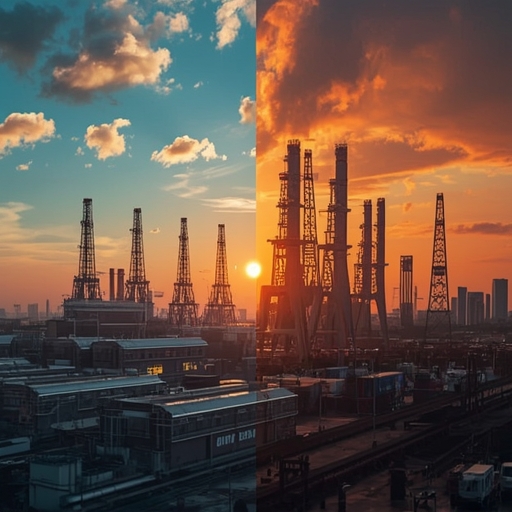
European industry finds itself standing at a decisive historical crossroads, where long-established foundations of prosperity are being tested by a convergence of global forces. On one flank, U.S. tariffs and protectionist measures are eroding the trade openness that once underpinned transatlantic partnership; on the other, China’s swift emergence as a technological and manufacturing superpower is transforming the competitive landscape of virtually every industrial sector. This dual pressure has created an environment in which European manufacturers must rethink their production strategies, supply chains, and innovation priorities in order to remain relevant in an increasingly multipolar economy.
The consequences of these developments extend far beyond macroeconomic indicators. Factories across Germany, France, Italy, and other manufacturing hubs are grappling with supply insecurities, higher operational costs, and accelerating automation demands. What was once the strength of European industry—its commitment to quality, precision, and environmental standards—now requires recalibration to adapt to a world where speed, scale, and strategic resource control define competitiveness. Simultaneously, questions of economic sovereignty and technological independence have entered the public discourse, raising debates about how Europe can protect its industrial base without compromising open-market principles.
At the policy level, leaders face the challenge of reconciling immediate economic relief with long-term structural transformation. Closer transatlantic integration, particularly in research collaboration, clean technology, and digital innovation, could offer one path forward. Such cooperation has the potential to transform competitive friction into mutual reinforcement, allowing Western economies to collectively withstand the pressures exerted by rapidly expanding industrial powers. Yet achieving this would require not only trade negotiations but also a renewed strategic vision—one that recognizes manufacturing as both an economic and geopolitical pillar.
Ultimately, the question is not whether Europe can endure the turbulence of today’s trade and technology rivalries, but whether it can turn adversity into opportunity. By investing in innovation, strengthening resilience across supply chains, and fostering cooperation grounded in shared democratic and market values, Europe can preserve its industrial heritage while building a more agile, sustainable, and globally competitive future. Its response at this juncture will shape the continent’s economic identity and influence the balance of power in global manufacturing for decades to come.
Sourse: https://www.bloomberg.com/news/videos/2026-04-06/raimondo-on-how-european-industry-is-getting-crushed-video