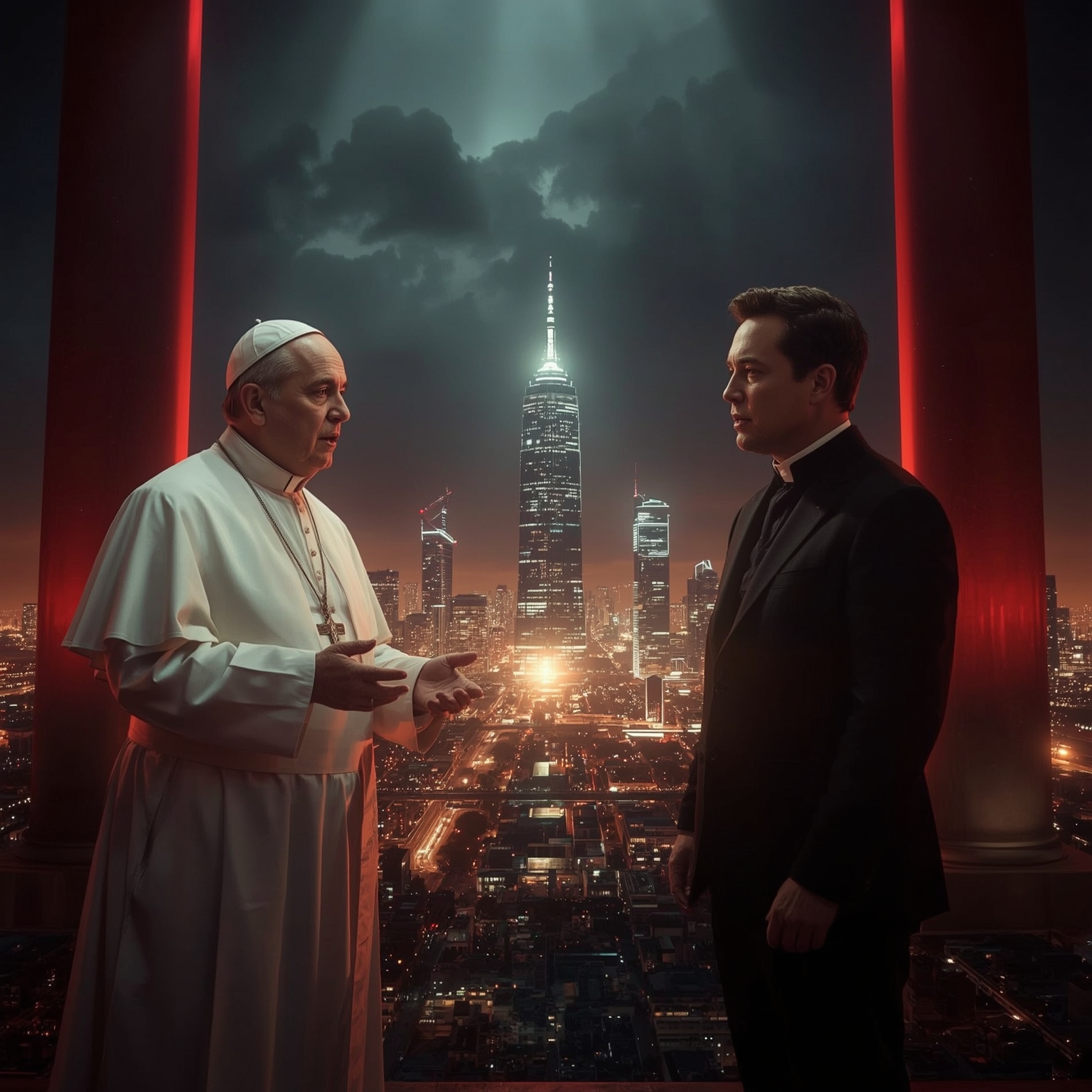
The leader of the global Catholic Church, widely recognized as the spiritual successor to Saint Peter, has recently shared pointed reflections on the immense earnings of Tesla’s chief executive, Elon Musk. These remarks came during Pope Leo’s very first interview with the media since his election to the papacy, published on Sunday by Crux, a Catholic news outlet devoted to covering the activities of the Vatican and the wider Church. In this dialogue, Pope Leo not only addressed the issue of Musk’s unprecedented compensation package but also wove his comments into a broader critique of modern economic disparities, particularly the widening gulf between corporate elites and ordinary workers.
The Pope highlighted how, in decades past, the imbalance between what company leaders earned and the wages of their employees, though present, was vastly smaller than what is witnessed today. He recalled that approximately sixty years ago, executives typically earned only four to six times what their average employee made. By his account, however, the figures he has most recently reviewed suggest that this ratio has metastasized to an extraordinary degree, with chief executives now compensated at levels more than six hundred times higher than their workforce. For Pope Leo, this transformation is not merely a statistical curiosity but a profound ethical dilemma that points to systemic distortions in how modern societies assign value and reward.
Illustrating the issue further, he noted a striking piece of recent news: the suggestion that Musk is on track to become the world’s first trillionaire. For Pope Leo, such reports provoke pressing questions about the meaning of wealth, human dignity, and societal priorities. If, he reflected, such outsized accumulation of monetary value becomes the sole or even the predominant measure of success, then humanity risks drifting into serious moral and social peril.
The concrete focus of his comments was Tesla’s proposed compensation arrangement, a plan valued at as much as one trillion dollars. This extraordinary package was structured around Musk’s ability to achieve daunting performance targets, such as driving Tesla’s overall valuation to $8.5 trillion, selling 12 million vehicles across the next ten years, and deploying a fleet of one million autonomous robotaxis. Tesla’s chairwoman, Robyn Denholm, defended the scheme in public interviews, stressing that the staggering figures were conceived not as gratuitous rewards but as incentives to ensure that Musk dedicates his energy to Tesla’s long‑term success. Musk, she reminded observers, juggles responsibilities as the head of SpaceX, Neuralink, the artificial intelligence startup xAI, and several other endeavors, while also making regular appearances in political debates. To Denholm, only a plan of immense ambition could hold his attention and channel his efforts toward Tesla’s future. She remarked that Musk stands to gain nothing whatsoever unless these audacious goals are met.
Ultimately, Tesla shareholders will render judgment on this controversial plan when they convene at the company’s annual meeting in November. Yet Pope Leo’s observations, though in response to this particular case, arose within a broader question put to him during the interview—namely, what he believed to be driving increasing polarization within both society and the Catholic Church itself. He identified economic inequality, particularly the soaring divergence between the living standards of working people and the lavish compensation enjoyed by the wealthiest, as one of the most potent forces deepening divisions and social unrest.
This was not the first time Pope Leo raised such concerns. At a summit held in June, organized by the Catholic Church and attended by an array of global leaders and policymakers, he called for a more just distribution of the earth’s resources. During that gathering, he described the massive, disproportionate accumulation of wealth by a small elite as an unacceptable imbalance, one that perpetuates cycles of injustice and inevitably contributes to outbreaks of violence and, eventually, to the tragedy of war. In his view, addressing wealth inequality is not only a moral imperative but also a necessity for securing peace and stability in the world.
As additional context, Pope Leo—born Cardinal Robert Prevost in Chicago and later naturalized as a citizen of Peru—was elected in May at the age of sixty‑nine. His elevation marked a historic first: never before had a U.S.-born figure been chosen as Bishop of Rome. His dual heritage, rooted in both North and South America, further underscores the international character of his pontificate, which from its earliest days appears committed to championing justice, equity, and the dignity of all people in the face of unprecedented global inequalities.
Sourse: https://www.businessinsider.com/pope-leo-elon-musk-tesla-pay-package-income-inequality-2025-9