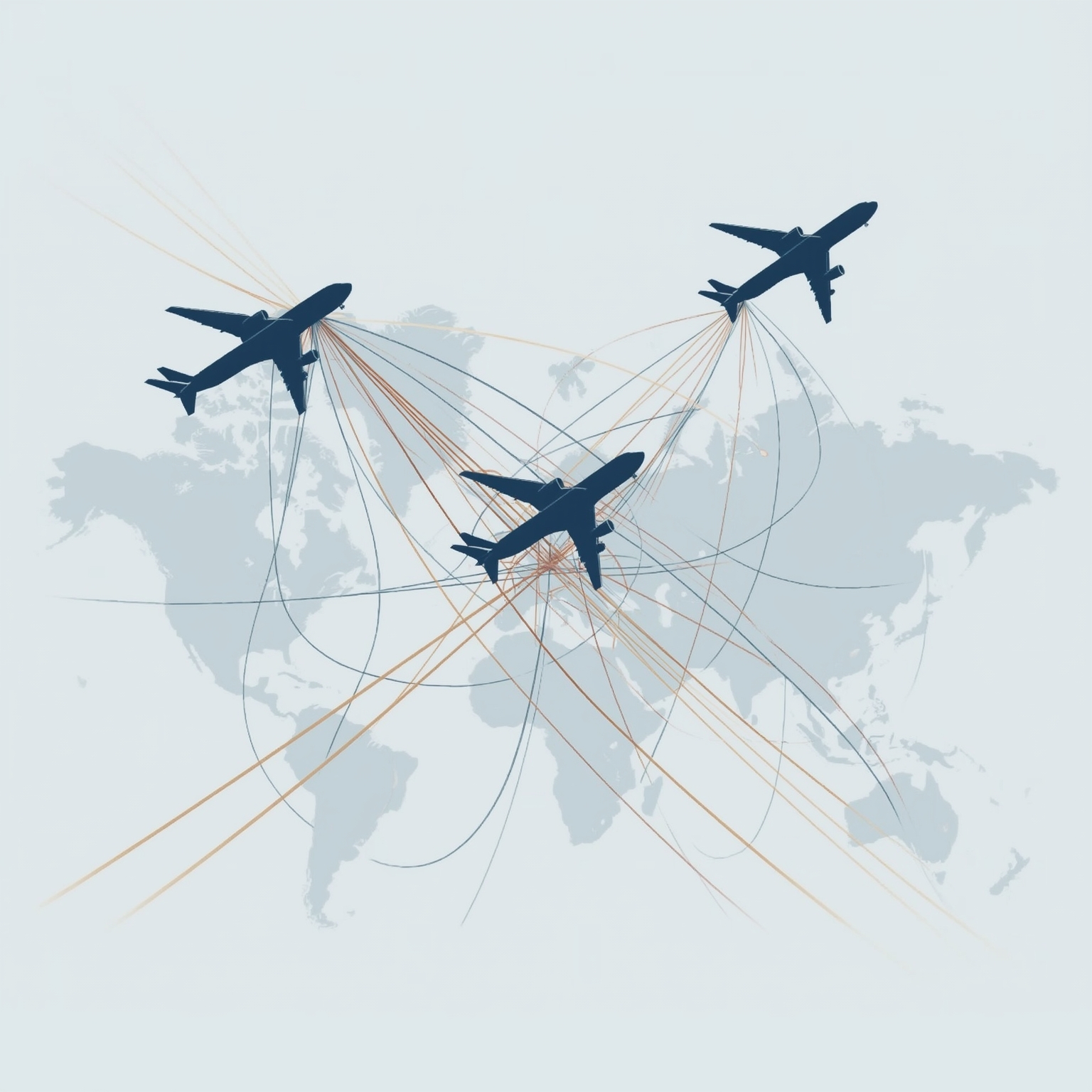
The Federal Aviation Administration (FAA) has announced a significant operational adjustment, reducing the number of active flights across forty of the nation’s busiest air markets as a precautionary measure to preserve the highest safety standards in American airspace. This decision comes amid the ongoing federal government shutdown, which continues to exert considerable strain on essential aviation services. During a press briefing on Wednesday, Transportation Secretary Sean Duffy revealed that beginning Friday, the FAA will implement a 10% reduction in flight capacity at these high-traffic airports. According to Duffy, this initiative is not a reactive attempt to manage the crisis but rather a deliberately proactive strategy designed to confront pressing staffing shortages among air traffic controllers. He emphasized that these professionals, who are shouldering increasingly unsustainable workloads, are approaching a month without pay, which has intensified operational pressure across the system. “The question for us,” Duffy explained, “is to understand exactly where the stress points lie and to determine the most effective way to relieve that burden before safety is compromised.”
Since the government shutdown began on October 1, the aviation sector has faced a series of escalating disruptions, including a noticeable rise in schedule delays and flight cancellations at airports nationwide. These complications stem largely from the cumulative impact of reduced staffing levels, particularly in safety-critical roles such as air traffic management and maintenance oversight. FAA Administrator Bryan Bedford expanded on Duffy’s remarks, noting that the agency is working closely with major airlines to determine how the proposed capacity reductions will be executed. Bedford cautioned that should workforce availability decline even further, the FAA would be compelled to enact additional corrective measures to stabilize operations. “Our operational data clearly signals that further interventions are warranted,” Bedford stated at the press conference. “We intend to act based on that data, and I want to firmly reassure passengers that flying within the United States remains entirely safe. Safety is, and will continue to be, our foremost priority.”
Reflecting on his three and a half decades in the aviation industry, Bedford acknowledged that such a sweeping flight reduction is without precedent. “We are entering uncharted territory,” he said, stressing that the current government shutdown, now spanning thirty-six days, has become the longest in the nation’s history. This unprecedented length has forced the agency to adapt in ways never before necessary to ensure that safety oversight remains intact during conditions of severe administrative disruption.
Geoff Freeman, president and CEO of the U.S. Travel Association, issued a statement to Business Insider underscoring both the necessity and the unavoidable consequences of the FAA’s action. He commended the agency’s emphasis on safety but warned that the decision would inevitably yield tangible effects for travelers. “Reducing scheduled flight capacity is a necessary step to maintain air safety, but it will undoubtedly alter the travel experience,” Freeman said. “Passengers should expect fewer available flights, longer wait times, and a higher likelihood of logistical disruptions. Every government shutdown represents an irresponsible failure of governance, and this decision highlights the urgent imperative to restore normal governmental operations without delay.”
When Business Insider reached out to the FAA for further clarification, the agency responded automatically with a written statement reiterating Secretary Duffy’s earlier comments. The reply confirmed an increase in staffing shortages systemwide and explained that when such constraints arise, the FAA mitigates risks by decelerating air traffic inflow at affected airports, thereby maintaining operational safety margins. Although officials have yet to specify which flights will be canceled or how these reductions will be distributed, analysts warn that the broader national impact could be substantial.
Aviation journalist Sean Cudahy, from The Points Guy, observed that because the adjustments target forty of the busiest airports—including key airline hubs—the resulting delays and cancellations will likely reverberate across the country. “The effects won’t be isolated,” Cudahy explained. “When hub airports scale back even a small percentage of their operations, it cascades through the network. These are facilities that connect to nearly every city imaginable, so the traveling public nationwide will feel the impact.” Supporting these projections, aviation analytics firm Cirium calculated that a 10% cut in flights at the selected airports could mean up to 1,800 flights canceled and approximately 268,000 seats removed from circulation. To illustrate the local implications, Cirium estimated that at Chicago O’Hare International Airport alone, a 10% reduction for Friday would eliminate around 121 flights, translating to roughly 14,524 passenger seats.
Given such potential disruptions, Cudahy advised passengers planning trips in the near future to monitor airline communications closely. “If I were scheduled to fly this weekend or next week,” he said, “I’d definitely keep an eye on my airline’s app and check for updates frequently, because there’s a real chance the timing or even the viability of that flight could change.” He further suggested that more detailed implementation plans are likely to be disclosed in the coming days, providing travelers with greater clarity as federal and aviation officials continue working to manage the fallout from this historic government impasse.
For readers wishing to provide additional information or insights, Business Insider’s aviation reporting team encourages contact via secure channels. Reporters can be reached through the provided email address or through encrypted messaging applications, accompanied by guidance to ensure that sources’ privacy and security are preserved throughout the communication process. In sum, the FAA’s decision marks a defining moment for U.S. air travel—an extraordinary reflection of how prolonged political gridlock can ripple outward to affect one of the nation’s most vital and safety-sensitive infrastructures.
Sourse: https://www.businessinsider.com/faa-cuts-flights-capacity-busiest-markets-safety-government-shutdown-2025-11


