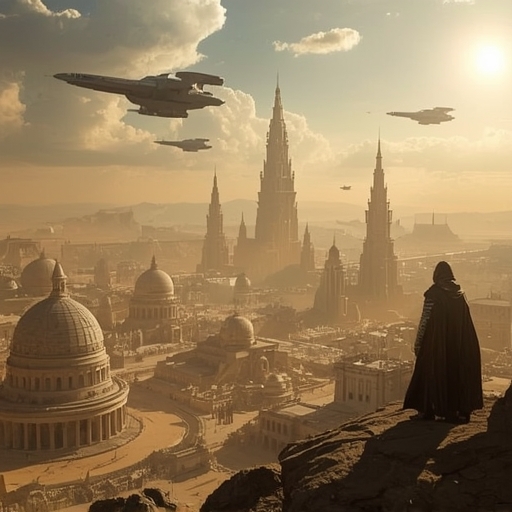
During the most recent celebration of The Game Awards, an event renowned for its dramatic unveilings and astonishing surprises, the audience was treated to a moment that instantly captured the imagination of gamers and Star Wars enthusiasts alike. As the show unfolded, an enigmatic voice declared that the dead speak—an opening tease that set the stage for an announcement few could have foreseen. The reveal that followed formally introduced *Star Wars: Fate of the Old Republic*, a spiritual successor intended to carry forward the legacy of the beloved *Knights of the Old Republic* series originally developed by BioWare and later continued by Obsidian Entertainment. The news sent ripples of shock throughout the gaming community, even among those who had encountered whispers and unverified leaks circulating online in the days leading up to the event.
The sudden announcement prompted countless questions across social media and fan forums, the most pressing of which focused on the game’s release timeline. When exactly would players be able to experience this continuation of a cherished saga? Industry journalist Jason Schreier of Bloomberg offered an answer that tempered expectations: according to his estimates, the project might not reach completion until around the year 2030—an assumption he himself described as optimistic. Schreier further speculated that if development encountered significant delays, the title could conceivably debut on a future generation of hardware—perhaps even a hypothetical PlayStation 7—highlighting the lengthy production cycles that often accompany ambitious, large-scale storytelling ventures of this caliber.
Schreier’s reasoning for citing 2030 was rooted in concrete details revealed through Lucasfilm’s official press release for *Fate of the Old Republic*. The document confirmed that its developer, Arcanauts Studios, had only been established earlier in 2025, leaving the company with limited operational history. At the helm of the fledgling studio is CEO and director Casey Hudson, best known for his previous work leading *Humanoid Origin*, a studio that had been developing an original, self-funded project before running out of financial support and closing near the end of 2024. Considering Arcanauts’ recent formation and the fact that it remains actively engaged in a wide-ranging recruitment process to build its team, analysts and fans alike inferred that it would likely take considerable time—perhaps several additional years—before tangible footage or a playable version of *Fate of the Old Republic* would be ready for public viewing. The notion of the game’s release still lies far on the horizon, distant yet eagerly anticipated.
In response to Schreier’s cautious outlook, Casey Hudson addressed the community directly with an encouraging, if somewhat cryptic, reassurance. He urged players not to worry, confidently stating that *Fate* would arrive before 2030, adding a touch of humor by noting, “I’m not getting any younger!” His comment, though intentionally lighthearted, carries an ambitious implication, suggesting that both Hudson and his team are determined to accelerate production and deliver the experience sooner than industry forecasts might predict. Yet despite such enthusiasm, the precise release window remains uncertain, and history has taught fans that early optimism in large-scale game development often gives way to shifting schedules and inevitable delays. For now, patience and cautious excitement seem to be the audience’s only recourse.
Even if *Fate of the Old Republic* were to exceed that 2030 benchmark, the gaming community would hardly be unprepared for such a wait. After all, major titles, particularly those unveiled with cinematic flair at global events like The Game Awards, frequently spend years in development before coming to fruition. The cyclical nature of anticipation, delay, and ultimate release has long been a familiar rhythm to fans of grand, story-driven franchises—especially within the expansive universe of *Star Wars*. For devoted followers, the promise of a new chapter set in that galaxy far, far away provides more than enough motivation to hold out through the intervening years.
For those seeking further insights into the ever-evolving landscape of pop culture and entertainment, it’s worth keeping an eye on the latest updates surrounding major franchises. Fans continue to track the future of *Marvel*, *Star Wars*, and *Star Trek* across film, television, and gaming, while also monitoring new developments within the *DC Universe* and the timeless adventures of *Doctor Who*. Each announcement adds to an interconnected tapestry of modern mythology—one that, much like *Fate of the Old Republic*, thrives on the delicate balance between nostalgia, innovation, and the eternal promise of what comes next.
Sourse: https://gizmodo.com/fate-of-the-republic-will-probably-be-out-before-decades-end-2000699519