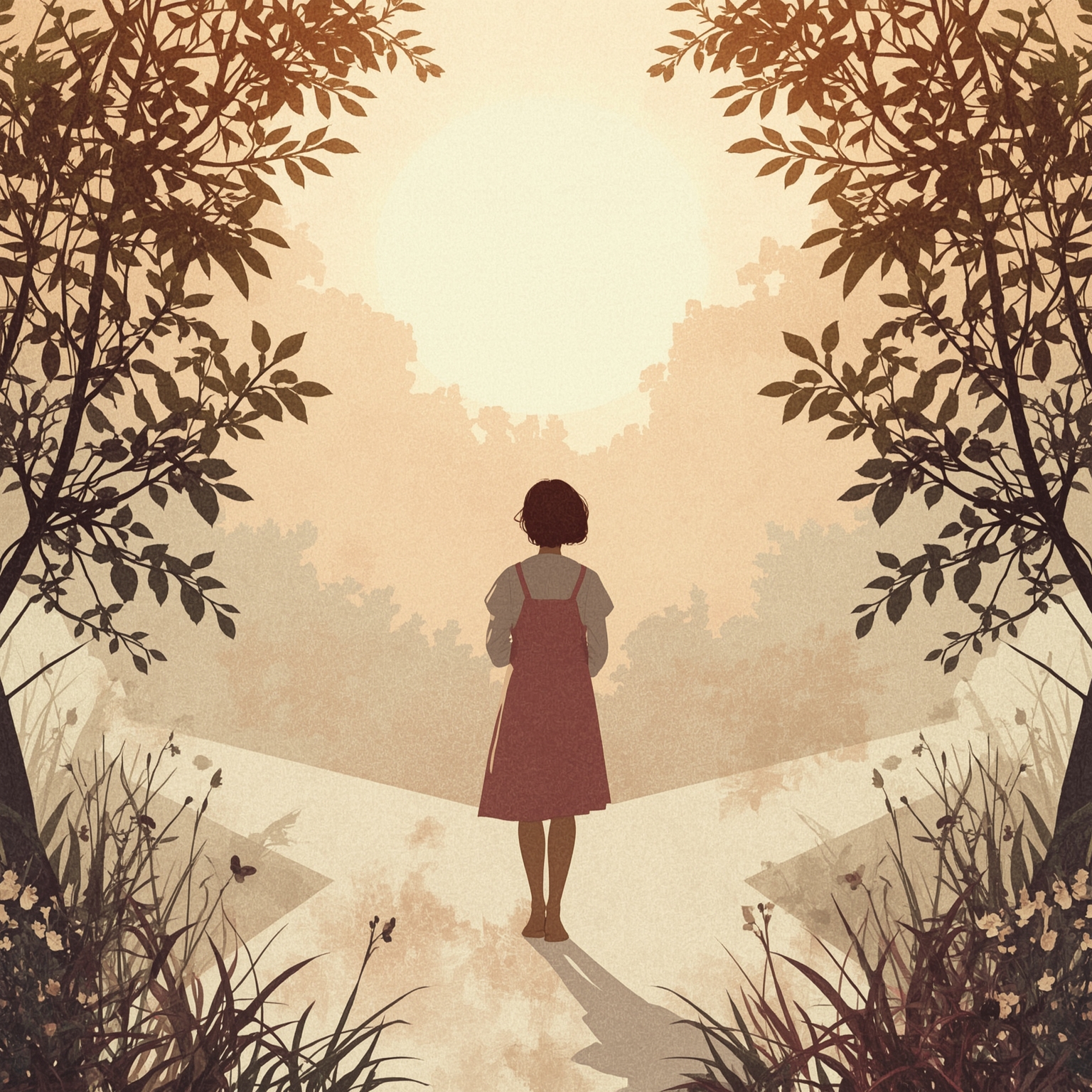
For as long as many women can remember, the longing to become a mother has existed as a constant thread woven through nearly every stage of their lives. From childhood daydreams to the vivid imaginings of adult life, they have pictured the number of children they would one day nurture, carefully considered meaningful names, and conjured visions of the warm, bustling households they hoped to create. For others, however—including myself—the certainty of that desire has never been as instinctive or unquestionable. The prospect of motherhood, rather than feeling like an inevitable calling or natural step forward, has often appeared overwhelming, even frightening, as though it demanded a leap of faith I wasn’t sure I was prepared to take.
Throughout much of my adolescence and young adulthood, I found myself almost entirely detached from the idea of having children. As a teenager, the concept was distant, belonging more to the adult world of obligations and responsibilities than to the realm of my immediate dreams. Even during my twenties, when many of my peers began to voice their hopes of starting families, I wavered in uncertain territory between indifference and anxiety. The thought of unexpectedly becoming pregnant in those early relationships filled me with dread; it was a scenario that felt catastrophic rather than joyful. When thirty approached—a threshold society often marks as an unspoken milestone for major life choices—my uncertainty did not quietly fade. Instead, it grew louder and more insistent, echoing in my mind as an urgent question: why didn’t I yet know what I wanted? The ambiguity surrounding motherhood, once an abstraction, now pressed on me with growing intensity, forcing me to confront whether I yearned for children or preferred to chart a different, child-free path.
A turning point arrived after I made a transformative move that altered the course of my life. In this new chapter, I met the man who would eventually become my husband. Our relationship blossomed naturally, grounded in shared laughter, long conversations, and mutual respect. When we married at the age of thirty-two, our union felt like the beginning of a gentle adventure. We reveled in the freedom that partnership afforded us — traveling spontaneously, spending slow weekends together, and savoring the simplicity of being two people building a life side by side without external expectations. For a while, that happiness felt complete. Yet with each passing year, faint but unmistakable whispers of my biological clock grew more pronounced, reminding me that time, in its quiet persistence, continued its march forward. My husband, supportive and patient, never pushed or prodded me toward a decision. Parenthood remained an abstract notion that we mentioned only occasionally, and always in a casual, almost hypothetical tone. I kept waiting for a moment of revelation, some internal certainty that would declare my path, but clarity remained elusive, and fear lingered like a shadow I couldn’t quite chase away.
Eventually, I realized that I needed to confront my own ambiguity. I immersed myself in personal essays written by women who had wrestled with similar questions, hoping that their experiences might illuminate my own. Yet, puzzlingly, what I discovered only deepened my confusion. Some authors expressed sorrow and regret over choosing motherhood, describing feelings of loss or frustration. Others, in contrast, wrote passionately about their children being the deepest source of meaning in their lives. These opposing narratives stood like two mirrors facing each other, reflecting back endless contradictions. Then, almost serendipitously, I stumbled upon a book titled *Motherhood: Is It for Me?* That question, posed so plainly, seemed to echo the very one I’d been silently asking myself. I decided to read it, not realizing that the next twelve weeks would become an inward journey requiring uncomfortable honesty and profound self-analysis. Each exercise within the book demanded openness, a willingness to unravel old beliefs and unlearn the quiet messages I’d internalized—messages that had once convinced me that viewing motherhood as a potential mistake was an act of strength rather than fear.
As I learned about the author’s own struggle—her years spent vacillating over the same monumental decision, even as she herself appeared on the cover alongside her toddler—I felt an unexpected sense of validation. It reminded me that uncertainty did not equal failure; it was part of being human. Gradually, through introspection and painful self-examination, I began to confront the emotional knots that had long shaped my resistance to motherhood. The emotion that surfaced most persistently wasn’t simply fear or doubt but the haunting worry that regardless of what I chose, regret might one day find me. I feared making the wrong decision—that having a child might shatter my independence, or that not having one might leave me standing amid an unfillable void later in life.
Through that honest internal work, I recognized that some of my apprehension stemmed from unresolved past trauma, experiences that had subtly convinced me that motherhood was dangerous or unsafe. I also became aware of how often I had allowed imagined judgment from others to influence a decision so deeply personal that no outside perspective could ever fully inform it. The truth was that I had spent years embracing and even defending my child-free identity as though it were an unbending moral code. I took pride in my autonomy and freedom and lulled myself into believing that altering this stance would represent weakness or hypocrisy. Yet in shielding myself from change, I had also denied the possibility that I could evolve—that my desires, like everything else in life, might transform. Accepting this realization felt simultaneously terrifying and liberating.
When I stepped back and examined my present life, I could see how vastly it differed from my past. My husband and I shared a relationship rooted in love and mutual support. We were financially and emotionally secure, had built a comfortable home, and had created a stable foundation for any new chapter we might choose to write. The life I inhabited now bore little resemblance to the one I had lived a decade earlier, and recognizing that disparity filled me with a sense of relief and unexpected freedom. It allowed me to see that my resistance had less to do with what I truly desired and more with the fears of a younger version of myself—fears that no longer needed to dictate my future.
Through this process of peeling back assumptions, I learned to distinguish between external and internal motivations. Questions such as “What would people think?” or “What would I have to give up?” began to lose their power. When I separated those surface concerns—like the lack of sleep, the financial strain of childcare, or the physical transformations that accompany pregnancy—from the deeper emotional and existential currents beneath them, I saw how limited my reasoning had been. Those practical considerations, while valid, paled in comparison to the larger, more profound possibilities of connection, love, and contribution that motherhood might bring. That reframing did not erase my uncertainties, but it anchored them within a wider, more compassionate context.
In the end, my reflection led me to an authentic conclusion—one that rested not on external validation but on inner peace. I came to understand that my journey toward motherhood was not about yielding to societal pressure, fulfilling family expectations, or matching the rhythms of my peers. It was about discovering my truth, unclouded by outside voices. When I finally recognized what I truly wanted, the fear that had once seemed insurmountable dissolved into a quiet sense of empowerment. I felt calm, relieved, and certain—not because motherhood was an obligation or destiny, but because it was the right choice for me.
I know that for many people, the question of whether to have children presents itself as straightforward and instinctive, requiring little deliberation. But for others, like myself, it unfolds as one of life’s most intricate and soul-searching decisions. I have come to believe that such a decision should never hinge upon the desires of a partner, the urgings of one’s parents, the chatter of social circles, or the opinions shouted across the internet. It is a conversation between the self and the heart—a choice that belongs solely to the individual. For me, that conversation ultimately led to clarity and to the joyful, grounded realization that it was time to welcome a new life into our own.
Sourse: https://www.businessinsider.com/should-i-have-a-baby-motherhood-2025-11


