Out with the old and in with the new — a phrase that perfectly captures the transformation currently underway at American Airlines. The carrier’s once-exclusive cross-country Airbus jet, a specialized aircraft serving high-end domestic travelers, is now undergoing a sweeping modernization. On a recent Thursday, I had the privilege of exploring American’s first Airbus A321XLR, a stretched and finely engineered narrowbody aircraft capable of flying an astonishing 5,400 miles, or roughly eleven hours, without pause. This impressive reach owes itself to an additional fuel tank that greatly extends its endurance, making it the first of its kind among all U.S. airlines.
With this new fleet addition, American is bidding farewell to nearly a dozen aging A321T aircraft—where the “T” appropriately stands for “transcontinental.” These older Airbus A321-200 jets have faithfully served for about a decade as the airline’s go-to option for coast-to-coast travel, primarily shuttling business travelers and premium passengers between major urban centers such as New York, Los Angeles, and San Francisco. Over those years, the A321T gained a reputation for luxury and exclusivity, providing well-paying clientele with elevated in-flight dining and comfort in three distinct cabin classes. Yet, technology and traveler expectations have evolved, and American is responding decisively.
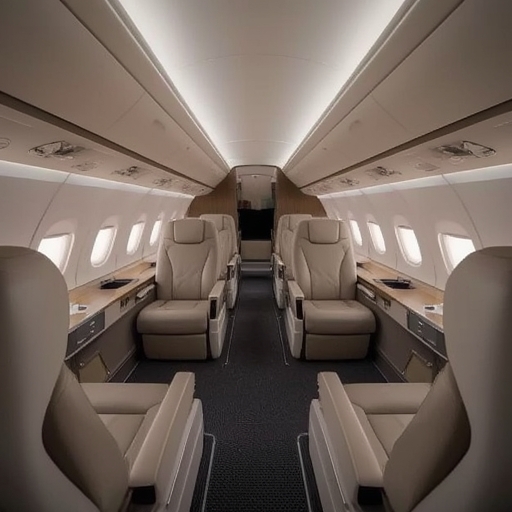
When it takes to the skies on December 18 for its inaugural cross-country service linking New York and Los Angeles, the sophisticated A321XLR will retain the A321T’s hallmark three-class configuration and the refined meal and beverage offerings that frequent flyers have come to expect. However, passengers will immediately notice that the premium area at the very front of the aircraft has been entirely reimagined. In a daring but calculated move, American has eliminated a traditional first-class cabin altogether. In its place sits a cutting-edge business-class section laid out in a one-by-one alignment, guaranteeing each traveler direct aisle access — a perk previously reserved for only a handful of first-class flyers.
The A321XLR also introduces a formalized premium economy section, bridging the gap between the fully flat business suites and the standard economy rows. Meanwhile, main cabin travelers will still benefit from subtle but meaningful upgrades: ergonomically redesigned seats, universal USB-C charging ports, and next-generation seatback entertainment screens that can pair wirelessly with personal Bluetooth devices.
Pricing on the popular New York–Los Angeles route will vary with season, but round-trip tickets are scheduled to start around $200 for economy, rise to about $1,000 for premium economy, and reach approximately $2,000 for a business-class experience by early 2026, increasing during peak holiday or vacation periods. Crucially, this new aircraft’s appeal is not confined to domestic skies. Unlike its transcontinental predecessor, the A321XLR is designed for longer ventures, including flights over the Atlantic Ocean. Starting in March, American plans to inaugurate service between New York and Edinburgh before gradually extending to other European cities. On these transatlantic journeys, travelers can expect fares beginning near $600 in economy, $2,700 in premium economy, and $3,700 in business, with inevitable surges during busy travel seasons.
The ability to seamlessly cross oceans marks the true strategic power of this aircraft. Its extended range unlocks new route options to destinations too distant for older narrowbodies and too small to economically justify a widebody such as a Boeing 767 or Airbus A330. This flexibility makes previously underserved markets — say, flights from New York to West Africa or from Florida to northern Italy — suddenly viable. For American Airlines, the A321XLR offers not just efficiency but opportunity: a chance to rebuild its long-haul network after the post-pandemic slump and to contend more effectively with rivals Delta and United, both of which rebounded and expanded their international portfolios earlier.
Nonetheless, as American prepares for this next generation, the transition also signals the end of an era. The A321T, long beloved by coastal business elites, will quietly retire from its iconic domestic circuits. Even so, most travelers are expected to celebrate the A321XLR’s advancements — from the improved cabin spaciousness and modern design aesthetic to small yet appreciated conveniences such as sliding privacy doors and better access to restrooms. A few limitations remain, including the fact that those doors will remain temporarily locked until regulatory approval arrives, and that passengers seated in row 25 will find themselves by a wall rather than a window, a quirk of the plane’s internal alignment.
This aircraft is intentionally premium-heavy, configured to seat only 155 passengers, compared to nearly 190 on the A321T. On the day of the media preview at New York’s JFK Terminal 8, American unveiled its entirely transformed cabin arrangement. The airline has officially phased out its once-flagship First Class and replaced it with twenty state-of-the-art private suites under the Flagship Business label. These are complemented by twelve seats in the new premium economy zone and 123 revised economy-class seats. The design caters to those willing to pay extra for an elevated travel environment high above 39,000 feet, signaling that American is leaning firmly into a comfort-driven, premium-focused future.
Every inch of available cabin real estate has been optimized to generate both passenger satisfaction and revenue potential, a balancing act akin to a three-dimensional puzzle. The Flagship Business suites exemplify this careful engineering: each pod includes a lie-flat bed, a generously sized tray for working or dining, a Bluetooth-enabled entertainment screen, multiple outlets, and clever storage compartments for laptops, shoes, or personal goods. The aesthetic is tasteful yet understated — a space designed to be both stylish and functional. No longer will business travelers find themselves blocked by a seatmate when heading to the lavatory, a common frustration on the old two-by-two setup. Now, the symmetry of the one-by-one arrangement grants freedom and privacy for everyone.
Privacy, in fact, has become the new currency of business-class air travel worldwide. Responding directly to that demand, American’s suite-style seating introduces sliding doors, creating a sense of enclosure and tranquility akin to miniature hotel rooms above the clouds. However, the design is not without its compromises: the wider seats make the aircraft’s single aisle narrower, meaning that two passengers may find it difficult to pass each other. Bottlenecks could form, especially near the galley and lavatories during service. Moreover, these sleek privacy doors cannot yet be used until the airline obtains official certification, which is expected soon. Unlike some competitors, American has decided not to include a supersized front-row “studio” product — JetBlue, for instance, markets its own “Mint Studio” as an upsell on the A321LR. Instead, American prioritizes a consistent, space-efficient layout rather than maximizing a single very-high-yield seat.
Premium economy has emerged globally as a popular middle ground between business opulence and economy value, and American’s A321XLR now embraces that trend fully. This cabin includes plush recliners in a two-by-two formation featuring leg and footrests, enhanced catering, and a 37-inch seat pitch. Travelers receive upgraded amenity kits in addition to priority boarding and check-in, delivering a noticeably more refined experience without the steep price tag of lie-flat business travel. While these seats do not transform into beds, they are substantially more generous and comfortable than the main cabin, justifying their higher cost for many long-haul flyers.
As for economy class, the layout remains consistent with American’s other long-distance aircraft, arranged in a three-by-three pattern with ergonomically contoured seats, adjustable headrests, ample entertainment options, and a 31-inch pitch. Early rows with extra legroom are identified by brown headrests, distinguishing them from the standard blue ones toward the back. Though less lavish than the forward cabins, this section still reflects a clear modernization compared to the older A321T interior.
Perhaps one of the most appreciated enhancements—particularly among tech-savvy travelers—is the inclusion of Bluetooth connectivity throughout every seat in the aircraft. Gone are the days of relying on the tangle-prone, low-quality wired headphones distributed during boarding. Passengers can now connect wireless earbuds or headsets, including AirPods, to the in-seat entertainment system directly. Additionally, beginning in 2026, AAdvantage loyalty members will gain complimentary Wi-Fi, further emphasizing American’s investment in a connected, seamless travel experience.
Of course, no aircraft is perfect, and the A321XLR’s row 25 serves as a small reminder of that. Due to the fixed position of structural frames and window placements, this row lacks a view entirely, facing a blank panel instead. While some travelers may find the lack of natural light disappointing, others might find it ideal for sleeping without outside glare — proving that even design quirks can become inadvertent perks depending on one’s preferences.
Ultimately, the introduction of the Airbus A321XLR represents far more than a simple fleet refresh for American Airlines. It signals a deliberate shift toward modernity, efficiency, and traveler-centric innovation, blending the practical economics of a narrowbody with the luxury touches of a long-haul widebody jet. As the carrier ushers in this new era, passengers will encounter a product that respects tradition yet fully embraces progress—a quintessential example of how commercial aviation continues to evolve in pursuit of greater comfort, connectivity, and choice.
Sourse: https://www.businessinsider.com/see-how-americans-old-a321t-and-new-a321xlr-cabins-compare-2025-12