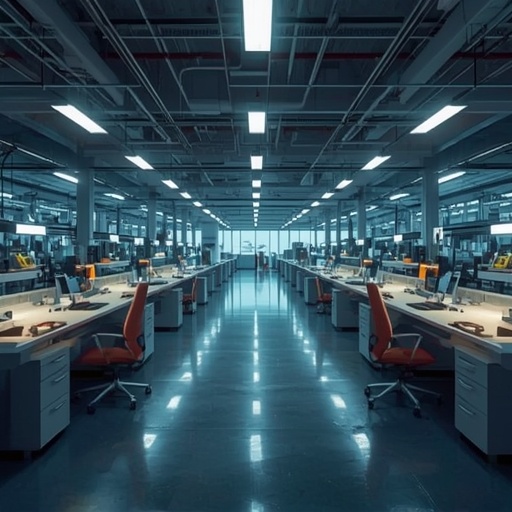
Jim Farley, the Chief Executive Officer of Ford Motor Company, has voiced a cautionary and deeply consequential observation about the state of the American workforce. According to Farley, the United States is now encountering what may be its most formidable labor crisis in generations—a shortage of skilled and available workers that threatens to fundamentally reshape the nation’s manufacturing base, influence the trajectory of economic development, and redefine how industries adapt to the future of work.
This warning arrives at a crucial juncture when the American manufacturing sector, long considered a hallmark of national strength and innovation, is undergoing rapid transformation driven by technological advancement, automation, and the global race for industrial modernization. However, Farley emphasizes that these innovations are only as effective as the people who design, maintain, and operate them. Without a steady influx of trained professionals and technically proficient craftsmen, even the most sophisticated production systems may falter, slowing progress and undermining competitiveness on the international stage.
The shortage of workers is not confined to Ford or even to the automotive industry—it reverberates throughout nearly every corner of the manufacturing ecosystem. From high-tech robotics facilities to traditional assembly plants, employers are struggling to attract and retain qualified talent. In some regions, critical positions remain vacant for months, forcing companies to delay production schedules and reevaluate long-term strategies. This scarcity of human capital compromises not only industrial productivity but also the broader economic stability upon which millions of livelihoods depend.
Farley’s remarks function as both a diagnosis and a call to action. He urges policymakers, educators, and business leaders to collaborate in rethinking how America develops its workforce for the twenty-first century. That means modernizing vocational training, investing in STEM education, expanding apprenticeship programs, and integrating emerging technologies within learning systems to bridge the growing skills gap. It also requires a cultural revaluation of manufacturing work—not simply as labor but as a sophisticated, intellectually demanding profession central to the nation’s prosperity.
Beyond the immediate economic implications, Farley’s statement underscores a deeper truth: the resilience of the U.S. economy relies not only on capital investment and technological prowess but also on the vitality and adaptability of its people. As industries advance toward automation and digital integration, the balance between machine efficiency and human expertise becomes even more crucial. Without intentional strategies to cultivate and sustain a capable workforce, the nation risks weakening the very foundation of its industrial ingenuity.
In essence, Jim Farley’s warning is both pragmatic and visionary. It draws attention to an emerging vulnerability that, if left unaddressed, could compromise America’s position as a global leader in manufacturing and innovation. Yet, it also carries an implicit optimism—that with foresight, collaboration, and commitment to workforce development, the country can turn this challenge into an opportunity to strengthen its economic future and secure enduring prosperity for the generations that follow.
Sourse: https://www.businessinsider.com/ford-ceo-jim-farley-worker-shortage-manufacturing-2026-5


