Japan has long been regarded as one of the world’s foremost innovators, a country where cutting-edge technology intertwines harmoniously with deeply rooted traditions of hospitality. In recent years, this combination has given rise to a fascinating transformation in the hotel industry, where automation and robotics are redefining the guest experience. When travel writer Michelle Gross decided to spend four nights at Yotel Tokyo Ginza, a newly opened property heralded as a hybrid-robot hotel, she sought to explore how far this technological evolution had come since her first, somewhat unsettling encounter with robotic lodging several years earlier.
Back in 2019, Gross’s initial stay at a robot-operated hotel in Tokyo left her with mixed feelings. The humanoid robots at the property were both glitchy and unnervingly lifelike, their stiff movements and malfunctioning systems more eerie than efficient. With the opening of Yotel Tokyo Ginza in the same neighborhood, she felt compelled to return and see whether improvements in automation and artificial intelligence had made the experience any more refined.
Gross has chronicled Japan’s travel and hospitality industry for nearly a decade, observing how the nation continually reinvents its guest services to accommodate surges in tourism. By 2025, Japan is once again experiencing record-breaking visitor numbers, yet the country simultaneously faces a shrinking labor force. This imbalance has encouraged the hospitality sector to experiment with inventive models of service — ones that increase efficiency through the integration of robotics while preserving the warmth of human connection that Japanese hospitality, or *omotenashi*, is famous for.
The Yotel Tokyo Ginza, a sleek four-star lifestyle hotel, opened its doors earlier in the year amid Ginza’s glamorous streets. The district, celebrated for its upscale boutiques, luxury department stores, and proximity to landmarks like the Tsukiji Outer Market and Kabukiza Theater, remains one of Tokyo’s most desirable accommodations zones. Gross, drawn to Ginza’s accessibility and vibrancy, found Yotel’s nightly rates — averaging around $133 compared to nearby properties often exceeding $400 — surprisingly affordable for the area’s prestige.
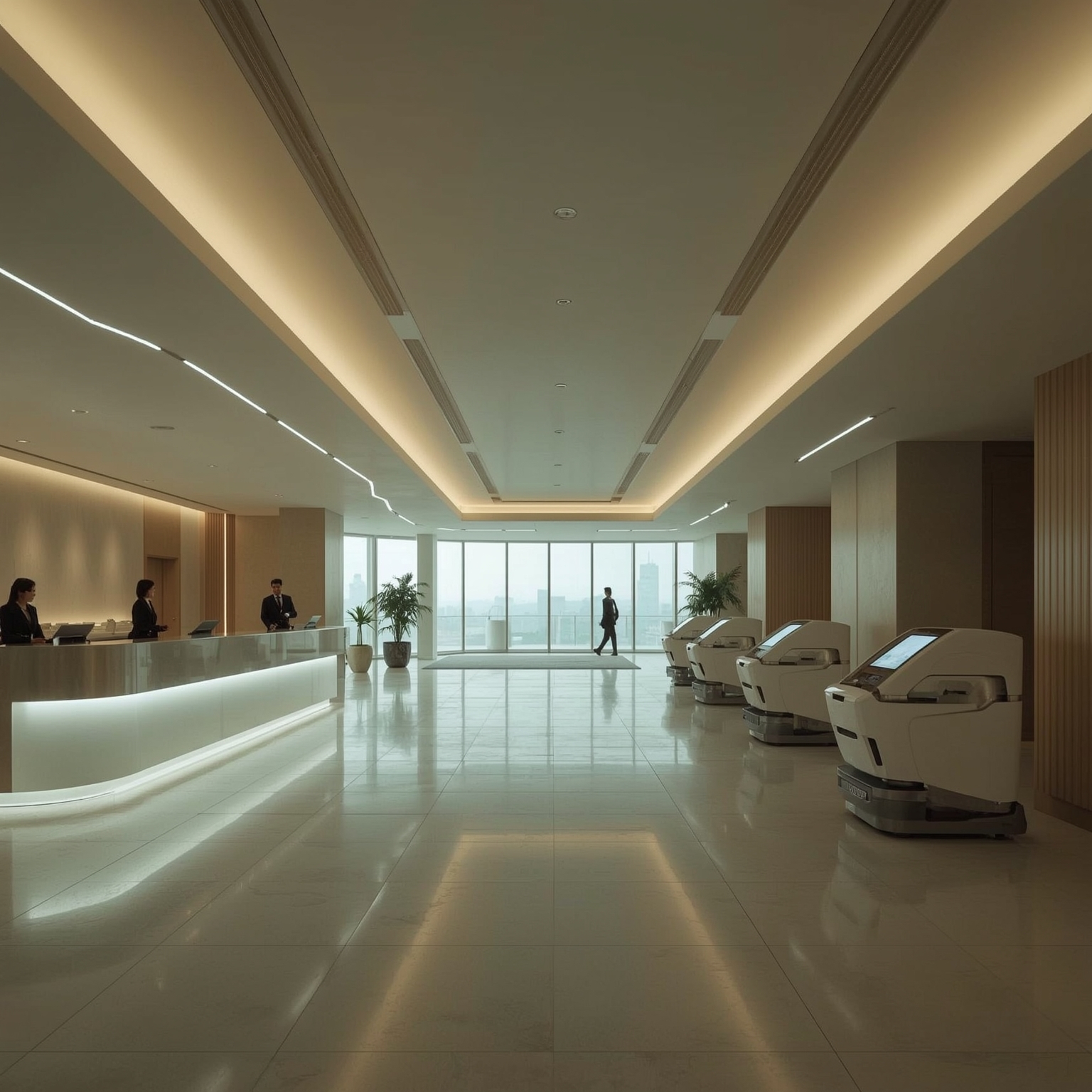
Her previous experience at Henn Na Hotel, another robot-themed establishment, had been characterized by mechanical concierges prone to errors. By contrast, Yotel Tokyo Ginza promised smoother interactions and smarter integration of human staff with robotic assistance. Upon arrival, Gross entered a futuristic lobby known as “Mission Control,” where guests can check in via sleek airline-style kiosks. Though the process took less than a minute and required minimal human contact, she observed that many visitors still gravitated toward the traditional manned reception desk, perhaps seeking reassurance or a personal touch.
The hotel also offers an optional same-day luggage delivery service to both Narita and Haneda airports, ideal for travelers wishing to move freely around Tokyo before catching a flight. After securing her room keycard, Gross encountered two of the hotel’s mechanical attendants, affectionately called “Yobots.” These robots — named Tomo, meaning “friend,” and Aibo, meaning “partner” or “buddy” — serve as mobile assistants capable of guiding guests or delivering requested amenities. When Gross scanned her keycard, Tomo rolled into action, escorting her from the lobby to the elevator and up to her room on the sixth floor. The novelty was undeniable, evoking memories of Rosie, the animated maid from *The Jetsons*. Yet, she admitted that while charming, the gesture was more entertaining than practical. The staff explained that Yobots might soon be equipped to carry luggage directly to guest rooms, a function that would truly enhance convenience.
Her room, categorized as a Premium Plus, overlooked the bustling streets of Ginza through floor-to-ceiling windows that flooded the compact space with natural light. Yotel’s rooms embody minimalist design principles — efficient, organized, and sophisticated with high-tech enhancements. Among these, the motorized SmartBed stood out: at the push of a button, it could shift from a flat sleeping surface to an upright lounge position. For a traveler accustomed to working from bed, this adjustable feature perfectly balanced comfort and utility. The bathroom, though small, was thoughtfully arranged, suitable for solo travelers looking for practicality over luxury.
During her stay, Gross tested the hotel’s robot room service multiple times. To minimize waste, Yotel provides complimentary amenities only upon request — a sustainability measure facilitated by automation. With a quick phone call, she requested pajamas and a toothbrush; within minutes, a Yobot arrived at her door carrying the items in a tidy compartment. The process was remarkably fast, taking under three minutes from request to delivery. An automated phone notification signaled the robot’s arrival, and with the press of a button, its drawer slid open to reveal the neatly packed items. The experience delighted Gross, who appreciated both the efficiency and the whimsical futuristic touch.
On the hotel’s ground floor, she visited Komyuniti, Yotel’s restaurant and bar that, in contrast to the automated elements elsewhere, is staffed entirely by humans. The venue’s comfortable ambiance welcomes guests throughout the day, offering buffet breakfasts, coffee service, afternoon tea, and happy-hour specials. Although Gross found the breakfast less impressive than expected, she valued the dining area as a human-centered counterbalance to the rest of the technologically driven environment.
While exploring Tokyo during her trip, Gross observed that robotic and automated solutions were appearing increasingly throughout the city — from transport hubs to neighborhood cafés. At Haneda Airport, mechanized assistants guided travelers through terminals, and one cafe employed remotely operated robots managed by individuals with physical disabilities, enabling participation in the workforce from afar. These innovations highlight Japan’s creative responses to demographic challenges, combining compassion with efficiency.
Reflecting on her overall stay, Gross concluded that Yotel Tokyo Ginza offers a fascinating glimpse into the near future of global hospitality. The hotel exemplifies Japan’s mastery of blending technological progress with practical service models, yet also reminds us of the enduring value of human interaction. The location and price point remain its strongest assets, making it a compelling option for solo travelers eager to experience something remarkably modern. Still, Gross envisions potential enhancements—robots capable of handling luggage transfers or even preparing coffee-to-order could elevate both convenience and charm. Her visit ultimately reaffirmed that while machines can streamline functions and enhance precision, authentic hospitality continues to rely on the uniquely human qualities of warmth, empathy, and spontaneity.
Sourse: https://www.businessinsider.com/robot-hotel-in-japan-yotel-tokyo-ginza-2025-10