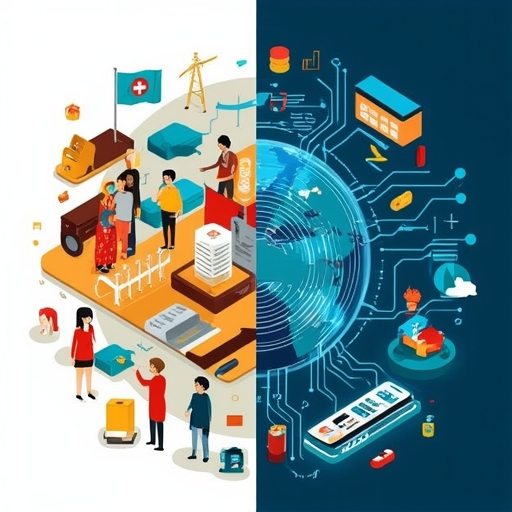
For more than six transformative decades, the Peace Corps has represented a unique intersection of diplomacy, education, and altruism—sending volunteers around the globe to share knowledge, foster growth, and empower local communities. The organization has long stood as a symbol of cross-cultural understanding, introducing sustainable solutions through grassroots approaches and person-to-person engagement. However, the emergence of a newly proposed initiative known informally as the “Tech Corps” marks a dramatic turning point. This modern iteration of the Peace Corps is reportedly gearing its mission toward integrating artificial intelligence and other advanced technologies into developing communities. While the intent, at least on the surface, appears to align with global modernization and digital inclusion, critics argue that such a shift could potentially replace authentic capacity building with technological evangelism orchestrated by major corporate entities.
At the heart of this debate lies an ethical paradox. The Peace Corps, in its original conception, was intended to serve human beings—to teach, to listen, and to collaborate. Technology, when introduced as a new centerpiece of engagement, transforms not only the tools of service but also the philosophy of intervention. For example, a volunteer once assigned to enhance local agricultural practices through cooperative methods may now be tasked with demonstrating AI-powered optimization software designed by global tech conglomerates. The dynamics of service subtly change: the agent of goodwill becomes a conduit for technology transfer, and the focus on human development risks being overshadowed by the allure of technological efficiency.
Proponents contend that this evolution reflects an urgent necessity. In a rapidly digitizing world, technological literacy is no longer optional—it is fundamental. Integrating AI expertise into humanitarian programs could unlock innovation for communities previously excluded from the digital economy. They see the “Tech Corps” concept as a pragmatic response to a changing global landscape, one where sustainable progress requires fluency not only in human culture but also in computational language. Yet, detractors remain wary of the potential consequences. They caution that what begins as empowerment might easily morph into dependency, with local systems increasingly tied to proprietary software and external infrastructures owned by multinational firms.
Ultimately, the question looming over this transformation is whether the Peace Corps’ timeless mission—to promote peace and friendship through service—can coexist comfortably with the profit-driven imperatives of the tech industry. Is the organization adapting to a digital age in a meaningful, community-centered way, or is it inadvertently surrendering its moral independence to commercial influence? The so-called ‘Tech Corps’ embodies both the promise and the peril of modern development: a fusion of humanitarian idealism and algorithmic ambition. As technology continues to redefine the boundaries of service, the Peace Corps—and the global citizens it serves—must decide whether this is an evolution that safeguards human dignity or a deviation that compromises it.
Sourse: https://www.theverge.com/policy/884625/peace-corps-tech-promote-american-ai