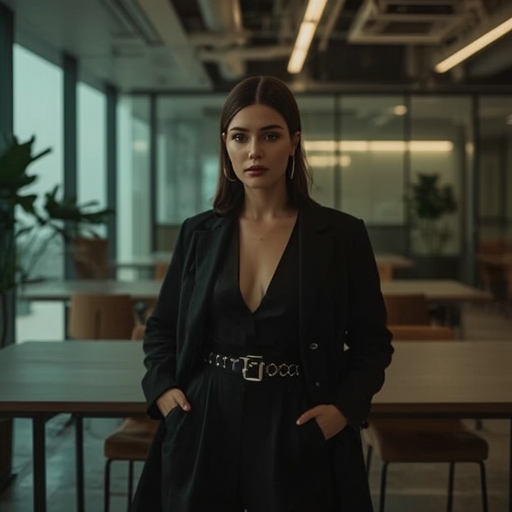
In the contemporary professional world, the very essence of leadership has undergone a remarkable transformation. The once-celebrated archetype of the intimidating, authoritarian executive—defined by sharp suits, curt commands, and a pervasive atmosphere of fear—has given way to a more nuanced, humane, and emotionally intelligent approach. Today, the truest measure of a leader’s strength lies not in their capacity to instill anxiety but in their ability to inspire trust, mutual respect, and authentic engagement among their teams. \n\nThis shift is eloquently embodied by the thematic evolution explored in *The Devil Wears Prada 2*. The sequel, while firmly rooted in the glamorous yet demanding world of fashion journalism, turns its lens toward an era in which empathy and collaboration eclipse rigid hierarchies and harsh management tactics. What once defined power—an iron hand masquerading as efficiency—is now viewed as a relic of outdated corporate culture. In its place, a new paradigm emerges: one celebrating leaders who listen, adapt, and elevate those around them. \n\nEmpathy, a quality historically dismissed as softness, now stands as a cornerstone of effective leadership. Emotional intelligence enables managers to foster creativity, loyalty, and resilience in their teams—outcomes impossible under regimes ruled by fear. Similarly, collaboration replaces command-and-control structures, creating environments where diverse ideas are not only heard but valued. Compassion has become a strategic advantage; leaders who embody understanding and emotional awareness build sustainable organizations capable of weathering rapid change. \n\nWithin the narrative of *The Devil Wears Prada 2*, this evolution manifests through its characters’ growth and introspection. The icy veneer of old-school authority begins to crack, revealing a recognition that even in the high-stakes realm of fashion and media, success is no longer defined by domination but by connection. Hierarchies loosen, values shift, and the human dimension—once hidden beneath layers of couture and control—steps into the spotlight. \n\nBeyond its cinematic context, this transformation mirrors real-world developments across industries. In today’s workplace, employees seek meaning and fairness, and organizations that nurture empathy outperform those that cling to antiquated power dynamics. The once-feared manager archetype fades into memory, replaced by leaders who command respect through openness, authenticity, and the courage to listen. The film, therefore, becomes more than entertainment—it is a reflection of an ongoing cultural revolution reshaping the foundations of leadership itself. \n\nUltimately, this new era of leadership celebrates empowerment over intimidation and collaboration over compliance. *The Devil Wears Prada 2* captures this zeitgeist with perceptive finesse, illustrating how power—redefined through compassion—can be both elegant and transformative. What was once a story about control now becomes one of evolution, resilience, and renewal, echoing a simple yet profound truth: genuine leadership begins with humanity.
Sourse: https://www.businessinsider.com/devil-wears-prada-2-review-miranda-priestly-toxic-boss-culture-2026-5


