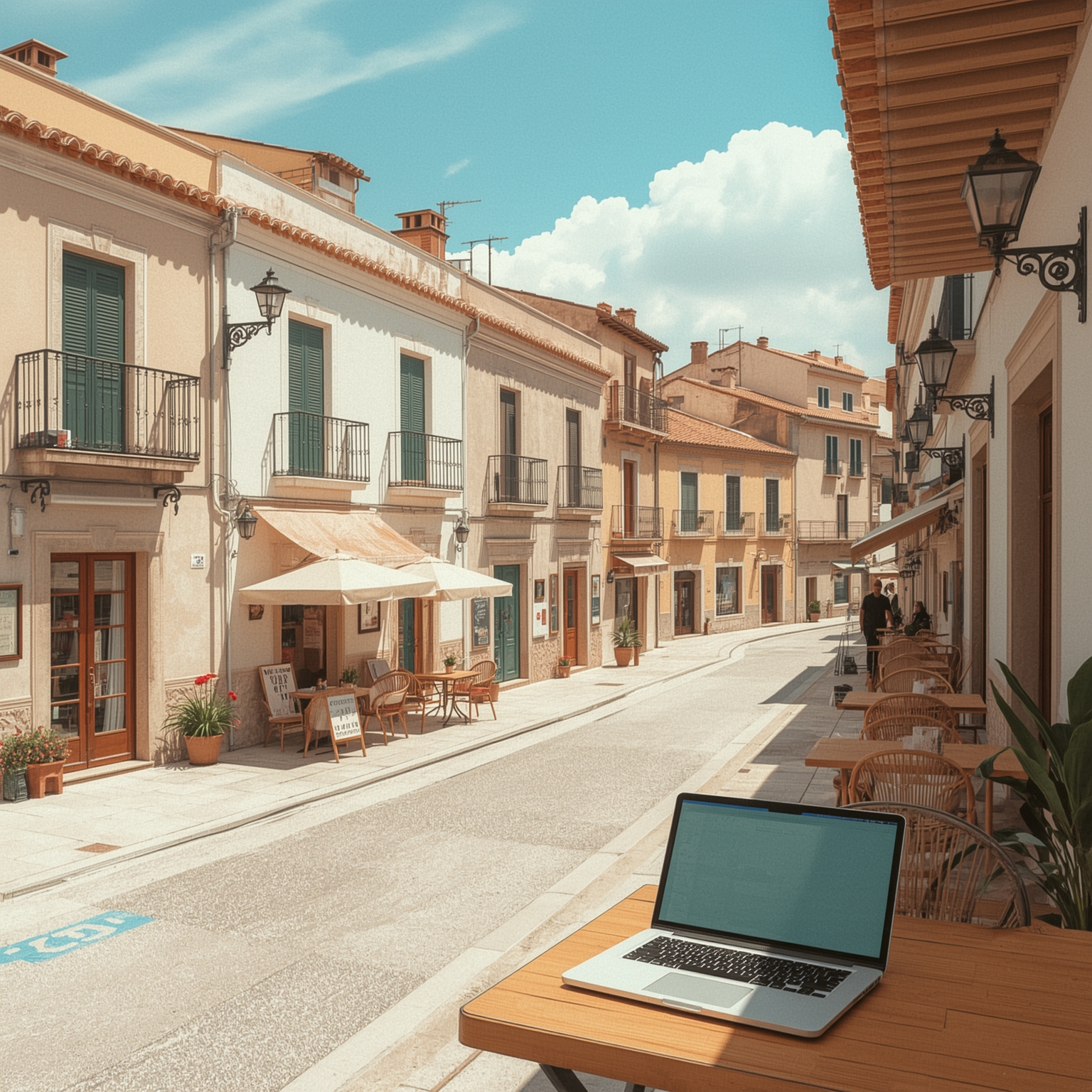
This narrative emerges from an in-depth conversation with marketing professional Jennifer Cody Kemp, a 53-year-old mother of one who now resides in Alicante, Spain. The following account, derived from her reflections, has been carefully refined for the sake of coherence and readability while faithfully maintaining its essence.
In October 2024, as Jennifer sat in the departure lounge of Cairo International Airport, her thoughts churned with an almost uncontrollable velocity. The stillness of the terminal contrasted sharply with the intensity of her internal dialogue. She had just completed nearly two weeks exploring Egypt on a long-awaited getaway with close friends—a journey filled with laughter, history, and the kind of emotional renewal that comes from stepping far outside one’s daily routine. Yet, as the end approached and her flight home to the United States loomed, a dull weight of apprehension settled over her. Returning to the corporate intensity of her long-held job in Fort Lauderdale, Florida, felt less like going home and more like walking back into an old, familiar cage.
It was then that the idea began to crystallize: perhaps this trip did not need to be a temporary escape from life, but rather a turning point within it. A quiet voice inside her challenged the relentless pace and expectations she had long accepted as normal. It whispered that constant motion was not synonymous with purpose, that happiness wasn’t something to be postponed until retirement. Increasingly, her life had become a cycle where financial success only fed higher expenditures—the illusion of progress masking deeper dissatisfaction. She began to entertain a radical possibility: to uncoil herself from the corporate hamster wheel and start over abroad.
Europe, a continent she had explored many times before, drew her imagination most vividly. She recalled how easily joy surfaced during her travels there: street cafés alive with chatter, the accessibility of culture, the affordability of daily pleasures. Among all the destinations she had visited, Spain seemed to embody the balance she was craving—vibrant, welcoming, and blessed with a rhythm of life beautifully indifferent to endless productivity.
Practical-minded as ever, Jennifer’s next steps were deliberate. Before taking any irreversible leap, she arranged a meeting with her financial advisor. Together they dissected her assets, income streams, and projected living costs with clinical precision. To her surprise, he confirmed that her finances were solid and adaptable for a life abroad. There was, he assured her, no financial obstacle to prevent the move. When she admitted her reluctance to spend another decade and a half working toward a future she might never reach, he listened empathetically. The loss of her father at sixty-seven, alongside the recent passing of several peers, had stripped away any illusion that time was guaranteed.
Encouraged by these realizations, Jennifer contacted an online relocation consultancy, Move Overseas Now, to assist with securing a digital nomad visa for Spain. Their guidance proved invaluable, clarifying everything from legal documentation to residency permissions. Soon thereafter, she committed fully: in April she resigned from her marketing position of twenty-eight years, listed her spacious four-bedroom, 2,600-square-foot Florida home for sale, and booked one-way tickets to Europe. The following month, her twenty-four-year-old son Mark joined her for an extended visit, eager to share in his mother’s adventure.
After exploring the sun-drenched coastline of southeastern Spain, Jennifer chose Alicante, a city poised gracefully between the Mediterranean Sea and the Sierra de Mariola mountains. Its mix of coastal serenity and urban energy satisfied her longing for both comfort and community. Her first months were devoted to establishing a modest new foundation: she rented a two-bedroom apartment in the historic city center measuring roughly 1,300 square feet. At a monthly cost equivalent to $925, the savings were immediate and substantial compared to her former $1,600 mortgage in Florida.
The financial relief extended beyond rent. No longer was she burdened by the annual $7,300 property tax that had once consumed her budget, nor the $450 monthly cost of private health insurance and co-payments. Spain’s publicly funded healthcare system, universally accessible and remarkably comprehensive, offered her peace of mind at a fraction of what she would have paid in the U.S. Even daily pleasures surprised her with their affordability: a fine glass of wine cost scarcely $3.50, and grocery bills often felt like a welcome revelation. Two dozen eggs, which had cost her around $12 in Florida, could be purchased locally for barely $2.50.
Freed from the expenses of car ownership, Jennifer discovered a more pedestrian lifestyle. Selling her vehicle eliminated another $450 in insurance fees each month. In Alicante, walking was not only common but deeply interwoven into the culture—streets designed for strolling, neighbors greeting one another, cafés buzzing with conversation. When she needed the sea, a brief twelve-minute bus ride brought her directly to the soft, golden beaches of the Costa Blanca.
Her professional life also transformed, though she remained engaged in marketing consultancy for a select roster of clients, including a publishing firm. The reduced overhead and lower living expenses meant her income stretched further than she had ever imagined possible. She could dine out freely, discovering regional dishes and authentic tapas bars while forming friendships across languages and cultures. Being single, she explored dating apps occasionally, but found that in Spain, connections often arose organically—in lively restaurants, on quiet terraces, or during evening walks through the old town. The warmth of human interaction felt less contrived and more genuine.
Yet beneath the sunlit simplicity of her new existence, a different kind of adjustment awaited her: learning to inhabit a slower world. The Spanish concept of “tranquilo”—a calm, steady composure toward life’s pace—challenged the deeply ingrained impatience she had developed after decades in high-speed American culture. In the United States, gratification was almost instantaneous. Purchases could arrive the same day courtesy of online giants; supermarkets operated without pause. But in Alicante, time obeyed an entirely different rhythm. Shops closed for siesta, often for two or three hours in the afternoon, returning only after five. Most grocery stores shut their doors midweek, making early planning essential.
This structure at first felt alien, even frustrating. She recalled standing before closed storefronts, reminded that certain conveniences would no longer bend to her schedule. But with time, she learned that these moments of forced stillness were invitations rather than obstacles—opportunities to breathe, observe, or simply exist without urgency. Her attempts to find her favorite “mushroom coffee,” a health-oriented brand she had brought from the U.S., became a comical reminder of cultural difference. No one in town seemed to understand what she meant; her quest sparked laughter and bemused shrugs in equal measure.
Months into her new life, Jennifer’s restless energy began to soften. She found herself embracing delays, savoring mornings without plans, and measuring success not by output but by contentment. The Spanish ethos of patience, which had initially tested her, gradually rewired her understanding of fulfillment. In slowing down, she discovered a quiet form of joy—the kind that sustains the spirit rather than drains it. And as she looked out from her balcony one evening over the glowing city and the distant waves, she realized she had not merely relocated. She had, in every meaningful sense, come home to herself.
Sourse: https://www.businessinsider.com/spain-cheaper-than-us-struggled-to-slow-down-2025-11