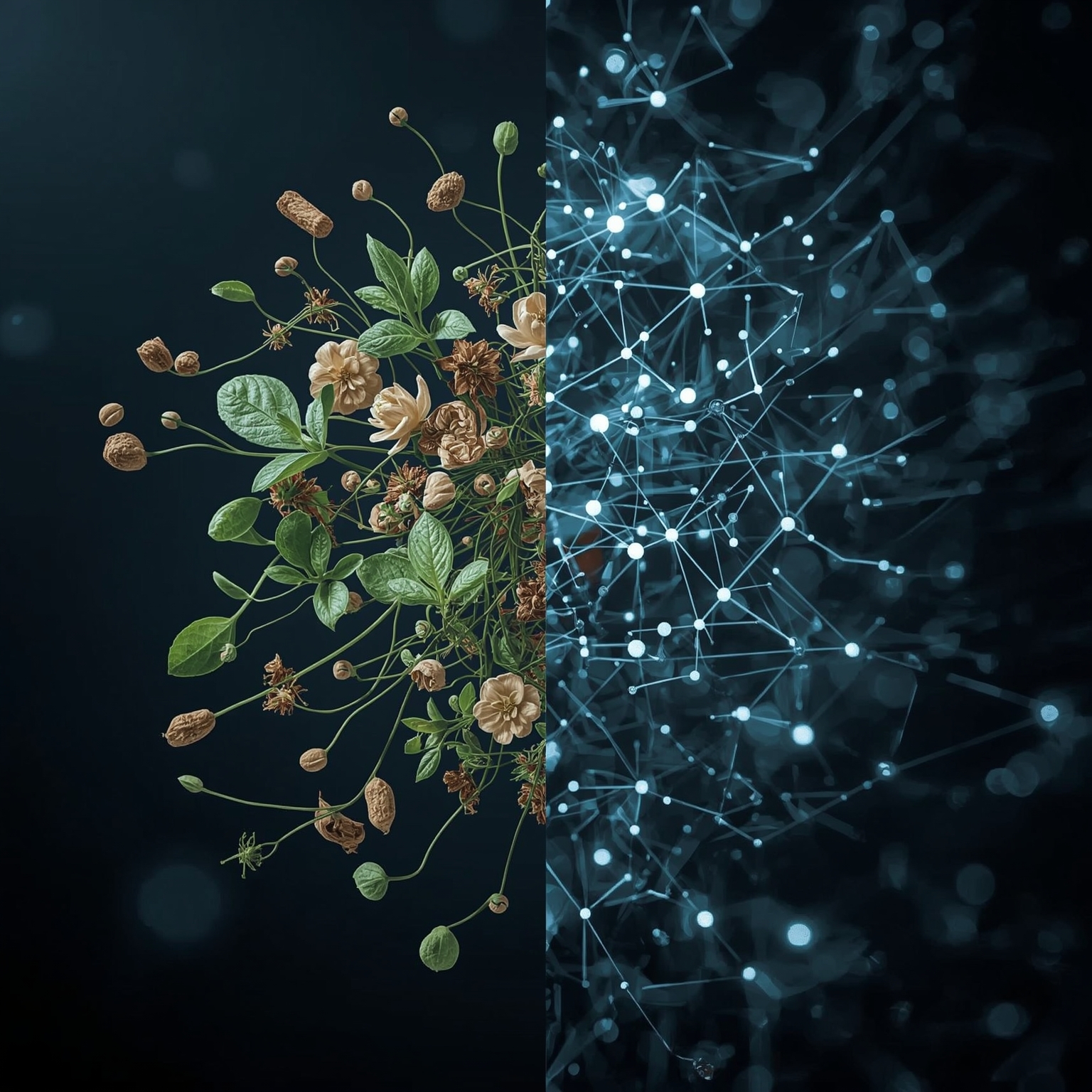
This as-told-to essay originates from an extensive conversation with Benjamin Leong, a thirty-one-year-old Singaporean who once practiced full-time as a licensed traditional Chinese medicine physician and has since reinvented himself as an artificial intelligence engineer at a medtech startup. The narrative presented here has been refined and edited for precision, coherence, and readability. Business Insider has independently confirmed the authenticity of his professional credentials and salary details.
From an early age, Benjamin felt a natural inclination toward the medical sciences and the broader field of healthcare. His fascination with medicine stemmed from a desire to help others and to engage with the human body’s intricate systems. However, after not gaining admission to conventional medical school, he turned his focus to traditional Chinese medicine (TCM), viewing it not as a compromise but as a meaningful alternative path that would still allow him to treat patients and contribute directly to their well-being. Although TCM required him to adopt a different approach—balancing ancient principles with modern clinical practice—it offered a legitimate avenue to serve as a clinician in a distinctive cultural and therapeutic framework.
It was during his academic years in TCM that Benjamin encountered an unexpected source of inspiration. One of the modules in his curriculum, a biostatistics and computational course, introduced him to the analytical world of data and programming. While this unit was primarily designed to equip medical students with statistical literacy, he found himself unusually captivated by the logic of coding, the creative potential of computational modeling, and the precision of data-driven problem solving. Yet, despite his intrigue, this curiosity remained dormant for some time as his primary focus continued to be on completing his medical training and preparing for clinical practice.
That latent interest resurfaced years later, just months before his licensing examinations in 2020. At that pivotal moment, Benjamin decided to take a concentrated sixteen-hour Python programming course—an experience that reignited and deepened his fascination with computer science. The structured process of writing and debugging code, constructing something functional from nothing but logic and text, provided him with a sense of intellectual satisfaction and creative achievement. The joy of problem-solving and the tangible results of his efforts instilled a lasting appreciation for programming, motivating him to explore this passion further.
In 2022, driven by intellectual curiosity and a desire to broaden his career possibilities, Benjamin enrolled in a part-time computer science program. He managed to balance this demanding academic pursuit with his ongoing duties as a practicing physician. Through this dual engagement, he found himself uniquely positioned at the intersection of medicine and technology. It was during this period that he made contact with a medtech company specializing in artificial intelligence applications for healthcare—an opportunity that harmoniously merged his medical background with his growing technical expertise. This alignment of interests culminated in his eventual appointment as an AI engineer in 2024.
Transitioning from the identity of a physician to that of an engineer required a profound shift in mindset. Clinical medicine is inherently human-centered, grounded in direct patient interaction, empathy, and immediacy of care. By contrast, engineering—particularly in the context of software and artificial intelligence—is largely process-oriented, involving complex project management, long-term development timelines, and collaboration within multidisciplinary technical teams. In a startup environment, where agility and strategic foresight are paramount, Benjamin had to adapt to a workflow defined not by immediate diagnoses or treatments but by iterative design, testing, and long-range objectives.
As he immersed himself in the engineering world, Benjamin encountered a wide array of new concepts and tools—version control systems, DevOps methodologies, and intricate project management structures, to name a few. Each represented a distinct learning curve. Beyond purely technical skills, he also had to develop an understanding of team dynamics: coordinating deliverables, interpreting product requirements, and ensuring timely deployment of features within the enterprise’s software ecosystem. One of the most significant challenges he identified was mastering the art of strategic project management, including planning months in advance, setting realistic milestones, and aligning the efforts of multiple contributors toward unified goals. These skills stood in stark contrast to his clinical background, where decisions and actions often yielded immediate feedback from patients.
Yet, Benjamin did not abandon the lessons of medicine as he stepped into technology. On the contrary, many competencies from his clinical past have proven invaluable in his new role. Chief among them is communication—specifically, the ability to speak fluently and empathetically with other healthcare professionals. Working in a medtech company requires frequent collaboration with hospitals, clinicians, and physiotherapists, where mutual understanding is crucial. Because Benjamin is well-versed in medical terminology and the cognitive frameworks that clinicians use, he can serve as an effective bridge between the technical development team and the healthcare users. This dual fluency enables him not only to discuss product design with engineers but also to advocate for the needs of practitioners who will ultimately use AI-driven tools in real-world medical settings.
His medical experience also equips him to guide the shaping of new products. Understanding how clinicians think and behave allows him to translate those insights into actionable feedback for software developers, ensuring that the final applications are both technically robust and genuinely useful in clinical contexts. In this hybrid capacity, he contributes not only technical input but also a crucial human perspective—a viewpoint that anchors innovation in practicality.
Even as he embraces his new identity as an AI engineer, Benjamin remains connected to his roots in traditional Chinese medicine. He occasionally performs locum work or assists at his former clinic when his schedule permits. This continued engagement provides him with professional flexibility; should he ever decide to return to full-time medical practice, he retains both the skills and qualifications to do so.
The financial implications of his career change have also been positive. His base salary at the medtech company is roughly thirty percent higher than what he previously earned as a junior physician, whose monthly pay was approximately 4,000 Singapore dollars (about 3,100 U.S. dollars). While remuneration was not his primary motivation for making the switch, the improved compensation underscores the tangible rewards that can accompany an effective interdisciplinary transition.
Benjamin acknowledges that joining an early-stage startup carries inherent risks—uncertainty about business outcomes, variable workloads, and evolving company structures. However, both his financial preparedness and his willingness to invest time in learning new disciplines gave him the confidence to pursue this path without fear. In his view, artificial intelligence represents one of the most transformative and rapidly expanding fields today, and its accessibility continues to increase at an unprecedented rate. Technological advancements, coupled with user-friendly learning resources, mean that aspiring professionals now have lower barriers to entry than ever before.
He emphasizes that while proficiency in programming and basic technical acumen remain beneficial, one no longer needs to be a coding expert to participate meaningfully in the AI ecosystem. A conceptual understanding of AI principles—how models are trained, optimized, and deployed—is often sufficient to begin engaging with the technology. Countless online tutorials, free educational platforms, and interactive tools now make it possible for nearly anyone to acquire relevant baseline knowledge. Benjamin notes, for instance, that modern conversational agents such as ChatGPT can function as personalized tutors, guiding learners through the fundamentals of programming or AI theory step by step.
Ultimately, Benjamin believes that success in this evolving domain depends less on formal credentials and more on intellectual curiosity, persistence, and an eagerness to explore. A sincere willingness to learn continuously—to ask questions, experiment, and build—is, in his experience, the strongest asset anyone can bring when bridging traditional disciplines with modern technology. His own journey from healing patients to designing intelligent systems stands as an example of how adaptability and curiosity can transform a career, demonstrating that reinvention, when guided by passion and purpose, can yield both professional fulfillment and financial stability.
Sourse: https://www.businessinsider.com/traditional-chinese-medicine-ai-engineer-how-career-pivot-benjamin-leong-2025-9