In 2018, Dmitrii Stepanov set foot in the Philippines with nothing more than a plan for a brief one‑month journey of exploration and adventure. What was intended as a temporary escape soon transformed into an entirely new chapter of life. Now, seven years later, with a marriage and two children shaping his daily reality, the Philippines has evolved from a mere travel destination into the place that he wholeheartedly calls home.
Back in Russia, where Stepanov spent his formative years, he made his living as a videographer, creating visual stories through the lens of his camera. Yet beyond his career, a growing fascination with the ocean steadily began pulling him in a different direction. Scuba diving and underwater photography captivated his imagination, eventually prompting a move to Dumaguete, a coastal city situated on the island of Negros Oriental, renowned internationally for its vibrant diving culture and exceptionally diverse marine life.
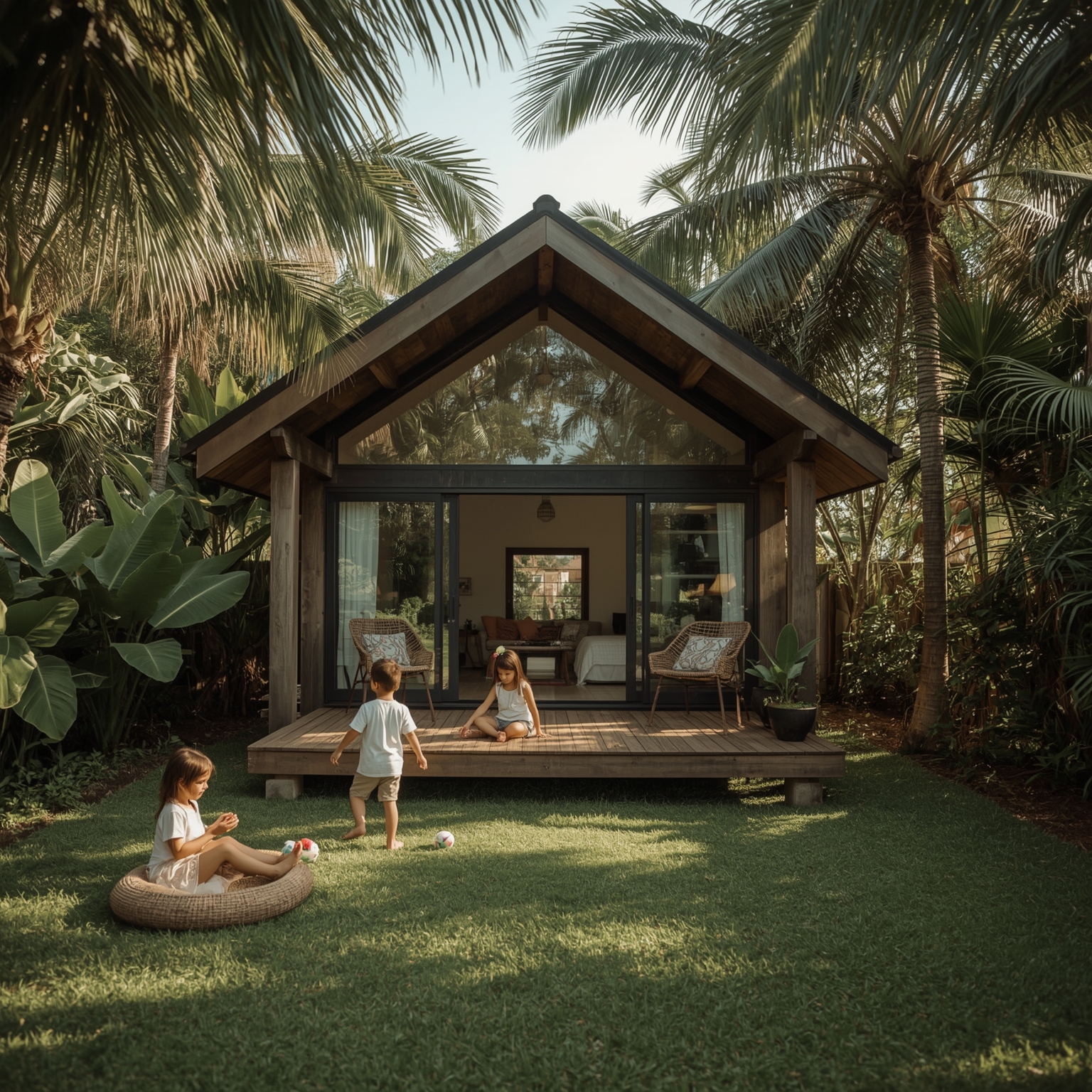
Today, along with his wife, Nivy Mondaya, and their two young children, Stepanov resides in a modest tiny house in the Philippine countryside. For the family, the relatively affordable cost of living in the region significantly eased the transition into their new lifestyle. Reflecting on the shift, Stepanov explained that what started as curiosity gradually became attachment: the longer he remained in the country, the stronger his affection for it grew.
Roughly six months into his extended stay, Stepanov’s life took a decisive turn when he met Mondaya online. Originally from the island of Bohol, she had relocated to Negros Oriental more than a decade earlier. Their connection deepened quickly, and not long afterward, the two married. The pandemic brought unexpected detours—while stranded in Vietnam, they welcomed their first child in 2021—before eventually returning together to the Philippines to restart their lives.
After settling back on Negros Island, the couple—both working as digital content creators—initially rented an apartment for about half a year. However, as new parents, they were increasingly drawn to the stability and permanence of home ownership. The experience of global lockdowns further encouraged them to seek refuge away from the bustle of Dumaguete itself, craving a quieter and healthier environment for their growing family.
Although Stepanov had previously considered renting the financially pragmatic choice, fatherhood altered his perspective. Having children, he admitted, redefined priorities, making the investment in property feel necessary rather than optional. Their search led them to Dauin, a small town renowned for its own dive spots, situated roughly forty minutes from Dumaguete City. The couple envisioned building, rather than buying, so they could shape a home tailored to their lifestyle. Scrolling through Facebook Marketplace, they discovered a parcel of land that seemed perfectly suited to their vision.
This property, spread across more than 77,000 square feet, was a coconut plantation positioned between the mountains and the sea. The location offered a striking combination of cool breezes, elevated terrain, and easy access to the beach within a short drive. With the help of a contractor, they oversaw the construction of a compact yet functional residence, which was completed within about four months. By September 2023, the family officially moved into their new home.
The original tiny house featured only the essentials: a bedroom, a small living room, a kitchen, and a bathroom. Yet, as time passed and their needs evolved, they gradually expanded the structure, adding a second room, a veranda to enjoy the outdoors, and pathways surrounding the property. In total, their investment amounted to approximately 2.2 million Philippine pesos. While modest in size, the home’s design proved adaptable to future adjustments and reflected their evolving lifestyle.
Life on the property balances simplicity with practicality. Mondaya maintains a vegetable garden, though parenting duties often limit the time she can devote to it. Fortunately, neighbors lend a hand in tending the plants, ensuring regular harvests. The household taps into the municipal water supply but also installed a separate storage tank to guard against shortages. Electricity is less reliable in the countryside, but the family creatively compensates by relying on portable power stations and maintaining steady internet access through Starlink.
Although the Philippines is no stranger to destructive typhoons, their house has thus far endured the severe weather with minimal damage. Aside from a section of bamboo fencing that was destroyed, the structure has remained sound, with no flooding, leaks, or landslides threatening their home in two years of residence.
As elsewhere in the world, the tiny‑house movement has attracted attention for its cost efficiency, minimalist ethos, and sustainable possibilities. Many homeowners worldwide describe benefits such as reduced overhead expenses, opportunities to reimagine personal consumption, or even turning such houses into profitable vacation rentals. However, it is also a lifestyle marked by challenges, especially during extraordinary circumstances like the pandemic, when limited space and isolation proved difficult for some. For Stepanov and Mondaya, though, raising children in a compact rural house has been deeply rewarding. Their four‑year‑old son enjoys both indoor space and the freedom of outdoor play, often with neighborhood children, safely away from traffic. Their infant daughter, still less than a year old, has her own cozy, enclosed corner within the home where she thrives.
The family has successfully carved out a peaceful niche far removed from urban noise, with everyday sounds limited to roosters, livestock, and the ambiance of the countryside. For Mondaya, this atmosphere resonates strongly with her own upbringing in the province; she recalls the joy of simple outdoor play, unburdened by excessive reliance on electronic devices.
Although the couple originally envisioned their tiny dwelling as a transitional solution—with possible plans to expand later or even transform it into a short‑term rental property—their perspective has shifted. As they have settled further into their surroundings and expanded the house to better accommodate their family, they have come to feel rooted and content. What began as a temporary experiment is now embraced as a long‑term home.
Ultimately, the story of Dmitrii Stepanov and Nivy Mondaya illustrates how unexpected turns in life—whether travel, marriage, or parenthood—can alter perceptions of what truly matters. Their journey from renting to building, from urban convenience to rural simplicity, reflects a broader truth: sometimes the most meaningful homes are not the ones we plan meticulously, but the ones that grow with us when circumstances—and children—bring entirely new priorities into focus.
Sourse: https://www.businessinsider.com/millennial-couple-built-tiny-house-philippines-raising-kids-family-2025-9