This as-told-to essay emerges from an in-depth, reflective conversation with Travis Carrasquillo, a thirty-seven-year-old content creator who currently resides in the vibrant coastal city of Da Nang, Vietnam. The dialogue, which drew from his candid recollections and thoughtful observations, has been carefully edited to enhance readability, while preserving the authenticity and emotional depth of his experiences.
Travis has now called Vietnam home for more than six years—a period that has profoundly reshaped his outlook on work, life, and community. Prior to this transformative chapter, he lived in Hawaii, where he was employed as a behavior analyst specializing in assisting children from military families who were navigating the complexities of autism. While the work was meaningful and deeply human, it was also extraordinarily demanding, both emotionally and mentally. The unrelenting stress convinced him that this could not serve as a lifelong career path. He realized, with growing clarity, that he would eventually need to seek a new direction—one that aligned more closely with his personal well-being and sense of purpose.
Travel had always drawn his curiosity and passion. Over three successive years, he ventured to several Southeast Asian destinations—namely the Philippines, Thailand, and Vietnam. These journeys left an enduring impression. The rhythm of life, the warmth of the people, and the vibrant cultures convinced him that Asia held something deeply resonant—a balance between vitality and simplicity that he found impossible to forget.
In early 2019, an unexpected opportunity arrived that would alter his trajectory. A retired military doctor, then residing in Hanoi with his Vietnamese wife, reached out to Travis seeking professional support for their young son, who had been diagnosed with autism. They were in search of someone experienced in behavioral analysis who could guide and nurture the boy’s communication and social skills. The timing felt almost destined: the offer came barely two months after Travis had vacationed in Vietnam. To him, it felt unmistakably like a sign pointing toward change. Hawaii, for all its natural beauty, had never entirely felt like home—the cost of living was steep, and a certain impermanence lingered beneath the surface. Trusting his instincts, he decided to accept the position and moved to Hanoi six months later.
For four years, Travis worked closely with the family, focusing his efforts on teaching and mentoring their son after school hours. His approach was patient, empathetic, and culturally adaptive. Recognizing that the boy was growing up in a bilingual household, he made a conscientious effort to study Vietnamese from the moment he arrived. His goal was not only to communicate effectively with the child but also to bridge cultural gaps and honor the family’s environment. Over roughly eighteen months, he took formal language lessons and reached a comfortable level of fluency. His progress did not end there—his girlfriend, a Vietnamese language teacher, continues to help him refine his skills and deepen his engagement with the local culture.
When that particular chapter of his professional life concluded naturally after several fulfilling years, Travis chose to remain in Vietnam rather than return to the United States. He relocated to Da Nang, a relaxed yet steadily developing beach city situated in central Vietnam. Although he had appreciated Hanoi’s layers of history, culture, and intellectual energy, he found the pollution difficult to endure over time. Da Nang, by contrast, promised clean air, a stunning coastline, and an appealing balance between urban amenities and natural serenity. When he first moved there two years ago, the city was still relatively under the radar. Few foreigners spoke of it enthusiastically, but Travis sensed potential—its calm beaches, mild climate, and relaxed tempo were exactly what he was searching for.
Today, Travis describes Da Nang as achieving what many larger cities cannot: the ideal equilibrium. It offers excellent coffee shops, gyms, and restaurants, all without the overwhelming hustle found in Vietnam’s major metropolitan centers like Hanoi or Ho Chi Minh City. He lives on the city side rather than directly on the beachfront—a choice that makes day-to-day living more affordable while keeping him only a brief ten-minute motorbike ride away from the sea. With a monthly budget of around $1,500, he finds life comfortable and rewarding. His expenses cover rent, food, exercise, and even the occasional weekend getaway, leaving him with enough freedom to enjoy the simple pleasures that matter most.
Many people back in the United States understand that Vietnam is cost-effective, but Travis often emphasizes that affordability here does not equate to poor quality. Quite the opposite: Vietnamese cuisine, in his eyes, represents freshness and health at its finest. Dishes are flavorful yet light, locally sourced, and prepared with care. Whereas dining out in the U.S. once served as an infrequent luxury, in Vietnam he can enjoy a freshly made and delicious meal for roughly a dollar and a half. Although he still cooks for enjoyment and to explore new recipes, he appreciates the social nature of eating out—meals in Vietnam often feel communal, with friends and families gathering around simple street-side tables to share food and laughter.
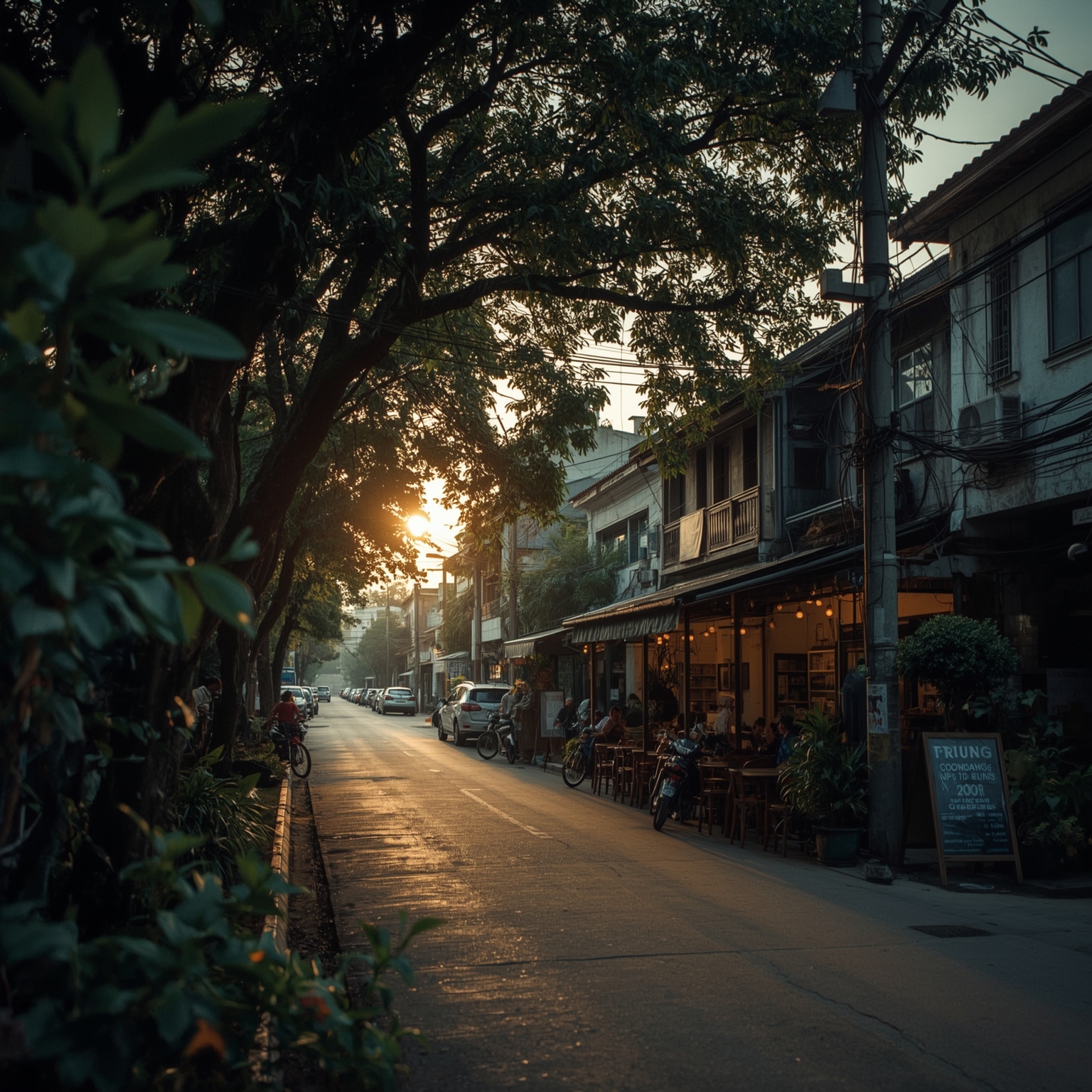
Beyond the practicality and affordability of daily life, what keeps Travis rooted in Vietnam is something less tangible yet far more profound: the warmth and connectedness of the people. Throughout nearly his entire stay, he has chosen to live in local neighborhoods rather than in expat enclaves. There, every evening unfolds with touching familiarity—families set up small tables outside their homes, chatting and eating together as the air fills with the scent of home-cooked dishes. Cafés bustle with groups of friends sharing stories over iced coffee, and neighbors pause to converse rather than rushing past one another. This palpable sense of community and belonging, he notes, is something that much of contemporary American life has lost.
When Travis returned to visit his parents in the quiet suburbs of Chicago, where he had grown up, the contrast struck him forcefully. The streets felt empty, and most houses remained closed off, their inhabitants largely isolated. People transitioned from one private space to another via cars, giving neighborhoods a strangely lifeless quality. Although he found comfort in the familiarity and calm of his hometown, he couldn’t help but miss the everyday vibrancy of seeing people outside, engaging with one another, and sharing public spaces.
He admits that there are small aspects of his previous life he still longs for—chief among them are Chicago-style pizza and the companionship of his family. Were it not for them, he doubts he would have much motivation to spend extended time back in the U.S.
Despite his deep admiration for Vietnam, Travis remains realistic. He’s aware of people who, captivated by the idea of life abroad, move to Vietnam expecting instant fulfillment, only to confront challenges they never anticipated. For that reason, he stresses the importance of testing the waters before committing to such a major life change. His advice is pragmatic and heartfelt: anyone considering relocation should visit for an extended stay—several weeks or a few months—to understand the rhythms of daily life, the culture, and the practicalities of living there. Only through personal experience, he says, can one truly decide if Vietnam—or any foreign country—is the right fit.
In sharing his story, Travis hopes to illuminate both the rewards and the realities of building a new life abroad: the beauty of cultural discovery, the freedom of slower living, and the profound peace that comes from finally feeling at home in a place that once felt distant and unknown.
Sourse: https://www.businessinsider.com/moved-to-vietnam-work-affordable-not-returning-america-da-nang-2025-10


