This narrative originates from an in-depth conversation with Erika Roberts, a 27-year-old medical student originally from Philadelphia who is currently pursuing her degree in Munich, Germany. The account has been carefully refined and organized to emphasize length, precision, and clarity without altering the substance of her experiences.
When Erika was 16, she participated in a high school exchange program that gave her the opportunity to spend several months in Munich—a city that immediately captured her imagination. The urban environment offered her, as a teenager, a remarkable sense of autonomy and safety. Public transportation operated with a precision and dependability she had not encountered before, allowing adolescents to move freely and independently throughout the city. She discovered an expansive array of cultural activities ranging from open-air concerts to local art exhibitions, all of which were easily accessible and tended to encourage youthful curiosity. At that age, Erika never imagined that she would eventually build an adult life in the same city a decade later.
As a teenager newly exposed to this atmosphere, the ordinary aspects of Munich life seemed infused with excitement and novelty. She vividly recalls how she and her international friends—both American and European—would buy freshly baked bread from a neighborhood bakery, stroll to the banks of the river Isar, and spend hours picnicking on the grass while discussing music, school, and ambitions. Even these seemingly insignificant routines carried a charm that left a lasting impression on her notion of freedom.
Upon finishing high school in June 2016, Erika found herself at a crossroads. She wished to postpone the predictable start of college life in order to do something extraordinary and meaningful. Her initial thought was to undertake volunteer work in a developing country such as Cambodia, a project that she believed would combine adventure with purpose. However, after conducting some research, she realized that many international volunteer programs required participants to bring specific technical expertise and practical abilities—qualifications that most idealistic but inexperienced 18-year-olds, including herself, simply lacked.
Consequently, Erika followed the more conventional path of touring universities across the United States. During these visits, she repeatedly encountered similar messages about the value of diversity, global awareness, and personal growth through academic challenge. Yet, she could not ignore the feeling that she had already experienced such cross-cultural enrichment during her earlier stay in Germany. The idea of returning to Munich persisted in her mind as a genuine possibility. Nevertheless, her father initially discouraged the plan. Concerned about risk and stability, the two eventually agreed that beginning her university studies in the United States would be the safer and more predictable choice.
Erika ultimately enrolled at a college in Massachusetts, where she majored in biochemistry with a pre-medical emphasis. Although she excelled academically and earned strong grades, she struggled to adapt emotionally and socially. The highly structured environment, while supportive, felt constrained compared to the independence she once enjoyed abroad. She recognized that she was not developing into the confident, self-directed adult she aspired to become.
Always drawn to new perspectives and cultural diversity, Erika found that her interactions with classmates failed to fulfill that desire. She began to sense a fundamental imbalance in her lifestyle: intense academic focus with insufficient personal freedom. While fully aware that medicine demanded immense dedication, she sought an educational path that would also accommodate exploration, travel, and time to breathe outside the lecture hall. She wanted to envision herself not merely as a physician, but as an intellectually and emotionally balanced individual capable of engaging with the world in multiple languages and environments.
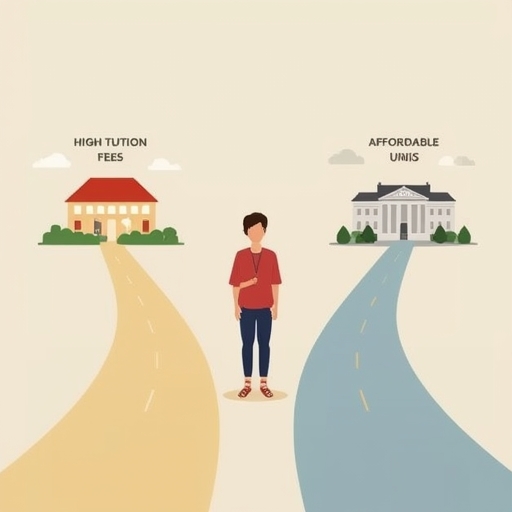
In the summer of 2017, after months of contemplation, Erika made a defining decision—to return to Germany. A close friend of hers, who had recently applied to transfer universities, encouraged her to evaluate her own options with renewed courage. Equally influential was the growing anxiety she felt regarding the exorbitant cost of American higher education and the long-term burden of student loans. After presenting her plan to her father, she was relieved to find that he now supported the idea. Impressed by her extensive research into the German education system’s public funding model, which dramatically lowers or even eliminates tuition costs, he gave her his full approval.
That autumn, Erika left the United States and began her transition by enrolling in a year-long German language program. Mastering the language was both demanding and transformative. Following that, as a non–European Union citizen, she completed a preparatory college program, which the German government requires before foreign students can enroll in certain university degrees. The coursework was rigorous, testing both her academic readiness and endurance. Yet her persistence paid off when she met the entrance qualifications for one of Germany’s most prestigious institutions—the Technical University of Munich—where she was accepted into the medical program. The contrast with her previous education in the U.S. was profound: her tuition fees amounted to only around $100 per semester, thanks to the country’s publicly funded higher education policy. She obtained a student residence permit, an essential legal step that allowed her to continue her studies without interruption.
Now approaching the final stages of her medical training, Erika divides her time between preparing for the medical board examinations and conducting research for her doctoral thesis. Beyond her academic commitments, she collaborates with Move OverSeas Now, a digital platform designed to guide others hoping to relocate and study abroad, contributing advice and insights drawn from her personal journey.
She has also participated in clinical rotations and assisted in surgical procedures—a milestone that affirms her growth from a high school exchange student into a competent medical professional in training. Outside of her studies, Erika continues to appreciate Munich’s exceptional quality of life: fresh and flavorful food, easy access to outdoor recreational activities such as hiking in the Bavarian Alps, and a cultural landscape filled with concerts, festivals, and art events. From this city, it is also remarkably affordable and convenient to travel to neighboring European destinations, enhancing her sense of connection to the continent.
Yet, despite her deep appreciation for her adopted home, Erika acknowledges that life abroad is not without difficulties. German bureaucracy can occasionally feel burdensome, particularly when facing administrative paperwork or strict regulations, and the short winter days often cast a literal and emotional gloom over the city. She is candid about missing her family in Philadelphia, noting that physical distance can heighten emotional bonds even as it challenges them. Still, she remains focused on her long-term goal: after completing her studies, she hopes to fulfill the U.S. residency requirement necessary to gain full medical licensing and the ability to practice freely in America.
Looking back, Erika recognizes that the transatlantic leap she made at nineteen represented both a logistical and emotional risk. Nonetheless, it proved to be one of the most rewarding choices of her life. Through her determination, adaptability, and commitment to personal growth, she has forged meaningful friendships and laid a solid foundation for her career and personal fulfillment. In retrospect, leaving behind the familiar comforts of home to pursue independence and education abroad was not merely a bold move—it was, for her, unequivocally the right one.
Sourse: https://www.businessinsider.com/moved-germany-study-medical-school-costs-100-per-semester-2025-12