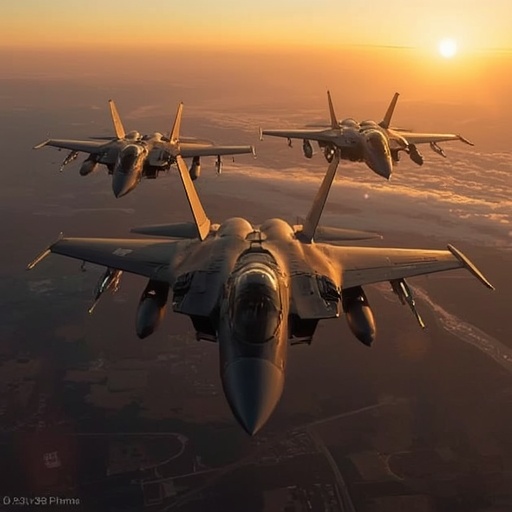
For decades, the A-10 Thunderbolt II — universally known as the Warthog — has been a symbol of steadfast reliability, providing critical close-air support and tenaciously fulfilling combat search-and-rescue responsibilities on countless missions. Its armored frame, fearsome GAU-8 cannon, and capacity to loiter over the battlefield have made it a beloved figure both within the U.S. Air Force and among ground troops who rely on its protection. Yet, time and technology inevitably transform even the most iconic tools of warfare. The Air Force has now set its sights on gradually transferring the Warthog’s vital rescue and support duties to a new generation of aircraft, specifically the agile, sensor-rich F-35 Lightning II and the powerful, multi-role F-15EX Eagle II.
This strategic handoff represents far more than simply replacing an airframe. It encapsulates the broader shift toward multi-domain integration, survivability in contested airspace, and the dynamic requirements of modern combat. While the A-10 excels in permissive environments — where control of the skies is secure — contemporary missions increasingly demand platforms capable of penetrating sophisticated defenses, networking seamlessly with other assets, and executing precision tasks within complex, rapidly evolving battlespaces. Fifth-generation fighters like the F-35 bring stealth technology, advanced data fusion, and unparalleled situational awareness that can reimagine traditional rescue and support operations, extending their effectiveness into domains inaccessible to earlier aircraft.
Nonetheless, this transition is not without its own profound challenges. The A-10’s unique blend of rugged simplicity and survivability has long served as reassurance in scenarios where ground forces required immediate, sustained backing. The aircraft’s ability to absorb damage, remain airborne, and deliver tangible firepower complemented its distinctive rapport with troops on the ground — a human connection built through shared experience. Introducing high-tech replacements means rethinking tactics, logistics, pilot training, and the emotional attachment surrounding a platform that has literally saved lives. Moreover, adapting platforms like the F-35 and F-15EX for the intricate demands of combat search-and-rescue will involve substantial doctrinal and technological recalibration to ensure they can replicate — or ideally exceed — the operational flexibility once provided by the Warthog.
Air Force leadership has underscored that modernization is essential to maintain air dominance and safeguard personnel in future conflicts where adversaries’ capabilities continue to evolve. This process, however, must balance innovation with prudence, ensuring that while embracing cutting-edge technology, the lessons and dependability embodied by the A-10 are not lost. The forthcoming era of rescue and support aviation will depend on integrating legacy wisdom with advanced systems — combining the Warthog’s spirit of persistence with the next generation’s precision and adaptability. As the Air Force phases out its venerable workhorse in favor of sleek, digital-era fighters, it stands not at an end, but at a pivotal moment that bridges half a century of proven courage with a new century of strategic vision and technological sophistication.
Sourse: https://www.businessinsider.com/air-force-delayed-a10-warthog-retirement-still-replacing-with-f35-2026-5