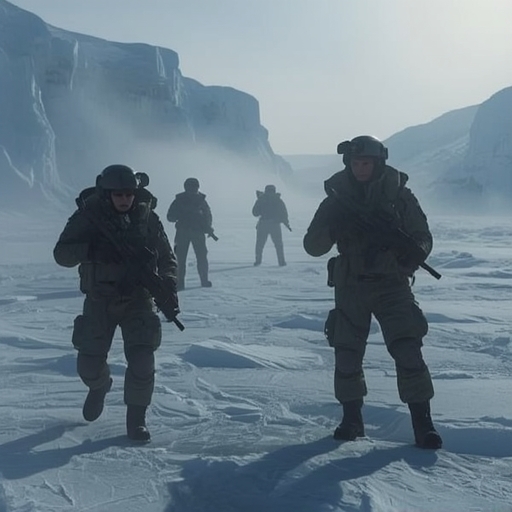
In the unforgiving expanse of the Arctic, where the temperature can plunge far below freezing and the landscape becomes an endless sea of ice and wind, even the cold itself transforms into a formidable adversary. For NATO soldiers tasked with maintaining operational readiness in such hostile conditions, the challenge extends far beyond endurance or tactical acumen—it becomes a precise battle against the natural elements. One of the most critical and often overlooked aspects of Arctic operations is the management of weapon temperature, a factor that can decisively influence success or failure when every second counts.
In these frozen frontlines, metal, circuits, and lubricants behave differently. Rifles that fire flawlessly in temperate climates may jam, seize, or lose calibration after prolonged exposure to subzero temperatures. Ammunition can misfire as propellants react sluggishly to cold, optical systems fog at the worst possible moments, and even the friction of a trigger pull can change depending on how frost interacts with the mechanism. For soldiers navigating this environment, every component of their weapon requires not just maintenance, but a complex system of temperature regulation and monitoring designed to preserve both responsiveness and reliability.
This intricate balance reveals how deeply engineering and adaptation underpin modern defense innovation. Cold-resistant materials, specialized coatings, and temperature-compensating mechanisms are not luxuries—they are survival necessities. NATO training in Arctic conditions now emphasizes not only marksmanship or endurance, but also the sophisticated art of thermal management: knowing when to warm, shelter, or shield weapons from overexposure to the cold, as well as understanding how transitions between warmth and extreme chill can cause condensation that freezes internally.
Such precision speaks to the broader truth of military readiness in extreme environments. Success depends upon the perfect harmony between human discipline, mechanical design, and environmental awareness. The Arctic, with its disorienting winds and biting stillness, serves as both testing ground and teacher, where every lapse in preparation can carry catastrophic consequences. To perform in this environment, NATO soldiers must not only exhibit strength and resolve—they must master science, engineering, and adaptability at a microscopic level. Each carefully calibrated degree of temperature becomes a symbol of survival, efficiency, and the continuing evolution of warfare in the world’s coldest theaters.
Sourse: https://www.businessinsider.com/nato-troops-cant-let-guns-get-too-warm-frozen-battlefields-2026-2