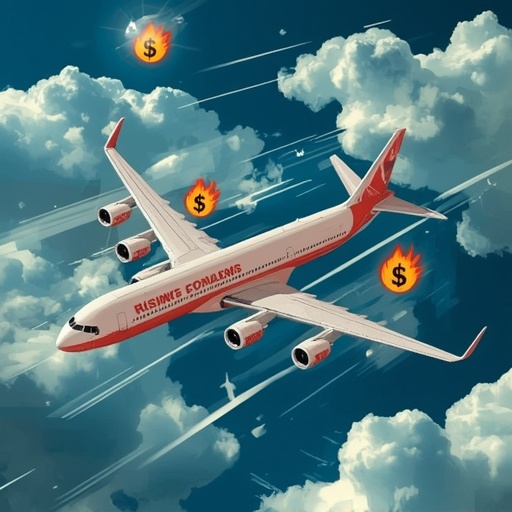
As global energy markets tighten and fuel prices continue their relentless ascent, the commercial aviation industry finds itself in a precarious position—one defined by shrinking profit margins, volatile operating costs, and an urgent need for strategic recalibration. Spirit Airlines, long recognized for its cost-conscious model, has taken a decisive step in response to this escalating fuel crisis—a move that many analysts regard not as an isolated adjustment, but rather as the first ripple in what could become a sweeping wave of industry-wide transformation.
In recent months, the sharp increase in jet fuel prices has forced carriers of all sizes to reassess financial assumptions that once underpinned their business models. Where airlines previously relied on bulk fuel hedging and incremental fare adjustments to buffer volatility, the present spike has proven so severe that traditional strategies can no longer maintain profitability. Spirit’s decision to adapt its operations and pricing structures underscores the magnitude of the challenge facing the sector. If current trends persist, other major airlines may soon be compelled to mirror these adjustments, resulting in sustained high ticket prices, reduced route flexibility, and a more concentrated competitive landscape.
For passengers, this transition will manifest not merely in rising airfare, but also in subtler shifts—tightened schedules, restrained growth in seat capacity, and cost-driven service optimizations. These responses, while necessary for corporate survival, are likely to redefine traveler expectations across domestic and international routes alike. Business travelers may face fewer low-cost alternatives, while leisure flyers—already contending with inflation in other sectors—could see air travel increasingly revert to a premium purchase rather than a commonplace convenience.
Economists contend that unless fuel markets stabilize in the near future, the aviation industry may require an even deeper structural reset, potentially accelerating investments in fuel-efficient technologies, next-generation aircraft, and sustainable aviation fuels. In the shorter term, however, airlines will have to navigate the immediate turbulence—balancing profitability with accessibility, and shareholder expectations with market realities.
For industry stakeholders, these developments signal a pivotal juncture: one where strategic foresight, operational agility, and fiscal prudence may determine which carriers emerge resilient, and which struggle to stay aloft. The skies ahead promise both uncertainty and opportunity—but one truth remains clear: as fuel costs soar, every mile flown will test not only the engineering of aircraft but the ingenuity of the business models that keep them airborne.
Sourse: https://gizmodo.com/more-carriers-expected-to-follow-in-spirits-footsteps-as-fuel-crisis-slashes-airline-profits-in-half-2000768495