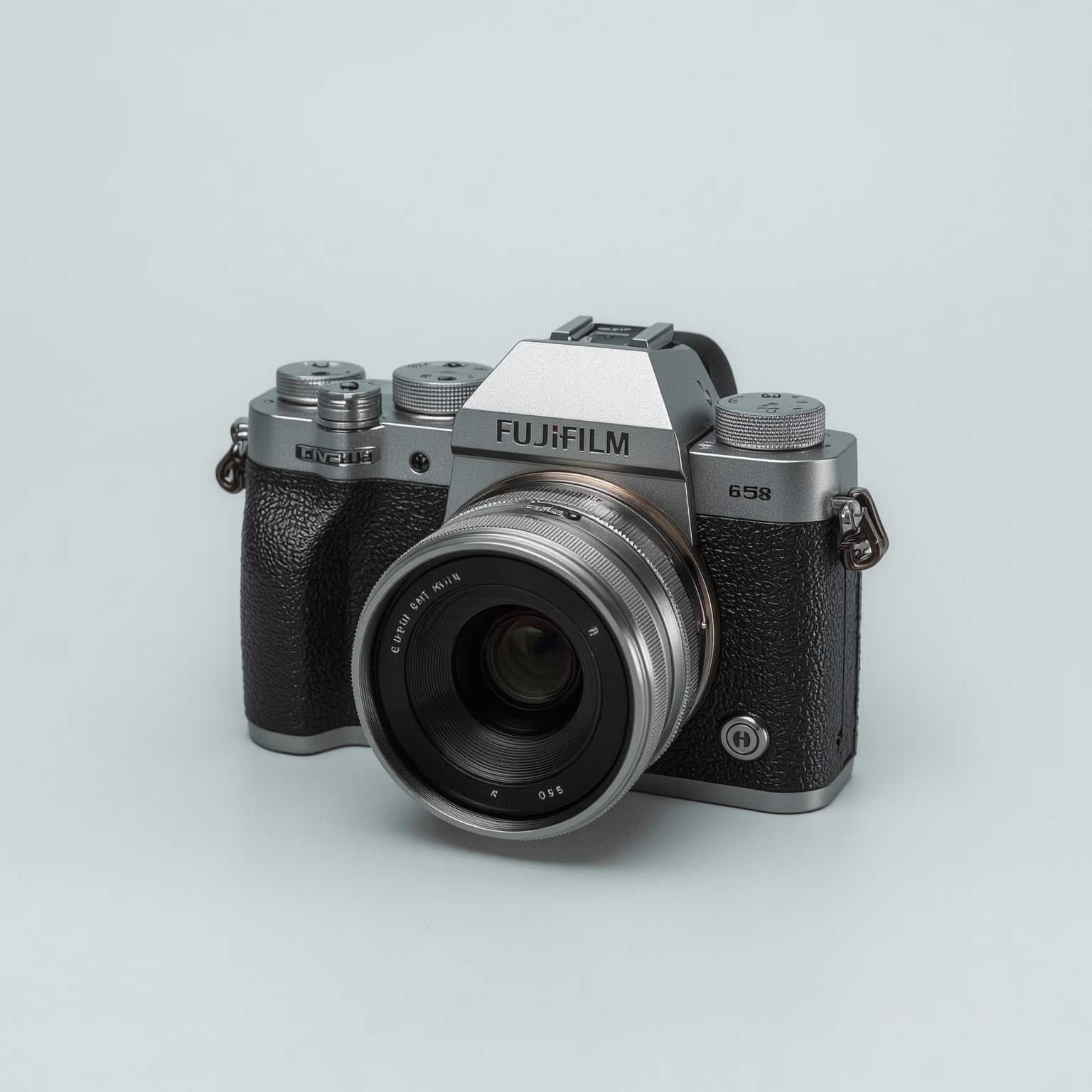
Fujifilm has officially revealed the third generation of its popular entry-level interchangeable-lens camera, the X-T30 series, expanding the legacy of a model that has long appealed to enthusiasts and aspiring creators. The initial X-T30, which launched back in 2019, quickly earned attention for bringing much of the advanced imaging performance of Fujifilm’s higher-end models into a compact and accessible form. Two years later, the company introduced the X-T30 II in 2021, offering only slight refinements that kept its technical foundations largely intact. Now, with the newly announced Fujifilm X-T30 III, the brand continues to evolve the series in a measured but meaningful way. This model does not represent a radical reinvention of the camera concept—that same 26.1-megapixel X-Trans CMOS 4 image sensor remains at its core—yet the inclusion of the company’s latest and notably more capable X-Processor 5 significantly enhances its overall responsiveness, efficiency, and creative flexibility. Together, this established sensor and new processor combination provide a familiar yet distinctly upgraded photographic experience.
One of the most visible changes on the X-T30 III lies in the redesigned control layout. The traditional mode dial that topped the previous generation has been replaced by a dedicated Film Simulation dial—an addition reminiscent of the control scheme found on the recently released X-T50 from the same family. This thoughtful design shift underscores Fujifilm’s longstanding commitment to celebrating the look and feel of analog photography in a digital era. By simply turning the new dial, users can instantly select from an impressive range of twenty distinct film simulation profiles, each meticulously engineered to replicate the signature tones, contrast, and color palettes of classic Fujifilm films. These options encompass both vivid color modes and refined monochrome treatments for moments when a black-and-white aesthetic better suits the creative mood. In addition to those preset looks, the dial provides three customizable positions that photographers can program with their own tailored styles, adjusting subtle parameters such as grain intensity, hue, highlight response, and saturation levels. This balance between nostalgic emulation and individualized control exemplifies Fujifilm’s knack for merging traditional artistry with modern convenience.
Although the X-T30 III continues to position itself primarily as a stills-oriented camera—a role it embraces through its impressive burst speeds of up to 20 frames per second with the electronic shutter—the upgraded processor introduces a range of video improvements that expand its versatility. Creators can now record exceptionally detailed 10-bit 6.2K videos at a smooth 30 frames per second, providing increased color depth and post-production flexibility. Furthermore, for those who prefer higher frame rates, the camera can deliver crisp 4K footage at up to 60 fps, while the Full HD mode allows for ultra-slow-motion recording at 240 fps, offering cinematic flexibility for capturing fast-moving subjects. These refinements make the X-T30 III more balanced between the demands of photographers and videographers, ensuring that users are not forced to compromise between portability and performance.
Consistent with previous entries in the X-T30 line, this new version does not incorporate in-body image stabilization—a feature still reserved for higher-tier models such as the $1,399 X-T50. However, the X-T30 III compensates with several intelligent advancements that elevate its autofocus performance. Its focusing system now operates with faster precision and features enhanced subject detection that leverages artificial intelligence to identify and track a broad spectrum of subjects. The camera can prioritize facial and eye recognition during portrait work and seamlessly follow animals, birds, vehicles, trains, insects, and even aircraft or drones, maintaining accurate focus across complex and rapidly changing scenes. These practical improvements translate to a more intuitive shooting experience, especially for those who rely on the camera’s ability to react to unpredictable movements.
Additional refinements extend to day-to-day usability. Battery life has been notably optimized, now accommodating up to approximately 425 still shots in the power-saving Economy Mode, in which the system scales back certain performance aspects such as autofocus speed and the brightness of the tilting LCD screen. Fujifilm has also carried forward the convenient built-in pop-up flash from earlier models, preserving an element of immediacy for casual or low-light shooting situations. For users who want to go beyond digital sharing and hold tangible reminders of their work, the X-T30 III integrates seamlessly with Fujifilm’s Instax Link printers. Through this feature, photographers can wirelessly transmit images directly to a compatible printer and crop them conveniently to match either the square or wide Instax film formats—an appealing fusion of modern imaging technology and instant print nostalgia.
The Fujifilm X-T30 III is set to reach consumers in November 2025, though preorders have already opened at a starting body-only price of $999.95 through authorized retailers such as B&H Photo. Fujifilm is offering three elegant color schemes—an all-black variant for understated minimalism, a classic silver-and-black combination, and a refined charcoal silver edition for those seeking a distinctive aesthetic. While the base price reflects roughly a $100 increase over the X-T30 II, which entered the market at $900, the improvements in processing power, interface, and feature set justify the premium. For buyers interested in a ready-to-shoot configuration, the company will also release a bundle pairing the X-T30 III with its new XC 13–33mm f/3.5–5.6 OIS lens, available in mid-December 2025 at a combined cost of $1,149.95. Altogether, the X-T30 III reaffirms Fujifilm’s reputation for crafting compact yet highly capable cameras that unite heritage-inspired design with cutting-edge digital performance, ensuring this latest iteration continues to resonate with photographers seeking both practicality and creative inspiration.
Sourse: https://www.theverge.com/news/805200/fujifilm-x-t30-iii-digital-camera-film-simulation-6k-ai-subject-detection