Each year, when the holiday season begins to glimmer on the horizon, my fifteen-year-old sister sends our family a meticulously curated and eagerly anticipated Christmas list. This annual ritual has evolved into far more than a simple catalog of desired gifts — it now serves as a revealing cultural snapshot, offering me a fascinating glimpse into the hallways, classrooms, and social circles of today’s Gen Alpha high schoolers. Through her selections, I gain a vivid sense of what currently defines teenage style and aspiration, shaped by the ever-changing interplay between nostalgia and novelty.
As the youngest of three sisters, my sibling adheres to a family tradition: she emails or texts the list to our mother, our eldest sister, and me, entrusting us to divide the purchases among ourselves however we deem appropriate. Over the years, I have come to expect her lists to be impressively thorough — often itemized down to the precise size, shade, and model number — reflecting her combination of teenage enthusiasm and acute attention to detail. Yet, this year’s compilation managed to surprise me in an unexpected way. While scrolling through her wish list, I found myself pausing repeatedly at the sight of brands and products that my thirty-year-old sister and I — now twenty-six — had cherished during our own adolescence. Fashion may indeed operate in cycles, but witnessing its return in real time, embodied through the tastes of one’s younger sibling, offers an oddly humbling sensation. There’s a touch of wonder in it, intertwined with the faint reminder that time has moved on, and suddenly one’s adolescence feels almost vintage.
Because my sister has been passionate about dance for many years, her inclusion of performance-friendly activewear came as no surprise. Her list featured the familiar heavy-hitters of athleisure culture — Lululemon, Alo Yoga, and Nike — all brands synonymous with the sleek, functional, and Instagram-ready aesthetic so beloved by her generation. However, what caught me completely off guard were the nostalgic echoes buried among her requests: fashion relics resurrected from the mid-2000s, names and products I hadn’t heard uttered since my own middle school days. There it was — Victoria’s Secret’s classic vanilla-scented body mist, a spritz that once defined teenage glamour; flared leggings straight out of our Y2K wardrobes; and even the unmistakably embellished Ed Hardy sweatsuits that once lit up mall displays and celebrity paparazzi shots alike.
To my amazement, she wasn’t alone in revisiting those early-2000s icons. Hollister, with its signature surf-inspired logo and moody store lighting, has found renewed favor among teenagers. In fact, both Hollister and UGG are experiencing remarkable commercial revivals — their latest quarterly reports boast double-digit year-over-year growth in 2025, according to Piper Sandler’s semiannual *Taking Stock with Teens* survey published last April. The data points to a striking resurgence of nostalgia-driven consumerism: Gen Alpha teens are infusing their wardrobes with once-retired symbols of millennial youth culture, turning retro into redefined relevance. My sister exemplifies this shift, her list requesting multiple versions of UGG footwear — from the compact mini boots to plush slippers and the trendy Lowmel edition — alongside a very specific Hollister puffer jacket in, predictably, pink.
As I reviewed her list, I couldn’t help but feel waves of nostalgia mixed with curiosity. I remembered my own teenage obsessions: for instance, the Nike Elite backpack, a coveted status symbol that nearly everyone sported during my school years. Yet amid these familiar echoes were newer names reflecting the rapid-fire evolution of youth fashion in the digital age. Fast-fashion label PrettyLittleThing and Kim Kardashian’s shapewear brand Skims both featured prominently, signaling how quickly social media visibility can turn modern brands into must-have staples for a generation constantly consuming online style inspiration. Interestingly, she also listed the Moon Boot — a distinctly retro, space-age shoe first popularized in the 1970s — showing that even decades-old designs can reemerge as niche fashion sensations.
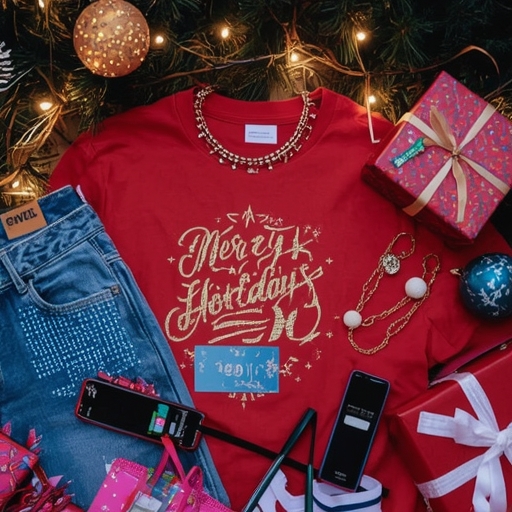
Her comprehensive wish list this year reads like a cross-section of contemporary teenage desire filtered through a prism of nostalgia and media influence. Among the items she longs to find beneath our Christmas tree are a pink iPad; matching light pink Beats Studio Pro headphones; several Lululemon sets with coordinating accessories like backpacks and keychains; form-fitting Skims tops; athletic gear from Nike and Alo; and the now-legendary Stanley tumbler in soft pink. Fragrance also features heavily, with requests for Victoria’s Secret’s Bare Vanilla mist, Burberry’s floral Goddess perfume, and Carolina Herrera’s Good Girl Blush. Jewelry and accessories — a Pandora bracelet and cozy UGG shoes in multiple styles — complement her more nostalgic picks, such as Ed Hardy tracksuits in an array of colors and pastel Moon Boots. She even included a deer-print blanket and a box of Ferrero Rocher chocolates, small comforts rounding out her ensemble of high-end and sentimental desires.
Finally, in a brief note at the bottom, my sister added a single caveat that encapsulates her blend of confidence and thoughtfulness: we are under no obligation to purchase *everything* on the list. That small disclaimer — perhaps half serious, half playful — brought a smile to my face. It epitomized the spirit of her generation: aware, expressive, unabashedly nostalgic, and yet refreshingly self-aware. And as much as her requests highlighted the cyclical nature of fashion, they also revealed something deeper — a universal truth about how every generation, in reinterpreting the past, defines its own version of cool.
Sourse: https://www.businessinsider.com/gen-alpha-teen-christmas-list-y2k-brands-ed-hardy-hollister-2025-12