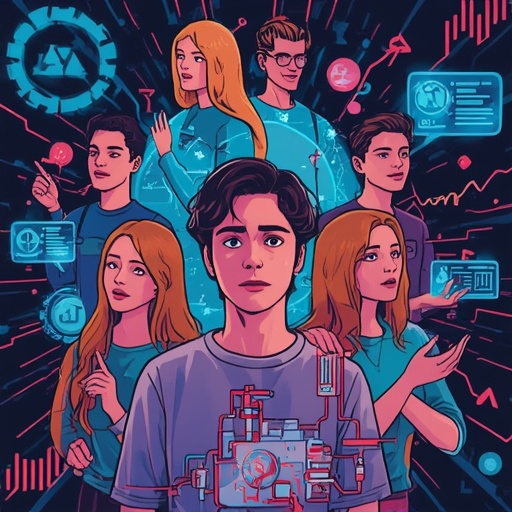
For years, Gen Z—the hyper-connected generation that matured amid the constant hum of the internet—has been celebrated for its openness to innovation and enthusiasm for technological progress. Yet a striking cultural shift is now emerging: the same group that passionately embraced new apps, disruptive start-ups, and algorithm-driven creativity is beginning to express deep unease about the accelerating presence of artificial intelligence in daily life. What once seemed exciting and full of possibility is rapidly becoming a topic of tension, introspection, and resistance.
At the heart of this change lies a growing skepticism regarding the balance between technology and humanity. Many members of Gen Z view AI not as an empowering tool but as an intrusive counterpart that may erode originality, authenticity, and personal privacy. They worry that automated systems capable of producing music, writing, art, or even entire conversations threaten to blur the boundaries between human thought and machine imitation. The fear is not merely technological—it is existential. In an era when identity is curated through digital expression, the increasing involvement of AI in creative spaces raises unsettling questions about what it truly means to be ‘original.’
Moreover, this generational anxiety extends beyond creative integrity. Discussions within workplaces, universities, and online communities reflect a collective concern over automation’s long-term impact on job security. Entry-level roles, freelance creative positions, and digital marketing tasks—once viewed as stepping stones for young professionals—are now being reshaped or even replaced by intelligent systems. What was promised as efficiency is, for many, beginning to feel like displacement. The transformation that once spurred optimism now generates apprehension toward an uncertain future of work.
Privacy, another cornerstone of Gen Z’s digital life, has also become a growing point of contention. After years of navigating social networks where personal information was readily shared, younger users are realizing that large-scale data accumulation gives immense power to algorithms capable of predicting behavior, crafting targeted content, and subtly influencing choices. When AI learns from these vast digital footprints, the line between convenience and surveillance becomes dangerously thin. It is perhaps no surprise, then, that more young individuals are calling for stronger transparency, regulation, and ethical accountability in AI development.
What makes this backlash particularly significant is that it does not stem from simple technophobia. Instead, it reflects a deeper desire for technological empathy—a belief that innovation should reinforce human values rather than undermine them. Gen Z’s critique invites society to reimagine the relationship between creativity and computation, to prioritize the emotional, ethical, and communal aspects of human experience that machines cannot replicate. Such conversations hint at a generational demand for balance—progress without exploitation, intelligence without manipulation, and advancement without erasure of the distinctly human touch.
The implications of this evolving attitude reach far beyond social media discourse. For educators, employers, and technology leaders, the pressing challenge is restoring confidence in a digital ecosystem that feels increasingly opaque and detached. Rebuilding trust will require more than promises of innovation; it will demand visible frameworks for fairness, inclusivity, and collaboration between human ingenuity and artificial power. Ultimately, Gen Z’s growing ambivalence toward AI may prove to be not a rejection of progress but a call for a more conscientious form of it—one that ensures our creativity, privacy, and humanity remain at the core of technological evolution.
Sourse: https://www.businessinsider.com/gen-z-graduates-ai-backlash-commencement-speeches-anxiety-job-market-2026-5