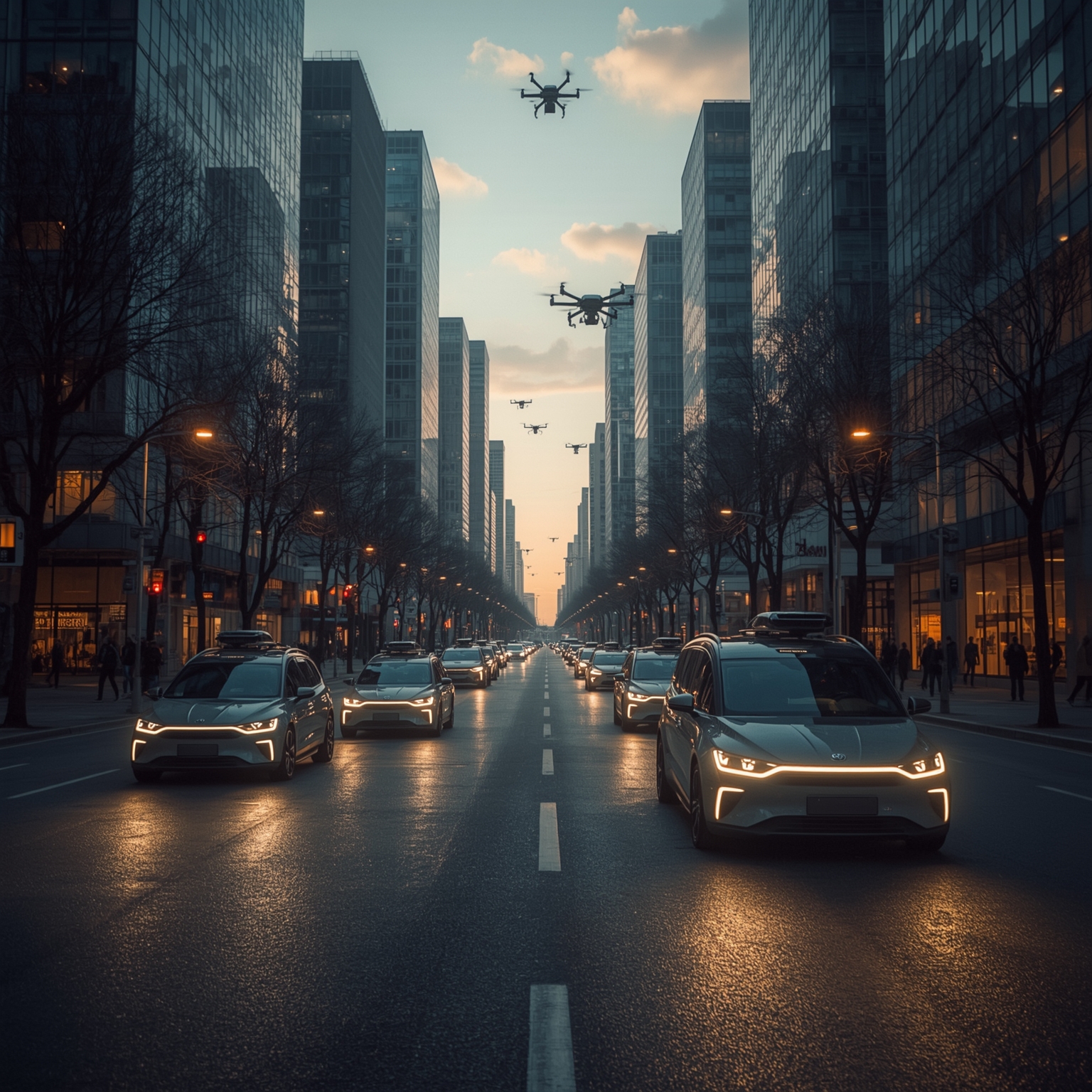
Autonomous robotaxis and self-driving delivery robots, once considered futuristic novelties, are no longer confined to laboratories or controlled test tracks—they now glide alongside traditional vehicles and pedestrians on streets across the United States. Yet, while these sightlines of robotic movement offer a glimpse into a transformative future for logistics and transportation, realizing such large-scale autonomy remains an extraordinarily expensive ambition. The journey from small-scale pilot projects to widespread deployment demands vast sums of capital, advanced infrastructure, and years of sustained investment before such technologies can become fully ingrained in everyday life.\n\nThis week, leading investors were reminded of these steep financial requirements as three major players in the gig economy—Uber, Lyft, and DoorDash—released their quarterly earnings reports. Among the recurring themes discussed by executives was a shared vision for expanding autonomous vehicle programs and, just as prominently, a collective reckoning with the substantial financial commitments those ambitions entail. Each company’s leadership underscored that transforming self-driving prototypes into a commonplace experience throughout the American landscape would require not just technological breakthroughs but also a willingness to devote immense financial resources toward development, deployment, and maintenance.\n\nPerhaps the most striking example of this renewed push came from DoorDash, the food delivery platform that has become a fixture in urban life. On Wednesday, the company disclosed a bold revision to its near-term spending plans, announcing its intention to allocate “several hundred million dollars more” than previously anticipated toward strategic initiatives—particularly the continued advancement of its autonomous delivery systems—by the year 2026. This dramatic increase in planned investment signaled not only DoorDash’s confidence in the potential of robotics to redefine last-mile logistics but also its acknowledgment that large-scale automation cannot succeed without massive upfront financial backing.\n\nA centerpiece of DoorDash’s automation efforts is its compact robotic courier known as Dot—a stroller-sized delivery robot introduced earlier this year. Dot is engineered to travel independently along sidewalks and bike lanes, deftly navigating complex urban environments to bring meals and goods directly to customers. According to CEO Tony Xu, integrating such technology into daily operations represents a long-term endeavor rather than a quick transformation. During the company’s earnings call, Xu emphasized that this evolution would not occur overnight; rather, it necessitates carefully planned, upfront investments to build hardware, enhance software intelligence, and establish reliable operational frameworks. Despite these forward-looking ambitions, the company’s stock price suffered a steep decline—falling 17% on Thursday, marking the most significant one-day drop in DoorDash’s history—after investors reacted to its expansive and costly roadmap.\n\nThe theme of heavy investment extended through the ride-hailing sector as well. Both Uber and Lyft, long-time rivals that have become synonymous with the modern mobility revolution, acknowledged that the path toward profitable autonomous fleets remains challenging and financially demanding. For Lyft, this commitment is already taking material form. The company, which maintains a strategic partnership with Alphabet’s Waymo, revealed its plans to build an operational depot in Nashville. This facility will serve as a centralized hub to charge, maintain, and store its autonomous vehicles available to Lyft passengers in the region. At an estimated cost ranging between $10 million and $15 million, according to CFO Erin Brewer, the depot exemplifies the substantial physical infrastructure required to support a functioning self-driving network. CEO David Risher further elaborated during the earnings call that while these initial expenses may seem burdensome, they are indispensable to ensuring the reliability, efficiency, and long-term scalability of driverless systems. As he put it, investment in tangible assets is unavoidable, yet the company remains optimistic about the long-term unit economics—an indication that the returns could ultimately justify the upfront costs.\n\nUber’s leadership articulated a similar perspective. CEO Dara Khosrowshahi admitted that, at present, Uber’s self-driving endeavors are still a money-losing proposition. Nevertheless, the company continues to view automation as a strategic cornerstone of its future operations. On Tuesday’s earnings call, Khosrowshahi reiterated Uber’s intention to steadily increase the availability of its driverless cars, thereby stimulating customer demand and positioning the company to benefit from economies of scale as the technology matures. The strategy aligns with Uber’s broader pattern of pursuing growth through calculated investment—whether in robotaxis, micromobility offerings like the Moto service (which enables motorcycle-based rides in select international markets), or other emerging mobility verticals. Khosrowshahi suggested that although Uber could theoretically shift focus toward immediate profitability, the greater challenge lies in balancing short-term earnings with long-term innovation. According to him, the company’s goal is to nurture both—prioritizing growth through innovation while ensuring that profitability remains attainable once the necessary groundwork has been laid.\n\nIn sum, the collective commentary from Uber, Lyft, and DoorDash reveals a singular truth about the race toward autonomy: while the promise of driverless vehicles—be they delivery robots zipping along sidewalks or robotaxis ferrying passengers across cities—continues to captivate public imagination, the path to widespread reality is paved with immense financial and operational hurdles. The companies at the forefront of this transformation appear aligned in their belief that substantial short-term expenditures are the price of admission to a technological revolution that, once matured, could redefine how goods and people move through the urban landscape.
Sourse: https://www.businessinsider.com/uber-lyft-doordash-more-spending-needed-for-self-driving-tech-2025-11


