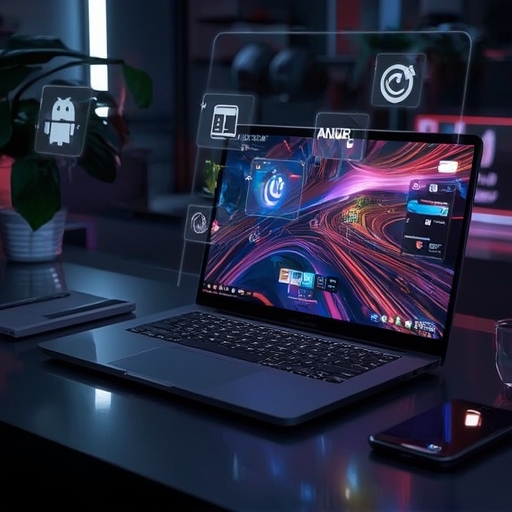
In a development that has captured the attention of technology enthusiasts and industry analysts alike, Google appears to have unintentionally provided a tantalizing preview of a long-rumored innovation—Android running natively on personal computers. According to recently surfaced information, a bug report seems to have unveiled details surrounding a new operating system codenamed ‘Aluminium OS,’ a hybrid environment designed to merge the distinctive capabilities of ChromeOS and Android into a single cohesive platform.
This revelation suggests a potential transformation in how users might one day interact with their devices, bridging the traditional division between mobile and desktop computing. Imagine the seamless transition of data, apps, and workflows between smartphones, tablets, laptops, and PCs—an experience that would blur the boundaries of current ecosystems. The inadvertent leak, while brief in its specifics, opens an extensive conversation about Google’s future roadmap and the direction of cross-platform productivity tools.
Aluminium OS, based on the limited clues available, seems to integrate the adaptability and app-rich environment of Android with the stability and security frameworks that have made ChromeOS a preferred choice for education and enterprise solutions. Such a union could offer users the simplicity of Android’s interface and expansive app library, enhanced by ChromeOS’s efficient multitasking, file management, and cloud synchronization features. If executed well, this could redefine both personal and professional computing environments.
The implications for enterprises are particularly significant. Businesses striving for unified device management and cross-functional compatibility between operating systems could benefit immensely. For instance, developers could create and test mobile applications directly on desktop hardware without the need for emulators, while employees could run both Android-native and web-based applications simultaneously on the same device. This integration hints at a future where hardware distinctions fade away in favor of a shared, fluid digital workspace.
For end-users, the appearance of Aluminium OS heralds a vision of computing that prioritizes versatility and continuity. Whether editing documents, managing mobile apps, or browsing the web, the experience could be designed to follow the user seamlessly across contexts and devices. Picture an environment where you begin editing a presentation on your phone, continue refining it on a Chromebook, and finalize it on a desktop PC—all without compatibility concerns or data fragmentation.
While none of these details have been officially confirmed by Google, the inadvertent nature of the revelation makes it all the more intriguing. Historically, accidental disclosures have occasionally hinted at significant internal projects in development. If Aluminium OS indeed becomes a reality, it could stand as Google’s most decisive step yet toward unifying its mobile and desktop ecosystems. The potential impact on user expectations, software standards, and competing operating systems could be profound, sparking a new wave of innovation across the industry.
In short, what began as a seemingly minor leak may actually mark the beginning of a major paradigm shift—one where ChromeOS and Android cease to exist as separate worlds, giving rise instead to a unified platform that redefines how technology interacts with human productivity. Whether this evolution will fulfill its promise remains to be seen, but one thing is clear: the concept of Aluminium OS has already ignited imaginations and set the stage for a reimagined, interconnected future of computing.
Sourse: https://www.theverge.com/news/869142/google-leak-aluminium-os-android-pc-bug-report-video