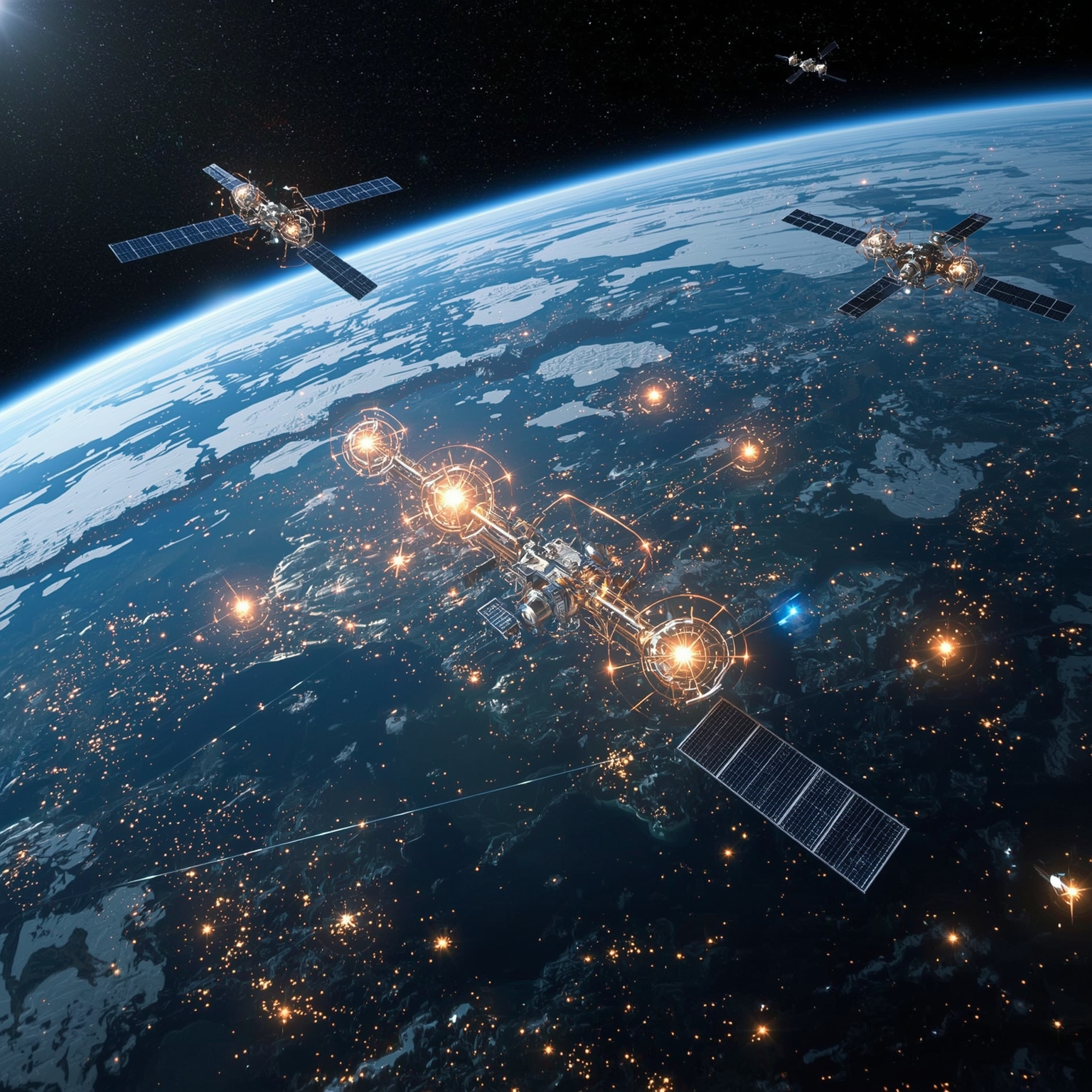
Google has unveiled an exceptionally ambitious new research initiative that attempts to break through the physical and environmental limits currently constraining the operation of energy-intensive artificial intelligence data centers on Earth. In a daring act of technological imagination, the company has proposed a plan to launch its proprietary AI processing hardware—its advanced Tensor Processing Units, or TPUs—into orbit aboard solar-powered satellites. This concept, which Google has formally introduced under the aptly chosen title *Project Suncatcher*, represents a genuine ‘moonshot’ endeavor: an experimental exploration of whether AI computation might one day thrive far beyond terrestrial boundaries.
In principle, if this project ever transitions from conceptual design to full-scale implementation, it could redefine what a data center is and where it can exist. Rather than continuing to build vast server farms housed in facilities that consume enormous quantities of electricity and cooling resources, Google envisions a network of orbital data centers operating continuously in the vacuum of space. Because these satellites would rely exclusively on solar radiation—an effectively boundless and renewable stream of energy—they could theoretically function without interruption, drawing power both during daytime and through the otherwise energy-starved nights that plague ground-based systems. The company’s ultimate aspiration is to capture this seemingly limitless supply of clean, stable energy to support its rapidly accelerating AI research and development, without exacerbating the environmental and economic challenges that accompany the expansion of its Earth-bound infrastructure, including elevated greenhouse gas emissions from power plants and increased utility costs associated with surging electricity demand.
In a blog post introducing the venture, Travis Beals, Google’s Senior Director for Paradigms of Intelligence, articulated this vision succinctly, emphasizing that in the years ahead, outer space might emerge as the most advantageous environment for scaling AI computation. Parallel to this announcement, Google has also released a preliminary research paper, distributed as a *preprint* and therefore not yet subjected to independent peer review, that documents the progress and the technical reasoning guiding its team’s early efforts.
Transforming this extraordinary vision into a functioning system will, however, require overcoming numerous formidable engineering obstacles. As outlined in both the blog and the accompanying paper, Google foresees deploying satellites carrying specialized TPUs, each equipped with solar panels capable of generating electricity with unprecedented efficiency. These panels could potentially deliver up to eight times the energy output that identical panels would achieve under Earth’s atmospheric and rotational conditions. Such productivity gains could theoretically translate into AI operations of remarkable scope and resilience.
Among the many obstacles, perhaps one of the most critical is the challenge of maintaining sufficiently robust and high-capacity communication between orbiting satellites. For these space-based data centers to compete effectively with terrestrial facilities, they must exchange information at breathtaking speeds—on the order of tens of terabits per second. This bandwidth requirement implies the need for innovative strategies in satellite configuration. Google’s proposed solution involves orchestrating constellations of satellites that maintain extraordinarily close proximity to one another, potentially separated by distances measured in mere kilometers or even less. Achieving and sustaining such tight formations would be unprecedented in current orbital operations. Yet this approach, while technologically promising, would also amplify concerns about space traffic management and the escalating presence of orbital debris, as collisions or mechanical malfunctions could multiply the existing risks associated with space junk.
Another major technical hurdle involves ensuring that Google’s TPUs can endure the intense conditions of the extraterrestrial environment, particularly radiation levels far higher than those encountered on the planet’s surface. To address this, the company has conducted extensive radiation resilience testing on its Trillium generation of TPUs. Preliminary results indicate that these chips can withstand a total ionizing dose consistent with a five-year mission duration without suffering catastrophic, permanent performance failures—a promising but still early indication of their readiness for space deployment.
Financial feasibility remains another determinant of success. At present, the expense of manufacturing, launching, and maintaining such sophisticated hardware in orbit would be prohibitively high. Nevertheless, Google’s internal cost analysis provides a cautiously optimistic projection: by the mid-2030s, the combined expenditure of launching and operating a space-based AI data center may become approximately comparable—when measured on a per-kilowatt-year basis—to the energy costs incurred by equivalent facilities on Earth. This potential parity underscores the long-term viability of the project, should technological advances in launch efficiency and satellite manufacturing continue apace.
In support of its research, Google has further disclosed plans for a collaborative mission with Planet, a private satellite imaging company. The partnership aims to deploy a small number of prototype satellites as early as 2027, a step designed to test the performance, stability, and durability of Google’s AI hardware under real orbital conditions. If successful, these early flights could mark the first tangible step toward a new frontier in computing—one in which the core of artificial intelligence operations might one day orbit above the Earth, powered perpetually by the light of the sun.
Sourse: https://www.theverge.com/news/813894/google-project-suncatcher-ai-datacenter-satellites


