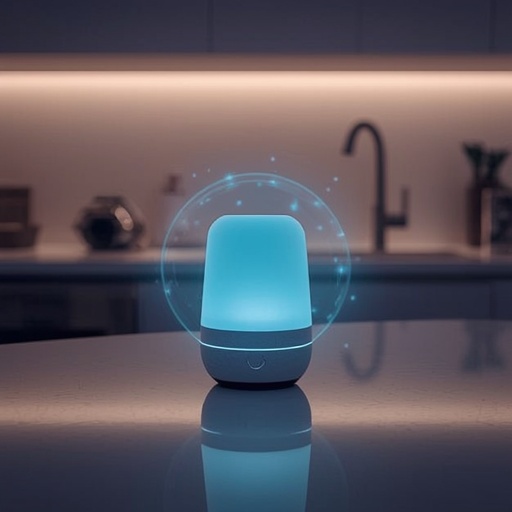
Over the last several years, smart speakers have found themselves in search of a meaningful transformation—an identity that extends beyond their earliest, most basic uses of playing music, setting reminders, or dimming household lights. For a long time, these compact devices seemed to have reached an innovation plateau, struggling to justify their continued presence on countertops and nightstands. The arrival of advanced artificial intelligence, however, appeared to offer a rejuvenating promise: a new era in which these voice-driven gadgets could evolve from mere conveniences into truly intelligent household companions.
That expectation now meets its latest test with Google’s long-awaited reentry into the smart speaker market. Following Amazon’s launch of a refreshed Alexa-powered lineup last fall, it is finally Google’s opportunity to demonstrate progress. Introducing the new Google Home Speaker—the company’s first completely redesigned model in six years and the first to carry the distinction of being “built for Gemini,” Google’s sophisticated new AI framework. This product marks more than just a hardware refresh; it symbolizes Google’s renewed seriousness about the smart home, a realm the company appeared to neglect in recent years.
At a retail price of $99.99, the Home Speaker emerges as a carefully balanced piece of consumer technology. It occupies the middle ground perfectly—large enough to deliver impressive sound yet compact enough to fit effortlessly into diverse living spaces. Its form strikes a balance between subtlety and character, offering an aesthetic that complements contemporary interiors without clamoring for attention. With color options like soothing jade, energetic berry, refined porcelain white, and understated hazel black, Google clearly aims to blend technology and décor. The jade hue, in particular, was designed with a subdued elegance that merges seamlessly into a variety of environments—from a minimalist kitchen counter to a softly lit bedroom shelf.
Physically, the Home Speaker presents itself as a slightly flattened sphere roughly the size of a softball, its surface wrapped in tastefully textured mesh fabric. There are no intrusive physical buttons to disrupt its sculptural simplicity. Instead, its control scheme relies on touch-sensitive areas that allow users to pause, play, or adjust volume with effortless taps. The integration of faintly glowing white dots provides subtle reassurance that each gesture has been recognized. A ring of light encircles the device’s base, serving as an activity indicator that glows discretely when the unit is active. Impressively, this illumination can be turned off entirely through settings—a thoughtful inclusion for those who prefer an unobtrusive presence during late-night listening sessions.
Functionally, the design exhibits a clear sense of user-centered thinking, though not without a few shortcomings. One noticeable omission is the lack of a color-matched power cable—a detail competitors like Apple’s HomePod Mini and Amazon’s Echo Dot Max have already perfected. Furthermore, while the speaker now adopts USB-C connectivity for its power brick, the cable remains permanently attached to the unit, limiting flexibility for those who might want an extended reach or an easy replacement in the event of wear.
When it comes to performance, the Home Speaker delivers a listening experience that balances expectation with restraint. Its single full-range driver cannot replicate the depth or fullness of sound found in Google’s earlier Nest Audio—which utilized both a woofer and a tweeter—but it compensates with broader sound dispersion. The result is genuine 360-degree audio that fills small to medium rooms evenly. Side by side comparisons reveal slightly thinner bass tones, yet mids and vocals remain articulate and pleasantly clear. In stereo pairing tests, the speaker performed admirably; linked together beneath a television, two units produced vibrant sound with commendable precision. High-energy pop tracks came through clean and resonant, though low-end reproduction unsurprisingly leaned mild and restrained, as expected from a device of this compact size.
Connectivity, one of the Home Speaker’s defining advantages, demonstrates Google’s desire to make it a functional centerpiece of the broader household ecosystem. It serves as both a Matter controller and a Thread border router, ensuring compatibility across contemporary smart home devices. Additionally, it is among the first of Google’s audio products able to pair directly with the Google TV Streamer, allowing synchronized playback that approximates spatial audio when two speakers are used in tandem. In trials, the sound remained well-synced with video streams and stable even during high-bandwidth usage, though certain types of content—like live sports commentary—occasionally felt acoustically constrained compared to premium home theater systems.
On the voice recognition front, Google has clearly invested in refining responsiveness. Three far-field microphones, complemented by a neural processing unit that mitigates ambient interference, allow the Home Speaker to detect commands across rooms and in noisy situations with high accuracy. It outperformed Apple’s HomePod Mini in microphone sensitivity, though Amazon’s Echo Dot Max retained a slight edge in responsiveness under loud playback conditions.
Yet hardware excellence tells only half the story. The soul of this new speaker lies in Gemini for Home—Google’s next-generation AI assistant designed to replace traditional command-and-response behavior with something more nuanced and conversational. The company envisioned a voice interface that not only understands everyday instructions but also interprets intention and emotional context. In reality, Gemini’s performance is a fascinating mixture of promise and imperfection. While it is more intuitive and capable of natural dialogue than the former Google Assistant ever was, it still suffers from noticeable latency. Comprehending complex, multi-step requests such as adjusting the thermostat, dimming lights, and turning off select devices often took several seconds to process—sometimes up to ten—lagging behind Amazon’s optimized Alexa Plus, which can manage similar sequences in under three.
In genuine conversational use, Gemini shines with moments of brilliance. The AI demonstrates impressive interpretative skill, handling commands phrased organically, such as “I’m cooking and getting too warm,” with contextual precision by lowering the temperature. However, it falters in memory retention. Pause too long, and it forgets mid-task, vanishing from context like a fleeting thought—a limitation the optional Gemini Live mode attempts to mitigate by keeping the conversational thread persistent. Disappointingly, this extended chat function exists behind a subscription paywall as part of Google’s Premium plan, signaling a new monetization direction for voice-based AI services.
In terms of knowledge and reasoning, Gemini situates itself above prior iterations of Google’s assistants. It answers complex event queries with contextual awareness, even managing to describe recent football matches intelligently without revealing spoilers. Yet, as a domestic organizer, it occasionally feels unreliable. Tasks such as adding grocery items or responding mid-recipe sometimes result in unexpected delays or secondary verification requests, undermining its role as a hands-free helper.
Compounding the uncertainty are occasional factual or behavioral inaccuracies common in large language models. Gemini sometimes delivers confident but incorrect responses or misinterprets song requests, substituting the wrong titles even after being corrected. At other times, it invents names during voice customization questions, further highlighting its unfinished software state. While these errors may amuse rather than frustrate, they emphasize how far Google must still travel before its household AI achieves the dependability its hardware already exhibits.
Ultimately, after extensive testing, comparisons with rivals reveal a clear hierarchy: while Gemini demonstrates richer conversational inference than Alexa Plus, Amazon’s assistant retains the upper hand in stability, contextual understanding, and automation setup. Google’s system, though more personable and endowed with appealing voice options, still struggles to maintain coherence in extended dialogues. Even so, the absence of advertisements—a feature Amazon has controversially integrated into some Echo displays—grants Google an element of refinement that many users may appreciate.
In summary, the new Google Home Speaker represents a thoughtful fusion of aesthetic sophistication, technological capability, and ecosystem awareness. As hardware, it firmly establishes Google’s competence in producing devices that are as beautiful as they are functional. But the company’s ambition to merge that craftsmanship with the intelligence of Gemini for Home remains partly unfulfilled. Despite meaningful advances in conversational AI and household awareness, response delays, occasional unreliability, and paywalled features prevent Gemini from fully realizing the seamless, intuitive future it promises. Consequently, this elegantly crafted speaker stands as a symbol of transition—an impressive vessel awaiting a more capable mind to match its potential, and a reminder that, for now, the hardware may have outpaced the intelligence designed to bring it to life.
Sourse: https://www.theverge.com/tech/959503/google-home-speaker-review-gemini-for-home