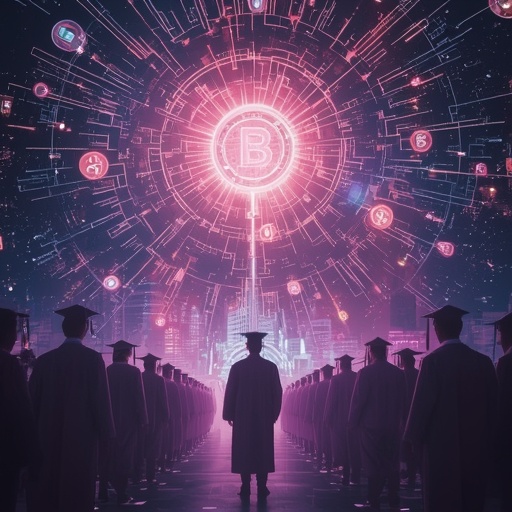
As the global season of commencements unfurls across campuses and digital platforms alike, we witness far more than the familiar rituals of caps, gowns, and speeches. What stands before us is a ceremonial intersection where heritage encounters disruption—where the wisdom of experience steps into dialogue with the unrelenting momentum of innovation. In this meeting between technology and tradition, generations converge: seasoned leaders, shaped by decades of learning and adaptation, now face a cohort of graduates unafraid to challenge conventions or interrogate assumptions once deemed immovable. This exchange is not a fleeting snapshot of academic celebration but a profound metaphor for the way societies evolve—through questioning, dialogue, and the courage to reimagine what is possible.
At the heart of this evolving dynamic lies artificial intelligence, a field that no longer belongs exclusively to laboratories or codebases but increasingly to the sphere of human ethics, creativity, and collective aspiration. The next epoch of AI innovation will not be authored solely by those who write the algorithms; it will be sculpted by those who dare to ask why and how those algorithms should serve humanity. The graduates of today bring with them a mindset defined not only by technical proficiency but by intellectual audacity—they possess a rare blend of digital fluency and moral awareness that can influence the trajectory of technology itself.
When we observe a graduate challenging a mentor’s assumptions or a professor entertaining an unexpected line of argument, we see the process of progress taking shape in real time. Every probing question aimed at authority, every moment of uncertainty that leads to debate, represents an incremental advancement toward a more thoughtful technological culture. It is through these conversations, where ambition meets experience and curiosity confronts caution, that the real architecture of the future is drawn.
The relationship between tradition and innovation, between the prudence of leadership and the daring of youth, determines how we integrate AI into the fabric of daily life. Established leaders carry the responsibility to listen, to mentor without silencing, and to evolve without relinquishing values that preserve human dignity. Emerging thinkers, on the other hand, bear the charge to question rigorously yet construct responsibly, to design systems that elevate rather than obscure the core of what makes us human. The bridge between these generations must therefore be forged in empathy as much as intellect.
Graduation season, then, becomes a living emblem of what the future promises: a renewal of perspective and purpose. The applause echoing through auditoriums and online ceremonies signifies more than achievement—it heralds the transfer of creative stewardship. In every diploma handed and every challenge posed to existing paradigms lies the potential for transformation. The new generation steps forward not merely to inherit a technological world but to redefine its boundaries. They are the audacious architects of an era where code converses with conscience, where innovation answers not only to efficiency but to ethics.
In this convergence of minds—experienced and emerging—resides the pulse of progress. Each thoughtful disagreement, each inspired conversation between curiosity and wisdom, fuels the continuous reshaping of AI and of humanity’s collective future. The next great leap in technology will not be born in isolation but in the harmony of diverse voices willing to listen, learn, and lead with imagination and integrity.
Sourse: https://www.businessinsider.com/sundar-pichai-google-graduation-speech-stanford-ai-backlash-eric-schmidt