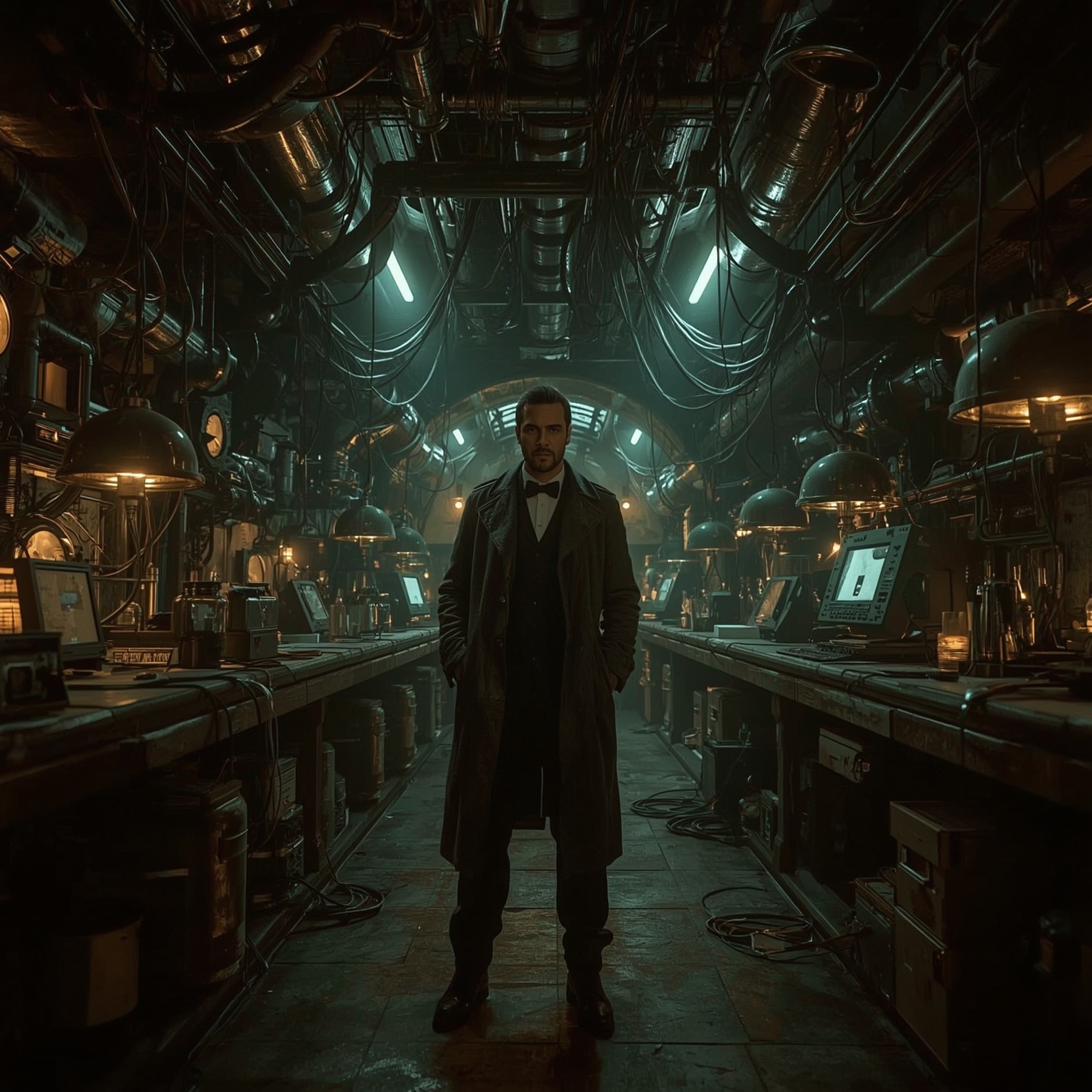
Although Mary Shelley’s *Frankenstein* remains a cornerstone of Gothic fiction, director Guillermo del Toro has chosen to infuse his cinematic adaptation with a distinctly modern sensibility drawn from the technological world of Silicon Valley. In a thoughtful conversation on NPR’s acclaimed *Fresh Air* podcast, del Toro explained that his reimagined portrayal of Victor Frankenstein was designed to echo the disposition, mindset, and self-assured boldness often attributed to contemporary technology entrepreneurs—the so-called “tech bros.” By establishing this connection, he underscores the timeless relevance of Shelley’s 1818 masterpiece, which recounts the tale of an ambitious scientist who pieces together a being from the remnants of deceased bodies and, through defiance of natural law, succeeds in animating it.
Del Toro elaborated that what particularly fascinated him was not merely Victor’s brilliance or creative energy, but rather his hubris—the perilous overconfidence that blinds him to the ethical and moral repercussions of his own ingenuity. He remarked, in essence, that the arrogance of Frankenstein is strikingly similar to the attitude of today’s technology innovators, who sometimes forge ahead with transformative inventions without pausing to assess the broader consequences of their actions. According to del Toro, this lack of self-reflection and restraint mirrors a worrisome pattern: a society captivated by progress yet frequently inattentive to the cost of its own ambition. His message was clear—humanity should occasionally halt its relentless sprint toward innovation and thoughtfully consider the direction in which it is racing.
The film’s resonance is heightened by the current cultural and industrial context in which artificial intelligence has come to dominate discussions of technological advancement. Over the past several years, the AI sector has accelerated at a breathtaking pace, transforming from speculative concept to global economic powerhouse. Startups such as OpenAI have played a pivotal role in democratizing access to powerful AI systems, most notably through language models like ChatGPT. This rapid proliferation has compelled industry giants—including legacy corporations such as Google and Microsoft—to reorient their strategies in order to remain competitive. The scope of this technological shift is immense; in April, the United Nations Conference on Trade and Development estimated that the AI market could expand to an extraordinary $4.8 trillion by the year 2033, signaling the profound influence AI is expected to exert on nearly every facet of economic life.
Yet beneath the optimism lies a vein of skepticism. A growing number of analysts, ethicists, and even leading figures within the tech community have voiced apprehension about the far-reaching implications of artificial intelligence. Critics caution that unchecked AI development could reshape the workforce, disrupt existing employment structures, and contribute to environmental strain through immense computational demands. Others point to subtler threats—to human relationships, creative authenticity, and personal privacy—as machine learning systems increasingly permeate daily existence. Figures such as Meta’s Chief AI Scientist, Yann LeCun, have publicly emphasized the need for clear regulatory frameworks and safety measures to ensure the technology’s deployment remains beneficial rather than hazardous.
Against this backdrop, del Toro’s own position could not be more unequivocal. During his *Fresh Air* interview, he expressed a forceful rejection of AI’s role within his artistic practice. He stated that he has neither interest nor inclination to adopt generative AI, not now and not ever. With disarming candor, del Toro—who is sixty-one years old—remarked that he intends to maintain his disinterest in such technologies until the very end of his life. Recounting a recent email exchange in which someone had inquired about his stance on AI, he admitted his response was blunt and decisive: when asked for his opinion, he replied simply that he “would rather die” than rely on artificial intelligence as part of his creative process. His words, though hyperbolic, convey a deep philosophical conviction about the sanctity of human imagination and the irreplaceable value of authentic artistic creation.
A representative for the filmmaker later confirmed to *Business Insider* that del Toro had no additional comments to provide beyond those shared in the interview, reinforcing the sincerity and finality of his stance. His adaptation of *Frankenstein*, therefore, can be understood not only as a haunting retelling of a literary classic but also as a commentary on contemporary innovation—an allegory for an age in which humanity must confront the consequences of its own technological prowess. The film made its theatrical debut in select cinemas on October 17 and is scheduled to premiere globally on Netflix on November 7, inviting audiences everywhere to reflect upon the recurring dance between creativity, ambition, and the moral responsibility that binds them together.
Sourse: https://www.businessinsider.com/guillermo-del-toro-frankenstein-tech-bros-ai-industry-2025-10


