For Guillermo del Toro, Mary Shelley’s *Frankenstein* has not been a fleeting artistic interest but rather a lingering fascination that has accompanied him throughout the course of his life. The celebrated filmmaker has frequently articulated his view of Shelley’s seminal novel as “the quintessential teenage book,” recognizing in it the restless yearning, rebellion, and sorrow of youth. His famed Los Angeles residence, aptly named Bleak House, functions as both a shrine and laboratory of imagination, its rooms overflowing with sculptures, paintings, and artifacts inspired by varied interpretations of the creature—from classic cinematic renditions to modern theatrical adaptations. Within such a setting, it seems almost inevitable that del Toro would one day commit himself to crafting his own vision of *Frankenstein*. Yet, even a decade ago, he admitted with both humility and dread that while he dreams of creating the definitive version—the greatest *Frankenstein* ever conceived—to realize that dream would paradoxically end it. Once a dream is made tangible, he mused, it ceases to be a dream.
Del Toro’s adaptation, as realized now, resists the temptation of dramatic reinvention. Instead of overturning Shelley’s text or reimagining her creature as something alien to its origins, the director frames the tale through the prism of his own enduring artistic obsessions: the coexistence of beauty and darkness, the corruption of innocence by experience, and the perpetual friction that defines relationships between parent and child. Infused with his signature visual lavishness and meticulous design sensibility, his film transforms a two-century-old gothic narrative into a personal statement of artistry and empathy. Every frame resonates with the essence of del Toro’s filmmaking—melancholy grandeur, emotional intimacy, and mythic resonance—rendering the story unmistakably his own while preserving its foundational soul.
The film’s structure adheres closely to Shelley’s original conceit, unfolding initially through the perspective of Victor Frankenstein, incarnated by Oscar Isaac, whose commanding presence captures both the charisma and mania of a man consumed by his own ambition. Victor’s defining trait—a fervent and self-absorbed obsession with conquering death—drives the film’s engine. In his quest, he stages dramatic demonstrations of his crude yet electrifying experiments before a skeptical assembly of physicians and scientists. Their horror is immediate: before them lies a ragged torso, momentarily animated by a surge of life, only to collapse again into lifelessness. All consider his work macabre, bordering on profane—until the ambitious Harlander (Christoph Waltz), a wealthy arms manufacturer, recognizes its potential and offers financial patronage, binding science, money, and madness in an unholy alliance.
Through del Toro’s lens, Victor’s descent into obsession becomes both tragic and inevitable. The script delves into his past, revealing a man marked by loss and emotional deprivation. His mother’s premature death leaves an unhealed wound, while his father’s clinical detachment replaces affection with dispassionate lessons in medical science. It is this fusion of grief and intellectual rigor that breeds Victor’s relentless drive to reverse mortality itself. With Harlander’s fortune enabling him, Victor isolates himself in a gothic aerie—an imposing laboratory perched atop a remote tower—and scours battlefields and morgues in his grotesque search for suitable anatomical fragments. Del Toro spares no detail: Victor inspects severed limbs and desolate corpses with the same scrutiny as a gourmand selecting his finest cut of meat, a grotesque juxtaposition that grounds the fantastic in visceral realism.
The act of creation, obsessively rendered, occupies the film’s most spellbinding sequence. Del Toro’s camera lingers on the minutiae of the process—copper wires glinting under candlelight, stitched sinew stretching as current surges, the thunderous moment when inanimate flesh trembles with reluctant vitality. The creature, portrayed by Jacob Elordi, emerges as both wondrous and terrifying: he is unnaturally tall, a physiological choice born of Victor’s pragmatic reasoning that larger limbs are easier to manipulate. Even though audiences anticipate the inevitable awakening, del Toro stages the moment with such cumulative precision that it still feels miraculous—an act of defiance against nature itself.
But creation quickly gives way to consequence. Victor’s failure lies not in his scientific method but in his utter lack of foresight. “He never considered what would come after creation,” del Toro reminds us through Victor’s own reflection, encapsulating the moral blindness at the heart of his hubris. For a few fleeting scenes, Victor exhibits something akin to paternal tenderness, attempting to guide his childlike creature—but his compassion curdles into fear and disgust. The monster, confined in chains within a damp underground chamber, possesses immense strength and near-supernatural regenerative abilities. Yet his mind matures haltingly, as though his body’s vitality advances far faster than his understanding. His first and only uttered word—“Victor”—resonates not as affection but as a haunting cry of ownership and abandonment. Enraged by what he perceives as failure, Victor seeks to annihilate his creation, culminating in a cataclysmic explosion that obliterates his laboratory and scatters the monster into a merciless world.
From this point, the film shifts perspective. Now seen through the creature’s mournful eyes, the narrative becomes a meditation on isolation and identity. Cast adrift in a hostile society that recoils from his appearance, the creature endures rejection at every turn. His gentle instincts are met with violence, his desire for companionship dismissed as monstrous presumption. Only one figure, Elizabeth—Victor’s sister-in-law, portrayed with ethereal empathy by Mia Goth—extends to him the grace of recognition. She perceives, beneath his grotesque exterior, the fragile remnants of human longing. Yet even her kindness cannot transcend the monstrous grief of immortality: cursed with healing powers that deny him escape, the creature’s suffering becomes cyclical and eternal. In time, the narrative builds inexorably toward confrontation—an act of retributive justice that is also, paradoxically, an expression of yearning for connection. The creature’s pursuit of Victor is less the vengeance of a villain than the desperate pilgrimage of a forsaken child seeking acknowledgment from his creator.
Del Toro’s *Frankenstein* mirrors the essential arc of Shelley’s novel, but its power lies in concentration rather than reinvention. What distinguishes this adaptation is the uncompromising focus on parenthood—its failures, responsibilities, and inherited pain. Victor emerges as the archetype of the negligent father: consumed by self-interest, he values his progeny only insofar as it validates his genius. When the creature does not conform to his expectations—when it fails to become the intellectual and aesthetic reflection he desires—Victor disowns it, erasing accountability for his own act of creation. The creature’s ensuing journey, marked by rage, grief, and a persistent, tragic loyalty, becomes a lifelong struggle to locate meaning within his suffering. Their final encounter, charged with equal measures of fury and sorrow, achieves an emotional resonance that is both devastating and unexpectedly tender.
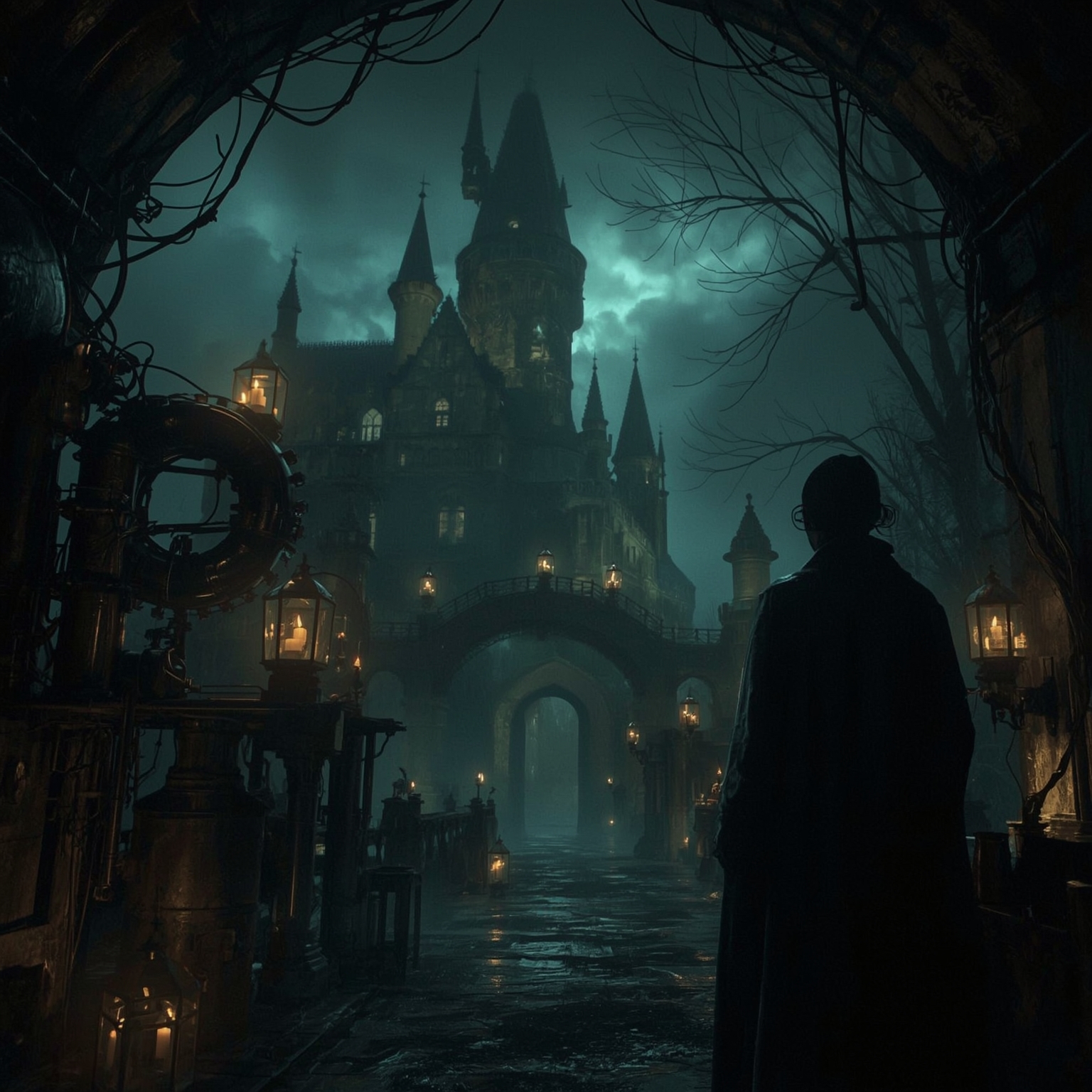
Every cinematic element amplifies these themes with singular precision. Isaac’s natural magnetism infuses Victor with both grandeur and repulsion—a man whose brilliance becomes his undoing. Elordi’s transformation, meanwhile, renders the creature heartbreakingly human: beginning as a naïve, wide-eyed infant trapped in a behemoth’s frame, he gradually transforms into a mythic figure of terror and sadness. Visually, his design departs strikingly from past incarnations—a figure of pale flesh traced with geometric scars, his body rationally assembled yet aesthetically sublime. These performances operate harmoniously within del Toro’s sumptuous mise-en-scène: cathedral-like laboratories, weathered fabrics, and chiaroscuro lighting conjure a waking dream infused with both melancholy and wonder. Every prop, down to the ornate coffins, embodies the filmmaker’s devotion to craftsmanship and narrative coherence.
Although the project’s gestation spanned many years, the finished film bears the unmistakable mark of patience and perfectionism. The result is an artwork that both honors and transcends its ancestry. In much the same way that Victor stitches together dismembered fragments to produce new life, del Toro weaves together the familiar motifs of gothic horror—scientific transgression, divine yearning, and existential despair—into a creation that feels startlingly alive. The film does not merely resurrect Shelley’s myth; it reanimates its moral pulse for our age, standing as a testament to both obsession and artistic love.
*Frankenstein* will first emerge in select theaters on October 17 before reaching wider audiences through streaming on Netflix beginning November 7, ensuring that del Toro’s long-dreamed vision finally finds life in the eyes of the world.
Sourse: https://www.theverge.com/entertainment/800374/frankenstein-review-netflix-guillermo-del-toro