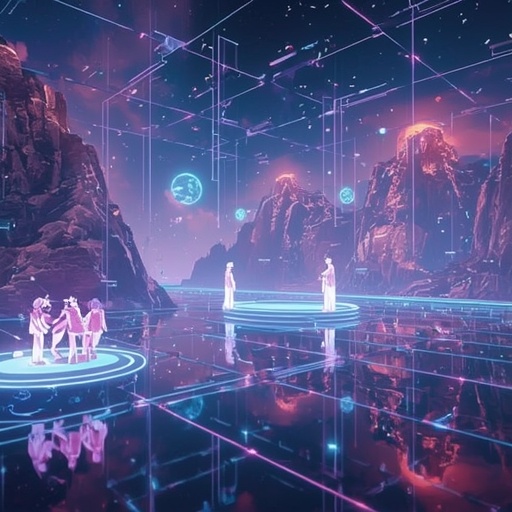
Before there was Sword Art Online, the world of anime served us a masterpiece of introspection and emotional depth known as ‘.hack//Sign.’ Unlike much of today’s media that thrives on adrenaline-fueled heroics, this remarkable series invites viewers to enter a calm yet complex digital realm where the focus is not on triumphing through might or dominance, but on reflection, vulnerability, and authentic human connection. The online world it portrays is less an arena of conquest and more a sanctuary—a quiet refuge for those seeking meaning, belonging, and escape from the turmoil of real life.
What makes ‘.hack//Sign’ enduring is its fearless willingness to pose uncomfortable questions about identity, loneliness, and the blurred borders between our digital and physical selves. The protagonist, Tsukasa, does not embody the quintessential hero archetype; instead, they are a soul adrift—a person unsure of their place both in the game and in the world beyond it. Through this fragmented consciousness and the mysterious circumstances trapping them inside the virtual network, the anime transforms online interaction into a subtle meditation on isolation and empathy.
Every conversation in the network feels charged with unspoken truths. Characters gather not merely to battle or boast of achievements, but to exchange fragments of their personal longings, their pain, and their yearning for connection. In these exchanges, the show captures what many gamers know quietly but deeply—the sense that digital spaces, though constructed of code and artifice, can harbor genuine emotion and foster real relationships. Within its soft-hued, ambient landscape, the story unfolds like an elegy for those searching for connection in the age of technology.
In contrast to more modern, action-oriented gaming narratives that emphasize leveling up and conquering dungeons, ‘.hack//Sign’ focuses on the existential challenges nested within the act of playing itself. It questions the emotional cost of immersion, exploring how the pursuit of escapism can sometimes lead to profound self-recognition. The series suggests that behind every avatar lies a person yearning to be understood—a reflection of us all as we navigate digital worlds seeking validation, companionship, or simply a place to exist without judgment.
Perhaps the most powerful message ‘hides in its quietest moments: the realization that wisdom sometimes comes from stepping away. The act of logging off, presented not as defeat but as courage, becomes the series’ emotional climax. It signifies reclaiming one’s agency, acknowledging that while the digital world offers solace and beauty, the real world—imperfect, unpredictable, human—is where understanding ultimately resides.
Two decades later, this message remains strikingly contemporary. In an era where our lives are increasingly conducted through screens, ‘.hack//Sign’ reminds us that technology’s power lies not in immersion alone, but in the connections and introspection it can inspire. The show stands as a quiet, luminous reminder that logging off is not abandoning the story—it is simply turning a page toward rediscovery, balance, and self-acceptance.
Sourse: https://gizmodo.com/hack-sign-still-hits-as-an-existential-gaming-anime-about-the-virtues-of-logging-off-2000765088