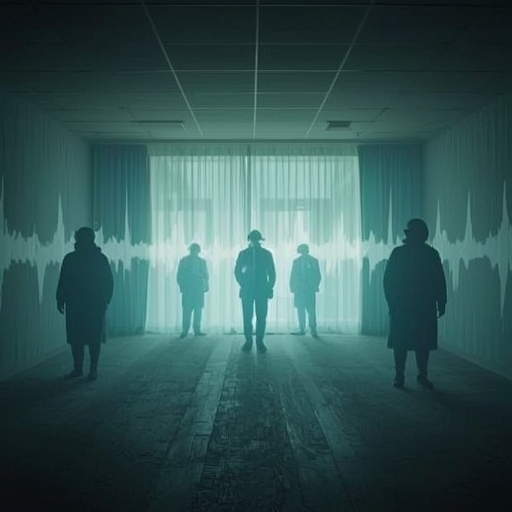
Many people have, at some point, experienced an inexplicable sensation of unease—the sudden chill running down the spine, the fleeting impression of being watched, or the faint sound that cannot be traced to any physical source. Such moments have long been attributed to the paranormal, fueling centuries of legend and superstition. Yet, modern research offers a far more tangible and scientifically grounded explanation: the subtle but powerful influence of infrasound.\n\nInfrasound refers to sound waves whose frequencies fall below the threshold of human hearing—typically under twenty hertz. Although these vibrations remain inaudible to us, their physiological and psychological impact can be profound. Scientists have discovered that exposure to these low-frequency oscillations can produce sensations of tension, uneasiness, and even mild anxiety. These responses occur because the vibrations interact with the human body and mind in ways we scarcely perceive. By stimulating parts of the inner ear and the nervous system, infrasound can induce subtle disorientation, raise heart rates, or create a sense of unseen motion in the environment.\n\nImagine standing in an old cathedral, where the distant rumble of traffic or the hum of mechanical equipment blends with the natural acoustics of stone and space. Though no ghostly presence lurks in the shadows, the low tones reverberating through the air may cause your intuition to whisper otherwise. Similarly, certain weather conditions, machinery, or architectural structures can generate infrasound that permeates our surroundings, quietly shaping our moods. In many so-called ‘haunted’ places, these vibrations have been measured and found to correspond with reported feelings of dread or agitation among visitors.\n\nThe implications of this research extend far beyond debunking ghost stories. Understanding infrasound challenges us to reconsider how our senses interpret the physical world. What we interpret as supernatural may, in reality, be the body responding to phenomena that lie just beneath our perception. By studying these acoustic subtleties, scientists can better comprehend how environmental stimuli affect emotional states and mental well-being. Furthermore, this knowledge could help architects, urban planners, and engineers design spaces that minimize unwanted low-frequency resonance, creating more comfortable and harmonious environments.\n\nThus, what once seemed the domain of folklore turns out to be a fascinating intersection of physics, biology, and psychology. The eerie feelings that once filled our ancestors with fear are no longer evidence of restless spirits, but rather a reminder of how extraordinarily complex and sensitive the human organism truly is. When science listens closely enough, it uncovers the hum beneath the haunting—and reveals that the mysteries we sense in the dark are echoes of our own perception responding to an unseen, resonant world.
Sourse: https://gizmodo.com/haunted-by-ghosts-new-study-provides-a-surprising-explanation-2000750521


