Throughout modern cinematic history, audiences have rarely needed to wait long before Hollywood turned its gaze once again toward Stephen King’s prolific body of work. The industry has repeatedly mined his vast catalog for inspiration, transforming his novels and short stories into films and television series that oscillate between brilliance and mediocrity. Yet, in recent years, the pace of these adaptations has accelerated with remarkable intensity, creating a veritable flood of projects devoted to translating King’s chilling imagination to the screen. This surge has yielded mixed results: while certain ventures, such as new versions of *Carrie*, *Children of the Corn*, and *’Salem’s Lot*, fell flat, failing to evoke the dread and enchantment of their earlier, more iconic predecessors, others — including *The Life of Chuck* and *The Long Walk* — achieved a mastery of tone and vision that reignited the public’s appreciation for King’s unique narrative voice, particularly when interpreted by directors who deeply grasp the emotional and psychological underpinnings of his tales.
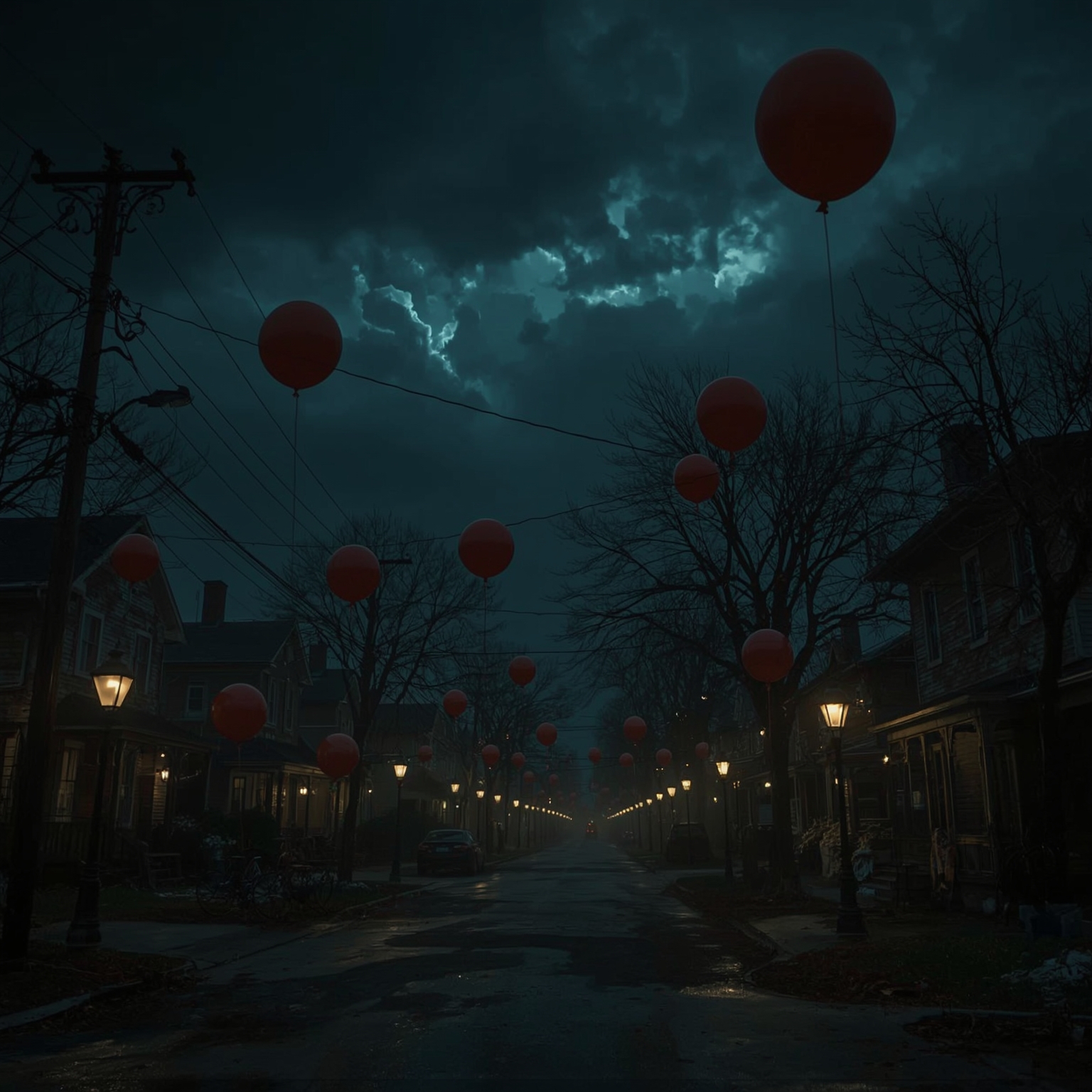
The rejuvenation of King-inspired storytelling owes much to Warner Bros. Discovery’s ambitious revival of the *It* saga. The studio’s two feature films recaptured the essence of the original narrative — a coming-of-age story enshrouded in cosmic horror — transforming a familiar legend into a fresh, modern spectacle. These films not only revitalized the mythos of Derry, Maine, but also served as the catalyst for current projects like HBO’s *It: Welcome to Derry*, a prequel series designed to burrow deeper into the clown’s sinister legacy. On paper, the concept brims with promise: by delving into Pennywise’s shadowy past, the show had the potential to expand the mythology that lies at the heart of King’s universe. Yet, in execution, it falters. Instead of unveiling new, unsettling revelations about the cursed town’s history, the narrative tediously reiterates familiar story beats, its lowered production values undermining the immersive fear that such material demands.
This deficiency might have been mitigated had the storytelling exhibited greater vitality — had the performances resonated with conviction, or had the horror sequences truly unsettled the audience. Instead, *Welcome to Derry*’s most surprising flaw is its languid pacing, prolonging the arrival of the infamous clown to such an extent that mounting anticipation gives way to impatience. The story unfolds several decades before the events of *It*, locating Derry within the turbulent context of the American Civil Rights Movement. In 1962, this ostensibly peaceful town, with its predominantly white, middle-class population and military installation operating under shrouded secrecy, appears to embody the self-satisfied insularity of midcentury small-town America. The displacement of the region’s Indigenous population has been conveniently forgotten, and the residents’ obliviousness to systemic racism is embodied in their complacent acceptance of Hank Grogan, a Black projectionist at the local theater, as proof of the town’s supposed racial harmony.
However, beneath Derry’s tranquil surface simmer decades of unacknowledged horror — the inexplicable disappearances of countless children that the townspeople avoid confronting. When another boy vanishes after a night at the cinema, the fragile illusion of security shatters. Prejudice rears its head with predictable cruelty as suspicion falls on Hank, accused of crimes he did not commit. It is left to the innocents — Hank’s perceptive daughter Ronnie and her empathetic classmate Lilly — to recognize that the true source of evil is not human bigotry but a malevolent, supernatural force stalking their community. Tragically, the children’s awareness is futile, for the prevailing racism ensures that their warnings go unheard.
From the moment Pennywise makes his long-anticipated appearance, portrayed once again by Bill Skarsgård with eerie precision, it becomes apparent that the showrunners, Jason Fuchs and Brad Caleb Kane, have refrained from pursuing a bold reinterpretation. Instead, they have reconstructed recognizable moments from previous *It* iterations — haunted whispers emanating from bathroom sinks, grotesquely distorted adult faces twisting into manic grins, and sequences of juvenile terror executed with diminishing returns. The few deviations that appear promising, such as the unexpected deaths of several seemingly central child characters, lose their impact as the narrative succumbs to formulaic pacing and over-exposition.
As the story alternates between the perspectives of its group of young protagonists — a proto–Losers Club — and a cast of adult newcomers including Air Force Major Leroy Hanlon, his wife Charlotte, and General Shaw, an unsettling rhythm emerges. These outsiders, unfamiliar with Derry’s secrets, sense that something profoundly unnatural lies at the core of the town’s social fabric. The show gestures toward using its historical backdrop to examine how Pennywise’s presence might intersect with racial and cultural anxieties, suggesting that marginalized residents could be particularly vulnerable to the town’s latent evil. For fleeting moments, this approach hints at thematic depth reminiscent of HBO’s adept social commentary in *Watchmen*.
Yet, where *Watchmen* married speculative fiction with incisive explorations of race and history, *Welcome to Derry* stops short. Its commentary feels perfunctory, surface-level rather than penetrating. References to *Pet Sematary* and other pieces of the King canon attempt to weave a broader tapestry, but these nods contribute more to franchise potential than to narrative richness. The inclusion of figures such as a young Dick Hallorann — the psychic chef later immortalized in *The Shining* — and the mention of familiar King landmarks like Shawshank Prison further signal HBO’s aspiration to construct an interconnected “King-verse.” This ambition could have invigorated the project, yet the execution leaves the impression of a series serving as a testing ground rather than a fully realized story.
Visually, *Welcome to Derry* often evokes the atmosphere of *Stranger Things*, blending nostalgic Americana with supernatural dread, but without the creative energy or distinct cinematic vision that made that earlier show compelling. Its horror sequences, while occasionally graphic, too often rely on abrupt bursts of violence rather than the slow-building suspense and emotional engagement that define enduring terror. Consequently, the audience is left uncertain as to whom the series intends to captivate — longtime King enthusiasts, casual viewers seeking thrills, or a younger audience acclimated to stylized streaming horror.
By the time Pennywise ultimately reveals himself in his full clown guise, the sense of foreordination is complete. Every narrative hint has already foreshadowed the outcome, leaving little room for surprise, mystery, or genuine dread. What the series most desperately lacks is a carefully constructed enigma — a story that deepens character psychology and invites the viewer to piece together meaning rather than passively consume it. The inhabitants of Derry seem condemned from the outset, their destinies telegraphed long before the final confrontation. Without a compelling mystery or richly evolving arcs, *Welcome to Derry*’s first season feels like an echo of better horrors, a shadow wandering through familiar corridors of fear. It possesses neither the thematic resonance nor the emotional weight required to justify yet another retelling.
Rounding out the ensemble, the series features performances from Madeleine Stowe, Rudy Mancuso, Mikkal Karim-Fidler, Kimberly Norris Guerrero, Joshua Odjick, and Morningstar Angeline. *It: Welcome to Derry* premieres on October 26, inviting audiences back into King’s world — though perhaps this time, the darkness lurking beneath Derry’s streets feels a little too familiar, and the chill of anticipation has been replaced by the uneasy recognition of repetition.
Sourse: https://www.theverge.com/entertainment/803022/hbo-it-welcome-to-derry-review