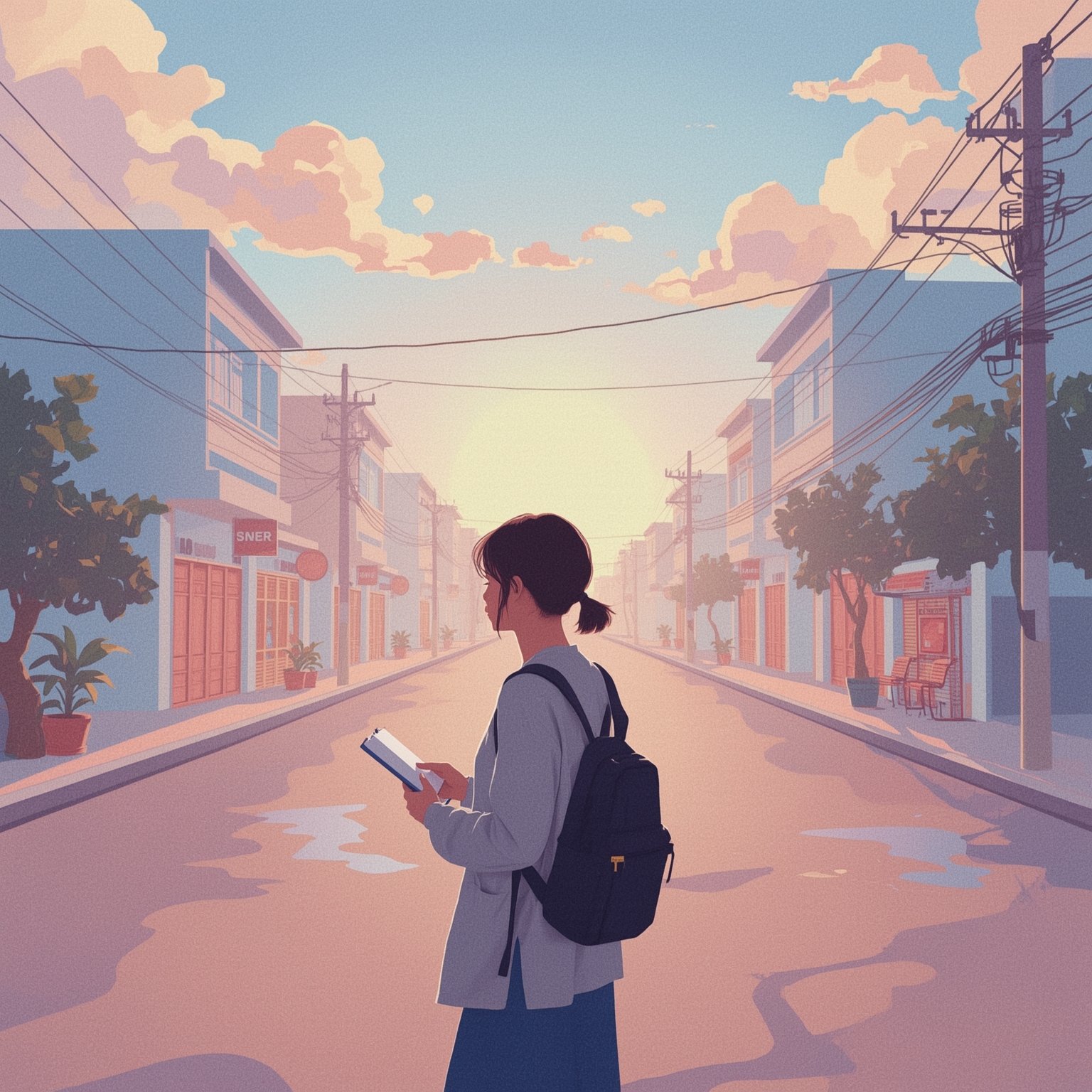
This as-told-to narrative originates from an in-depth discussion with Peter Truong — a digital content creator who made the significant move from Vancouver, Canada, to the dynamic metropolis of Ho Chi Minh City, Vietnam. The account has been carefully refined to ensure clarity and concision while preserving the authenticity of his reflections.
Peter Truong’s story begins in Vancouver, where he was born to Vietnamese parents who had immigrated to Canada during the 1980s in pursuit of a more stable and prosperous future. Growing up in a household rooted in Vietnamese traditions but surrounded by the unmistakably Canadian way of life, Peter experienced a complex interplay of cultures. Although his parents embodied what many would describe as the archetype of traditional Asian parents—deeply valuing discipline, academic success, and respect for one’s elders—Peter himself identified more closely with the cultural rhythms of Canada. Hockey games, pancake breakfasts soaked in maple syrup, and the overall casual Canadian demeanor formed the fabric of his daily life, leaving him feeling, for much of his childhood, almost disconnected from the Vietnamese heritage his parents cherished.
His childhood unfolded in an era prior to the omnipresence of the Internet, when mainstream media offered only limited representation of Asian figures—icons such as Jackie Chan and Bruce Lee being among the few visible faces that resonated with his background. While his mother diligently ensured that the family’s Vietnamese customs thrived behind closed doors, the cultural narrative outside their home operated under different rules. Peter vividly recalls lunch hours when he would unwrap a traditional bánh mì sandwich, only to be met with puzzled or dismissive remarks from classmates unaccustomed to its distinctive aroma. Moments like these often left him yearning to trade his homemade meals for the simplicity of a familiar North American hot dog, a symbol of his desire to blend in seamlessly with his peers and align himself more comfortably within Western norms.
Much of his upbringing took place within immigrant neighborhoods inhabited largely by other first-generation Vietnamese-Canadians and Chinese-Canadians. Although this environment offered some familiarity, it did not necessarily strengthen his cultural identity; rather, it reinforced the feeling that being authentically Vietnamese was, at that time, neither particularly admired nor deemed fashionable. As he advanced into university, Peter experienced what he now recognizes as a period of cultural exploration and confusion. Determined to reconnect with his Asian identity, he immersed himself in pan-Asian pop culture—K-pop, mainstream East Asian films, and a variety of cultural influences—ironically bypassing the very Vietnamese heritage that was innately his. Those years were marked by an enthusiastic search for belonging across a wide Asian spectrum, but not yet an embrace of his roots.
It wasn’t until 2017, when Peter first returned to Vietnam as an adult, that a profound realization began to take shape. Wandering through the bustling streets of Saigon, surrounded by the sounds, tastes, and mannerisms of a culture that was both familiar and foreign, he at last recognized that being Vietnamese was not simply a label assigned by ancestry — it was a living, breathing mosaic of values, language, and shared history intertwined with his identity.
Several years later, in 2022, an unexpected turning point arrived: Peter was laid off from his corporate job in the technology sector. Single, in his thirties, and at a crossroads, he interpreted this loss not as an ending but as an opportunity for reinvention. A long-held aspiration resurfaced—the idea of taking a gap year abroad, teaching English somewhere in Asia. Motivated by both curiosity and a subtle yearning to rediscover himself, Peter decided to act on that dream. And so, in 2024, he found himself relocating to Ho Chi Minh City.
Initially, he believed his transition would be effortless, assuming his cultural background and familiarity with basic Vietnamese would serve as firm foundations for adaptation. However, daily life quickly proved more complex. Simple exchanges, such as answering a phone call or receiving a delivery, often turned into moments of miscommunication. When he tried speaking Vietnamese, locals would sometimes respond in rapid speech that far surpassed his comprehension, and when confusion arose, a call might abruptly end with a disconnecting click. What seemed like minor inconveniences accumulated, revealing to Peter how central communication truly is for navigating everyday experiences.
These frequent misunderstandings also invoked a deep sense of admiration for his parents, who decades earlier had accomplished the much harder task of immigrating to Canada with little command of English, yet managed to create a stable life. The contrast between his current struggles and their perseverance offered perspective, strengthening his gratitude and respect for their journey.
After one year of teaching English, Peter decided to redirect his energy toward content creation, a field that allowed him to express the nuanced relationship between identity, culture, and belonging. During his stay in Vietnam, he observed notable contrasts between work cultures in Asia and in North America. In many Vietnamese workplaces, extended hours and an intensity of commitment are seen as the norm, whereas in Canada, boundaries such as leaving the office at precisely 5 p.m. are commonly respected. Yet amid this demanding environment, Peter also discovered a charming counterbalance—Vietnam’s deeply ingrained nap culture, a daily pause that provides an unexpected but appreciated sense of rhythm and restoration.
Outside of work, building friendships proved surprisingly natural. The local social fabric is woven with a communal warmth that stands in gentle contrast to the more individualistic culture of Canada. Frequenting the same café over time, he would find that familiar faces quickly turned into acquaintances, and soon, into genuine friendships. This sense of organic connection illuminated one of the many dimensions that made living in Vietnam so enriching.
Reflecting on his journey, Peter realized that relocating across the world had taught him much more than adaptability—it had granted him insight into his own resilience. He discovered that the transformation he had been seeking did not require a change in geography; true self-awareness arises from introspection, not from external circumstances. A quote that he often returns to, especially during his second year abroad, encapsulates this sentiment: “Wherever you go, there you are.” The idea serves as a reminder that insecurities and self-doubt will persist regardless of the setting unless one takes the time to address them internally. The most enduring lesson from his overseas experience, then, was the necessity of cultivating security and confidence from within.
Through this process, Peter also gained a deeper appreciation for the magnitude of his parents’ sacrifices and struggles. As a second-generation child who has endured only a fraction of what they persevered through, he now feels an immense sense of empathy and gratitude for their courage and resilience.
Interestingly, his cross-continental lifestyle has sharpened his awareness of what “home” truly means. When residing in Vietnam, he occasionally finds himself longing for the brisk chill of Canadian winters, yet when back in Vancouver, he yearns for the kinetic vitality of Saigon’s streets—the ceaseless buzz of scooters and conversations that animate the city’s atmosphere. The contrast underscores how he now belongs fully to both worlds. After roughly a year and a half, Peter has come to perceive Vietnam not only as a temporary destination but as a second home. Canada remains the place of familiarity—its streets mapped in memory, family nearby, routines predictable—while Vietnam continues to challenge and inspire him with novelty and opportunity. Over time, as his network expands and daily life stabilizes, he senses that his two worlds are no longer opposites but complementary halves of his identity.
In the end, moving to Vietnam brought his personal narrative full circle. What once felt like a division between two cultures now feels like integration. Peter recognizes himself as entirely Vietnamese and entirely Canadian—an embodiment of what is often called a third-culture identity. For him, this duality is not a source of conflict, but of enrichment; it allows him to appreciate the strengths, values, and perspectives of both countries, ultimately making his life experience broader, deeper, and profoundly his own.
Do you have a personal story about starting anew in a different city or country? Business Insider invites readers to share their experiences—reach out to agoh@businessinsider.com to contribute your journey.
Sourse: https://www.businessinsider.com/vietnamese-canadian-moved-to-vietnam-rediscover-roots-third-culture-kid-2025-10


