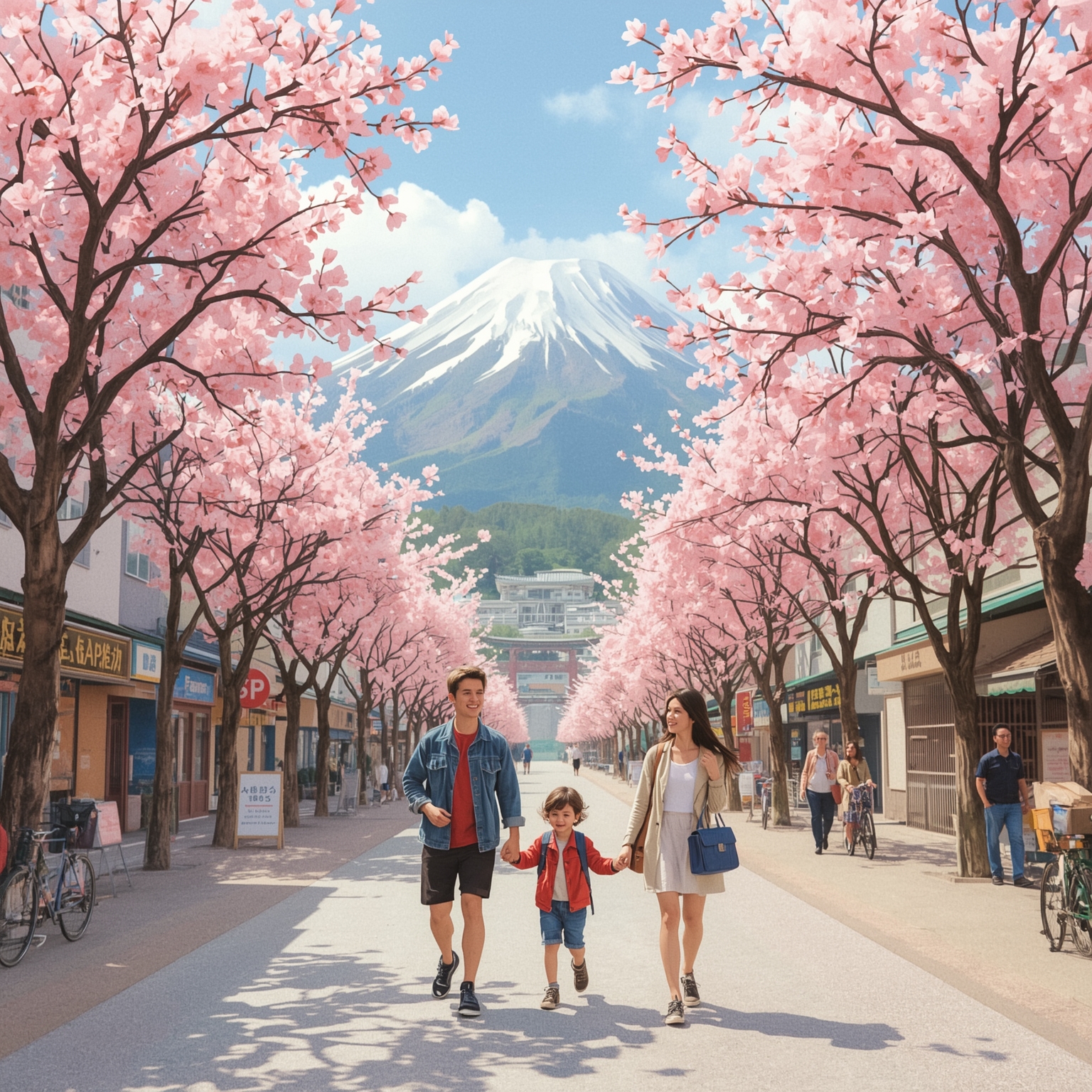
When it came time to decide on our summer vacation destination, my children’s opinions were instantly and passionately aligned: they were determined that Japan should be our next adventure. My ten-year-old son, whose enthusiasm for anime, manga, and the mystique of ancient ninjas knows no bounds, dreamed fervently of walking through the very streets that inspired his favorite animated worlds. My fourteen-year-old daughter, on the other hand, possesses an unshakable love for thriving urban landscapes such as New York City; she longed to immerse herself in the sleek, ultramodern energy of Tokyo, a metropolis synonymous with innovation, dazzling neon skylines, and cosmopolitan allure. Their excitement was infectious, and Japan appeared to be a destination capable of fulfilling everyone’s dreams. Nevertheless, despite my own longstanding desire to explore the Land of the Rising Sun, I felt a lingering hesitation before committing to buy the plane tickets.
Although I have traveled extensively across continents—spanning places as varied as bustling European capitals, tranquil island retreats, and remote countryside landscapes—the prospect of organizing a trip to Japan seemed surprisingly intimidating. The sheer magnitude of details to consider, from understanding its intricate transportation network to navigating deeply rooted cultural customs, felt almost paralyzing. Still, my children’s persistent enthusiasm eventually broke down my resistance. Their eagerness reminded me that sometimes the best journeys begin when we surrender our apprehensions. Convinced at last, I agreed that we would make our long-awaited voyage eastward to Japan.
To allay my nerves about ensuring that everything went smoothly, I decided to compromise by booking a structured group tour while also reserving a few days exclusively for our family at both the beginning and the end of the trip. It was, in every sense, a balanced approach—a way to combine the security of expert planning with the flexibility to create our own adventures.
Despite my many years of travel experience, planning this particular journey proved unexpectedly challenging. Before having children, I used to move from country to country with little more than a backpack, trusting spontaneity to lead the way. That carefree approach no longer worked once I became responsible for curating itineraries that suited differing personalities and ages, all timed around school holidays when destinations tend to be at their busiest. Japan, with its famously complex railway system, precise but unfamiliar etiquette, staggering array of attractions, and linguistic barriers, presented a challenge at every turn.
Each time I sat down with maps and travel guides, intending to finalize plans, I became lost in indecision. Beyond the major cities of Tokyo and Kyoto—which were obvious must-sees—I yearned to explore smaller towns, coastal escapes, or scenic mountain retreats that reflected Japan’s quieter charm. Yet with every new possibility I discovered, from idyllic islands and ancient shrines to breathtaking alpine hikes, the options multiplied rather than narrowed. What should have been an exhilarating process became an exercise in overthinking, leaving me overwhelmed and unable to move forward.
Adding to the confusion was one of Japan’s most iconic experiences: riding the legendary bullet trains, or Shinkansen. My children and I were particularly excited about this, yet I was soon startled to learn that Japan’s rail system is divided among more than a hundred companies, each with its own regional passes, ticket types, and routes. This stood in stark contrast to my previous experiences traveling by train on five continents, where a single national provider usually simplifies logistics. Here, even something as seemingly straightforward as choosing the right train required pages of research and a fair amount of patience.
Ordinarily, I take great pleasure in creating itineraries and uncovering hidden gems, but this time my enthusiasm gave way to frustration. Weeks of effort yielded little in terms of cohesive plans, and I began to realize that my perfectionism was becoming an obstacle rather than an advantage. Recognizing that, I shifted gears and began looking for alternatives—something that would relieve me of the organizational burden without sacrificing the quality of the experience.
That search led me to discover a small-group family tour offered by Intrepid Travel, designed specifically for families who wish to balance structure with discovery. Finding it felt like a revelation. The itinerary promised to handle the logistical complexities for me, freeing my mind to focus on enjoying the journey with my children. The tour traced a route from Tokyo to Kyoto, including carefully selected stops along the way—such as Hiroshima, whose profound history I wanted my children to witness and reflect upon, and the enchanting mountain village of Hanokki, a destination so picturesque I might never have discovered it on my own.
One of the most liberating aspects of joining a guided tour was relinquishing the constant need to make decisions. Having local experts coordinate train reservations, organize accommodations, and act as cultural interpreters meant I could concentrate not on timetables or maps, but on being present with my family. Of course, not every detail matched my personal preferences; I might have chosen different hotels or scheduled some visits in the cooler evening hours instead of under the intense midday sun. Yet these compromises felt minor compared to the relief of enjoying a vacation free from stress. As a full-time working mother constantly juggling priorities, I was profoundly grateful to have found a solution that restored a sense of joy to travel planning—outsourcing the complex logistics while keeping the heart of exploration intact.
To make the experience truly our own, I extended the trip by adding free days before and after the formal tour. This gave us space to explore destinations that had captured my children’s imaginations but weren’t included in the official itinerary. At the start of our journey, we lingered in Tokyo for several days, diving into its vibrant culture. We marveled at the frenetic spectacle of Shibuya’s Scramble Crossing, where a thousand pedestrians surge forward simultaneously from every direction—a breathtaking choreography of urban life. We also spent an unforgettable day at Tokyo Disney, fulfilling a promise I had made to both kids long ago.
After our guided tour concluded near Kyoto, we extended our stay to visit Osaka, a dynamic city known for its culinary delights and exuberant atmosphere. There, we indulged in street food, wandered through neon-soaked districts, and spent an entire day at Universal Studios Japan, a highlight especially for my son, whose excitement at boarding each train—whether local or bullet—never waned.
In the end, the hybrid structure of our trip—a professionally organized tour bookended by freely planned days—proved to be an ideal formula. It combined the peace of mind that comes with expert guidance and the delight of spontaneous family exploration. The experience taught me that responsible flexibility is the true art of travel, and as I look ahead to future adventures, I suspect I will use this model again: structured enough to ensure harmony, yet open enough to allow wonder to lead the way.
Sourse: https://www.businessinsider.com/planning-japan-with-kids-was-overwhelming-we-booked-a-tour-2025-10