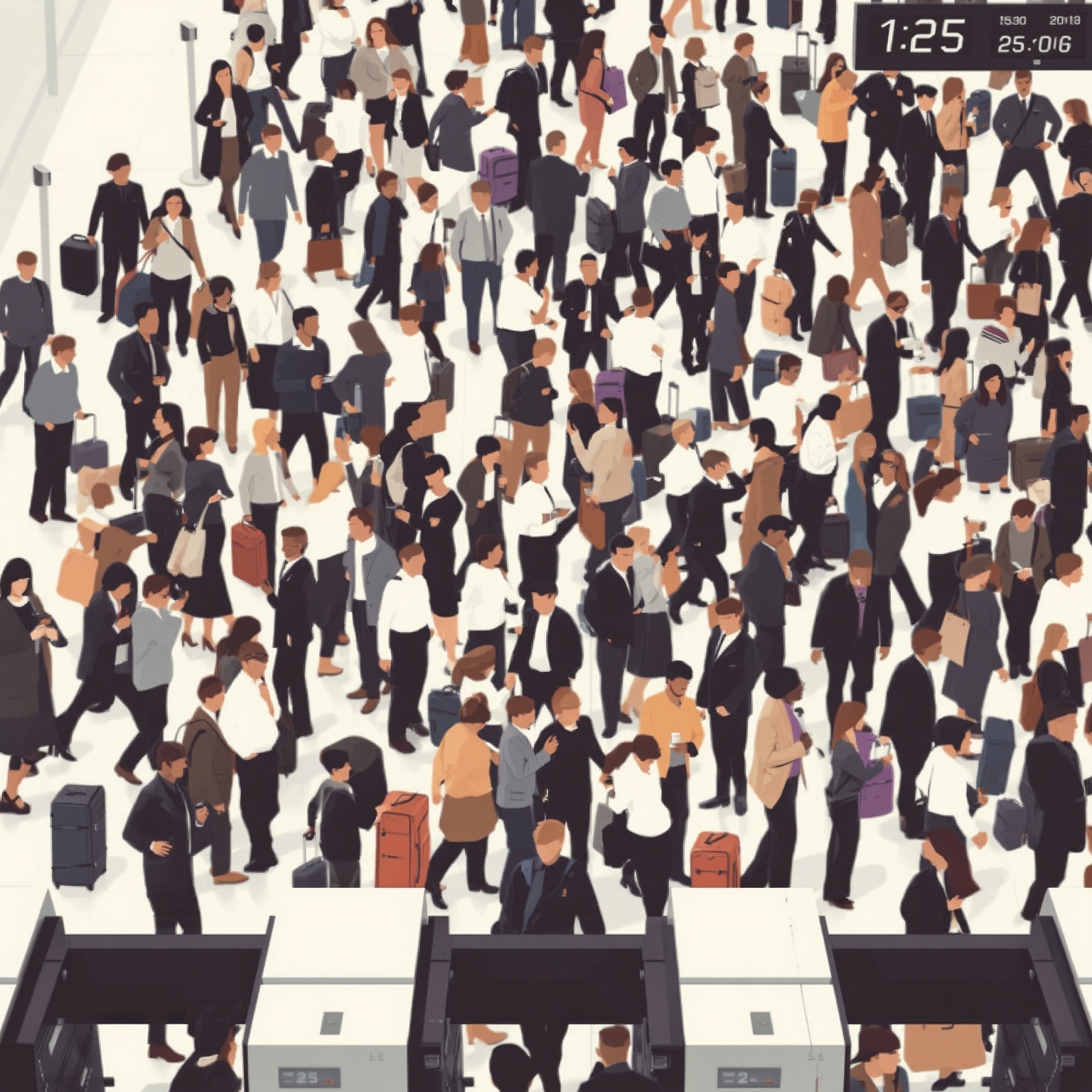
For individuals planning to travel by air, the looming possibility of a federal government shutdown offers little in the way of positive outcomes. Experts, trade associations, and unions within the aviation sector have voiced mounting concern that, without a congressional resolution to authorize funding in time, severe disruptions could ripple across the entire travel system. These disruptions would not only manifest in frustratingly long queues and delays but might also culminate in serious concerns regarding aviation safety if critical oversight and maintenance operations are paused indefinitely.
Specialists speaking to *Business Insider* noted that in the most immediate sense, travelers would see airport security checkpoints move more sluggishly, with longer-than-usual lines forming during peak travel hours. Yet this is only the surface of a much broader problem. Should the shutdown continue for weeks rather than days, it could provoke additional complications, such as Transportation Security Administration (TSA) employees and air traffic controllers—designated as essential staff—becoming increasingly dissatisfied after working without pay. This frustration might ultimately lead some workers to leave their posts entirely, straining an already fragile system further. Air traffic control centers, which already face a national shortage of approximately 3,000 controllers, would be particularly vulnerable to exacerbated understaffing.
In fact, several aviation organizations representing both employer and employee interests have stated publicly that suspending federally managed programs—like the upkeep of air traffic equipment or the analysis of safety incidents—poses a genuine hazard to the structural safeguards of the National Airspace System (NAS). These safeguards were designed with multiple redundancies precisely to minimize risk, and a shutdown threatens to erode those protective layers. That means training pipelines could stall, equipment upgrades would be frozen, and essential safety databases left understaffed—all of which subtly weaken aviation’s strong safety record.
For travelers trying to navigate this uncertainty, patience becomes more than a virtue; it is almost a requirement. Airlines for America (A4A)—a trade group that advocates for major U.S. airlines including American, Delta, United, and Southwest—has already alerted the public that if government-controlled services such as the FAA, TSA, or Customs and Border Protection face staffing shortages, systemic slowdowns will inevitably occur. The likely results include slower passenger screening, delayed customs processing, and reduced efficiency in air traffic coordination. Henry Harteveldt, a travel analyst at Atmosphere Research Group, emphasized that over time these delays could snowball into canceled flights, erratic scheduling, and missed connections, particularly as peak holiday periods approach.
The financial impact on workers compounds the staffing problem. Though designated as essential, TSA agents and air traffic controllers would be expected to report for duty without receiving paychecks until the shutdown ends. While many may initially continue working, morale could deteriorate sharply after the first missed pay cycle—often around two weeks into the closure. In the last major shutdown of 2018–2019, numerous employees began to call in sick or abandoned positions for more stable sources of income, leading to a dramatic slowdown of operations nationwide. Airports such as LaGuardia in New York even had to halt inbound traffic temporarily due to insufficient controller staffing. Atlanta and Philadelphia also experienced significant disruptions, illustrating the fragility of the system when staffing is compromised.
With the upcoming Thanksgiving travel season only weeks away, Harteveldt warned that staffing shortages at the TSA could severely impact holiday bottlenecks. If departing employees are not swiftly replaced with new hires after the shutdown, airports may be strained beyond their normal capacity. John Rose, chief risk officer at Altour, an international travel management company, urged travelers to adopt a cautious mindset, advising that during a shutdown they should allocate considerably more time for both departures and arrivals—particularly for trips abroad. While airlines themselves may continue to manage check-ins and baggage largely unaffected, government-run services involved in border control, customs, and aviation safety are especially exposed to disruption.
Although experts and organizations agree that commercial aviation remains one of the safest modes of transportation overall, the real concern lies in the erosion of redundancies and support systems that contribute to that safety. Earlier this week, more than a dozen aviation groups co-signed a letter addressed to Congress, warning that a prolonged shutdown would suspend safety improvement projects valued at billions of dollars. These initiatives include developing more advanced technologies for air traffic control communication, reducing the frequency of near-collision events on runways and taxiways, and enhancing the nationwide efficiency of airspace navigation.
The U.S. Travel Association underscored the potential economic fallout. A recent survey it conducted found that 60 percent of Americans would cancel their trips outright if a government shutdown took place, while 86 percent anticipated being inconvenienced in some way. The organization further estimated that the travel industry would collectively lose as much as one billion dollars each week that the shutdown drags on. Airlines would be hit especially hard, not only from lower ticket sales but also from costly refunds and deferred travel decisions, eroding profits over time.
The warnings are not hypothetical—they are backed by historical experience. During the 35-day government shutdown spanning late 2018 into early 2019, safety regulators and inspectors were unable to perform their normal oversight functions. The Air Line Pilots Association, representing over 80,000 pilots, sent an urgent letter to then-President Donald Trump, cautioning that prolonged lapses in inspection and regulatory personnel posed unacceptable risks. That same shutdown also witnessed TSA officers and air traffic controllers leaving in such numbers that operations at multiple major airports slowed to a crawl, triggering ripple effects across the entire national airspace system. Some employees even took on secondary jobs to make ends meet, making them unavailable for their essential aviation posts.
Today’s concerns echo those same vulnerabilities. If a shutdown begins, programs vital to the modernization of air traffic control systems could be frozen midstream. Such a freeze would not only hinder immediate efficiency but prolong problems even after federal funding resumes, since training pipelines and hiring efforts would remain months behind schedule. With shortages already constraining capacity at major hubs like Newark Liberty International Airport, an extended shutdown could set the U.S. aviation industry back significantly in its post-pandemic recovery.
In short, while the skies themselves remain safe due to the professionalism of those still working, the infrastructure supporting that safety faces genuine strain under the weight of political gridlock. Travelers, therefore, should adopt a flexible mindset: arrive earlier than usual for flights, anticipate delays at customs or security, and prepare for possible rescheduling of itineraries. The possibility of a shutdown extends far beyond minor inconveniences, touching upon the very reliability of the system that millions of passengers rely on daily.
Sourse: https://www.businessinsider.com/how-a-us-government-shutdown-could-impact-your-next-flight-2025-9