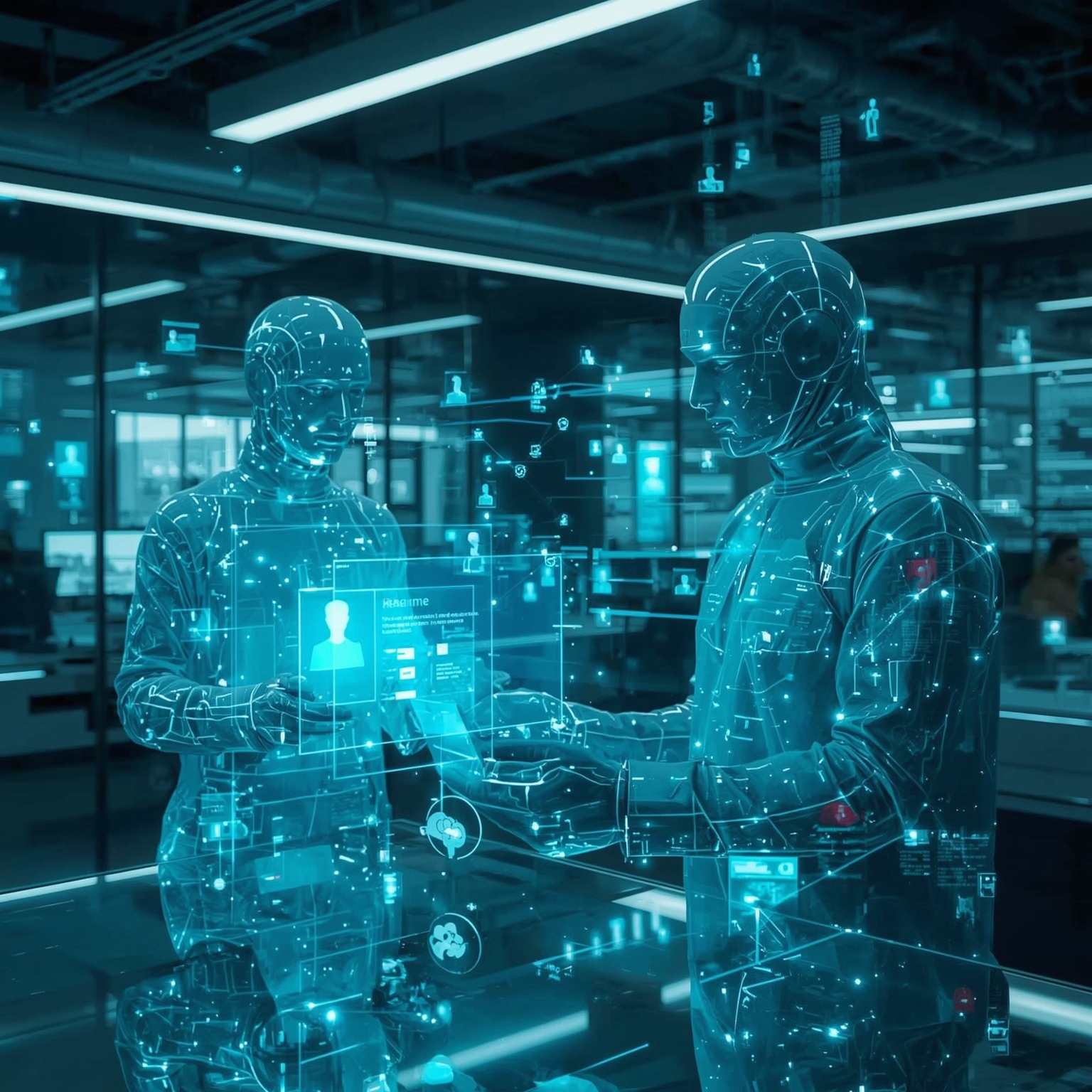
For individuals aspiring to secure a position at Goldman Sachs, one of the most prestigious financial institutions in the world, polishing and refining interpersonal or so-called ‘people’ skills has become a critical priority. While technical competence and familiarity with modern tools are undeniably useful, recent insights from two senior partners at the firm—shared in a conversation with Business Insider—underscore that human-centered qualities continue to play an outsized role in hiring decisions, even as artificial intelligence (AI) technologies increasingly shape the bank’s operations. These executives provided a nuanced view of how the ongoing integration of AI is simultaneously reshaping and reaffirming what the company values in prospective employees.
Meena Lakdawala-Flynn, who serves as cohead of Global Private Wealth Management as well as cohead of the initiative known as One Goldman Sachs—a program currently undergoing an extensive AI-driven transformation—emphasized that human aptitude still remains the backbone of success in her department. She detailed that attributes such as sound judgment, refined interpersonal abilities, creativity, intellectual curiosity, and above all a strong work ethic, are regarded as indispensable characteristics in potential hires. Her reasoning rests on the nature of wealth management itself: this domain flourishes through relationships, trust, and personal understanding rather than through purely mechanical execution. Indeed, Lakdawala-Flynn explained that as AI tools become more advanced and efficient, they can take over repetitive analytical or administrative tasks, ultimately freeing up advisers’ time so they can devote more of their attention to developing authentic connections with clients.
According to her, superior interpersonal acumen—empathy, effective listening, and nuanced communication—forms the cornerstone of client relationships. The stronger that bond of trust and mutual understanding becomes, the more readily clients share their true goals, preferences, and concerns, enabling advisers to craft well-tailored financial strategies. To support this dynamic, Lakdawala-Flynn’s team frequently leverages proprietary digital tools such as the GS AI Assistant, an interactive artificial intelligence companion designed to enhance productivity, as well as real-time language translation software and other innovative systems that help bridge communication gaps and streamline information flow.
Asahi Pompey, the global head of the Office of Corporate Engagement and chair of the Urban Investment Group, offers another layer to this perspective. Having been part of Goldman Sachs for nearly two decades, Pompey is herself a dedicated practitioner of AI-assisted work, describing her personal use of such technologies as extensive. Nonetheless, she maintains that despite the rapid evolution and widespread adoption of these advanced systems, the fundamental attributes distinguishing exceptional applicants have remained largely unchanged. In her view, the technological revolution has not altered the essence of professional excellence—it has merely created new contexts in which it can be displayed.
Pompey elaborated that the pillars of strong performance continue to be an unwavering attention to detail, deep comprehension of one’s specific responsibilities, and an inherent responsiveness that matches the firm’s famously fast-paced environment. Accuracy, too, remains a nonnegotiable expectation; the precision demanded of investment professionals cannot simply be outsourced to algorithms. However, Pompey added that an increasingly vital component of modern competence includes the ability to engage critically with AI systems—knowing how to frame precise prompts when interacting with chatbots or analytical models, and how to effectively question or verify automated results. This balance between trusting technology and exercising human oversight is, in her estimation, one of the distinguishing marks of the next generation of high-performing employees.
Goldman Sachs’s heavy investment in technology underlines the scale of this transformation. The company has reportedly allocated around $6 billion toward technological infrastructure and innovation this year alone. Chief Executive Officer David Solomon publicly stated that such investment is intended not only to expand the bank’s engineering capacity but also to fundamentally transform its technical capabilities through AI integration. Many of the firm’s younger analysts and associates, described by Chief Information Officer Marco Argenti as ‘AI natives,’ enter the organization already comfortable with these emerging tools, reflecting a generational shift in how analytical and operational tasks are approached.
Despite internal communications acknowledging that the transition of One Goldman Sachs to a more AI-centric model may involve ‘limited’ job reductions, Solomon has emphasized that the overarching impact of these technologies will likely be expansive rather than reductive. In his view, the efficiency and scale derived from AI-driven processes create opportunities that necessitate an increase in headcount—specifically through the hiring of what he calls ‘high-value’ employees, individuals capable of combining technical literacy with strategic insight, ethical judgment, and emotional intelligence. Thus, the institution’s trajectory points to a future in which human skill and artificial intelligence evolve side by side, each magnifying the other’s strengths.
Anyone with direct experience working at Goldman Sachs or information relevant to these developments is invited to contact the journalist responsible for this piece via the provided email address or through Signal for secure communication. The authors encourage potential sources to use a personal email account and nonwork devices to maintain confidentiality and adherence to security best practices. This multi-perspective overview reveals how, even in an era defined by algorithmic innovation, Goldman Sachs continues to prize timeless human qualities—discretion, diligence, intellect, and empathy—while seamlessly integrating them into a technologically advanced framework designed for the future of global finance.
Sourse: https://www.businessinsider.com/two-partners-goldman-sachs-ai-hiring-2025-11


