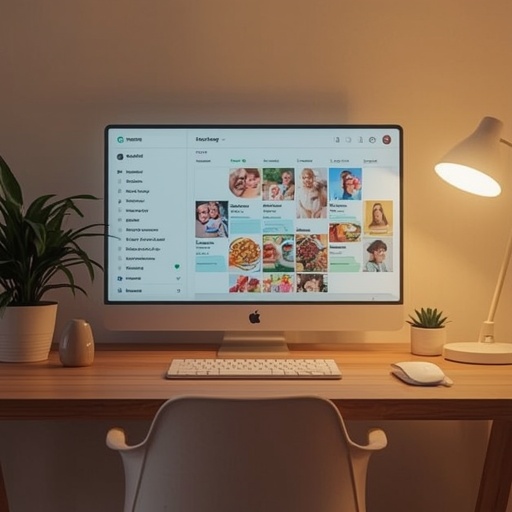
In the bustling rhythm of modern urban life, where professional ambition constantly collides with parental responsibility, one New York City mother has discovered a remarkable ally in artificial intelligence. Through the strategic use of personalized AI agents, she has transformed the overwhelming chaos of family logistics into a seamless and almost autonomous system of support. These intelligent tools now serve as a digital backbone for her household, managing an impressive range of day-to-day operations—from monitoring grocery inventory and placing automated orders to coordinating extracurricular activities and aligning every member’s schedule onto a shared, intelligent calendar interface.
Before integrating AI into her routine, she often faced the familiar exhaustion of trying to balance a demanding job with the unpredictable needs of children, school events, and domestic tasks. The mental load—those countless invisible to-dos that mothers disproportionately carry—used to consume her energy and emotional bandwidth. Now, much of that cognitive burden has been effectively delegated to her smart assistants. For instance, when her child’s summer camp registration opens, her AI system alerts her ahead of time, autofills repetitive forms, and even ensures no activity overlaps with existing commitments. Grocery management has become equally effortless: the smart platform tracks consumption patterns, predicts restocking times, and suggests healthier meal plans while staying within her family’s budget.
This reliance on AI does not strip away the human element of parenting; rather, it enhances her capacity to be more present where it truly matters. By removing the friction of logistical drudgery, she’s gained the priceless ability to focus on meaningful engagement—bedtime conversations, spontaneous weekend adventures, and the simple joy of being available both emotionally and mentally. The result is a lifestyle that redefines balance not as an unattainable ideal, but as a technically achievable equilibrium enabled by intelligent systems.
Her experience mirrors a broader societal evolution in which technology no longer serves solely as a distant productivity enhancer but as a deeply integrated presence in personal life. This shift marks the beginning of an era where AI-assisted parenting becomes not just a novelty but a transformative solution for working families. The application of adaptive algorithms, contextual scheduling, and predictive analytics is reshaping domestic management in ways that liberate time and alleviate stress.
In essence, this mother’s story demonstrates that artificial intelligence, when applied thoughtfully, doesn’t replace care, intuition, or human warmth—it empowers them. It offers a vision of parenthood less defined by exhaustion and obligation, and more by intentionality, creativity, and calm. The fusion of family life and intelligent systems is proving that smarter technology can indeed foster a kinder, more balanced world—starting in the heart of a busy New York home.
Sourse: https://www.businessinsider.com/working-mom-ai-agents-handle-groceries-camp-forms-school-calendars-2026-7