After the end of a marriage, one of the most difficult adjustments often lies in helping children navigate life between two separate homes. The familiar rhythm of a single household gives way to a routine of transitions—packing bags, splitting time, and juggling emotional attachments across different spaces. It can be profoundly unsettling for a child who craves consistency, warmth, and the comforting predictability of their surroundings.
For me, as a newly single parent, I realized early on that these transitions were affecting my children far more than I initially understood. Each Sunday evening, as I packed their toys, pajamas, and school items for the week at their other parent’s house, I saw small but telling signs of anxiety: favorite stuffed animals clutched tightly, small faces clouded with confusion, and the repeated question, “Can I leave this at home?” Those moments were heartbreaking, and they forced me to think deeply about what home really means for a child whose world has been divided in two.
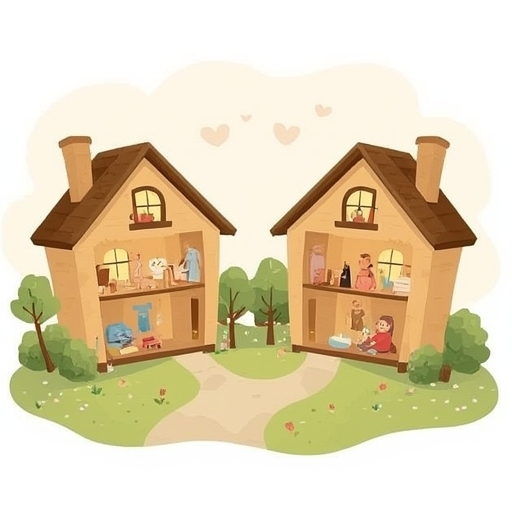
That reflection led to an unexpectedly simple yet powerful solution — duplication. I started with the basics: an extra set of pajamas, toothbrushes, and hairbrushes. Soon, I extended this idea to their favorite bedtime storybooks, comforting blankets, and art supplies. Every time the children discovered that something they loved existed in both homes, an immediate sense of relief washed over their faces. Without realizing it, I was teaching them that security does not depend on location; it lives in familiarity, constancy, and the love we put into the spaces we build for them.
The result was almost transformative. The emotional turbulence that once accompanied each transition softened. The weekly moves became smoother, less frantic, and much happier. My children began to see both houses not as separate worlds, but as two expressions of the same family—two havens equally theirs. They no longer asked which house was the ‘real’ home because, in their hearts, they knew both were.
Looking back, I understand that duplicating everyday items was never simply about convenience. It was about empathy, about recognizing a child’s deep need to belong without interruption. By giving them two spaces filled with the same care and familiarity, I was quietly rebuilding their sense of stability. It was a small practical change that, over time, dissolved a large emotional barrier. And in doing so, it reminded me that healing after divorce often begins not with grand gestures, but with small acts of thoughtfulness repeated until they feel like love.
Sourse: https://www.businessinsider.com/why-i-buy-duplicate-items-for-my-kids-after-divorce-2026-1