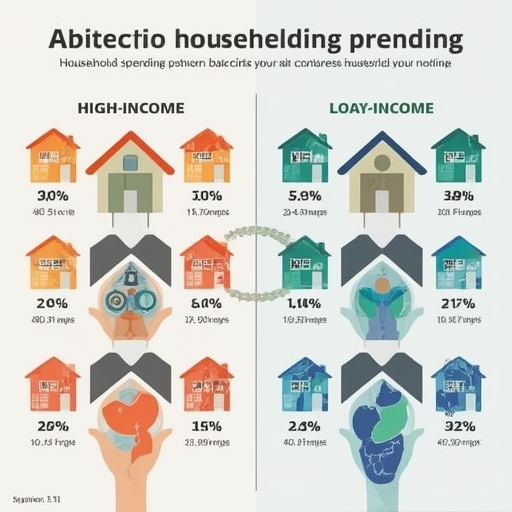
An in-depth examination of recent economic data provides a nuanced understanding of how spending behaviors vary across income levels, revealing profound differences in financial priorities and constraints. Higher-income households, endowed with more discretionary resources, tend to spend considerably larger absolute amounts on housing and related amenities—purchasing larger properties, investing in real estate upgrades, and maintaining higher living standards. However, when those expenditures are viewed as a proportion of their total income, the financial burden appears relatively lighter, emphasizing the elasticity of their budgets and the flexibility afforded by greater wealth.
Conversely, low-income families operate within far tighter financial margins. Although their overall spending is necessarily lower in numerical terms, a disproportionately high share of their limited income is committed to housing costs, such as rent and utilities. This dynamic underscores the structural imbalance these households face: even minor increases in essential expenses can significantly impact their financial stability. The data vividly illustrates that for lower earners, maintaining secure shelter is not merely a financial choice but an ongoing struggle that consumes a substantial portion of available resources.
From a broader socioeconomic perspective, these patterns serve as indicators of enduring inequality within the housing market and the economy as a whole. Policymakers and analysts can interpret this contrast as evidence of systemic pressures that make upward mobility difficult for those on the lower end of the income spectrum. For urban planners, financiers, and policymakers, understanding these disparities is critical for shaping more equitable housing policies, designing targeted subsidies, and structuring tax incentives that take into account both total spending and proportional burden.
Beyond policy implications, these insights also aid financial educators and advisors who guide individuals toward sustainable budgeting strategies. Recognizing that higher earners and lower earners experience fundamentally different constraints allows professionals to recommend realistic, context-sensitive financial advice. Ultimately, this deeper appreciation of spending disparities illuminates the complex relationship between income, necessity, and opportunity—demonstrating how the simple act of maintaining a home reflects broader economic forces that influence every layer of society.
Sourse: https://www.businessinsider.com/charts-show-how-highest-lowest-earners-spend-money-2026-3