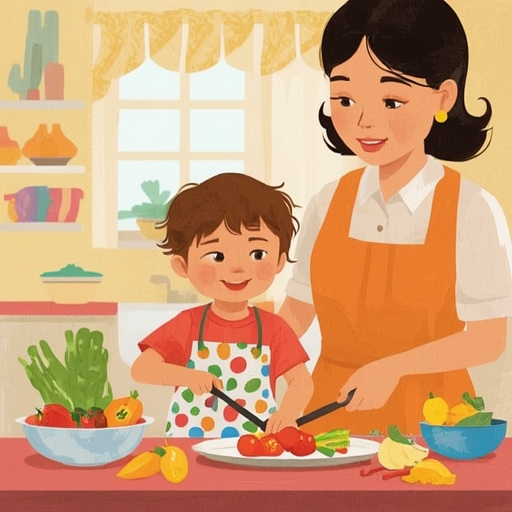
At first, dinner felt like a nightly standoff—each meal an exhausting negotiation with a tiny, determined palate. My four‑year‑old could outlast any parent’s patience when it came to refusing vegetables or anything unfamiliar. I assumed it was a phase that would pass on its own, but the weariness that crept into our family dinners hinted that something deeper was needed: not another tactic, but a shift in perspective.
The breakthrough came unexpectedly, not through discipline or trickery, but through empowerment. One evening, in a moment of both desperation and inspiration, I handed him a wooden spoon and invited him to help me cook. That small gesture—letting him participate rather than observe—transformed the atmosphere of our kitchen entirely. Suddenly, the place that once felt like a battleground became a laboratory of curiosity, laughter, and learning.
He measured flour, stirred sauces, and gleefully chose which vegetables to wash. In those moments, I saw the spark of ownership light up in him. The vegetables that had been villains on his plate became treasures he had helped prepare. What surprised me most was not simply that he began eating better, but that his attitude toward food, and toward himself, began to evolve. With every meal, his confidence grew alongside his skills—his pride evident in every proud announcement of “I made this!”
As our kitchen became his classroom, I realized that cooking was not merely about nutrition or routine, but about nurturing independence. The messy counters that once tested my patience became symbols of discovery. Empowerment, I learned, can turn struggle into joy when a child is allowed to experiment, fail safely, and take ownership of their success.
Now, the once‑stressful dinners have turned into moments of shared laughter, teamwork, and creativity. My son’s curiosity extends beyond the kitchen—to how things work, how flavors mix, and even how patience pays off when waiting for a timer to ding. The simple act of letting him stir, taste, and decide has built not only his willingness to eat, but also his confidence to try new things and trust his own abilities.
In the end, the secret ingredient wasn’t hidden in any recipe. It was trust—the willingness to hand over a little control, to accept a bit of chaos, and to recognize that the path to growth is often delightfully messy. Sometimes, all it takes to transform frustration into confidence is a wooden spoon, an open heart, and the courage to let a child lead the way.
Sourse: https://www.businessinsider.com/toddler-cooking-help-picky-eating-parenting-montessori-2026-5


