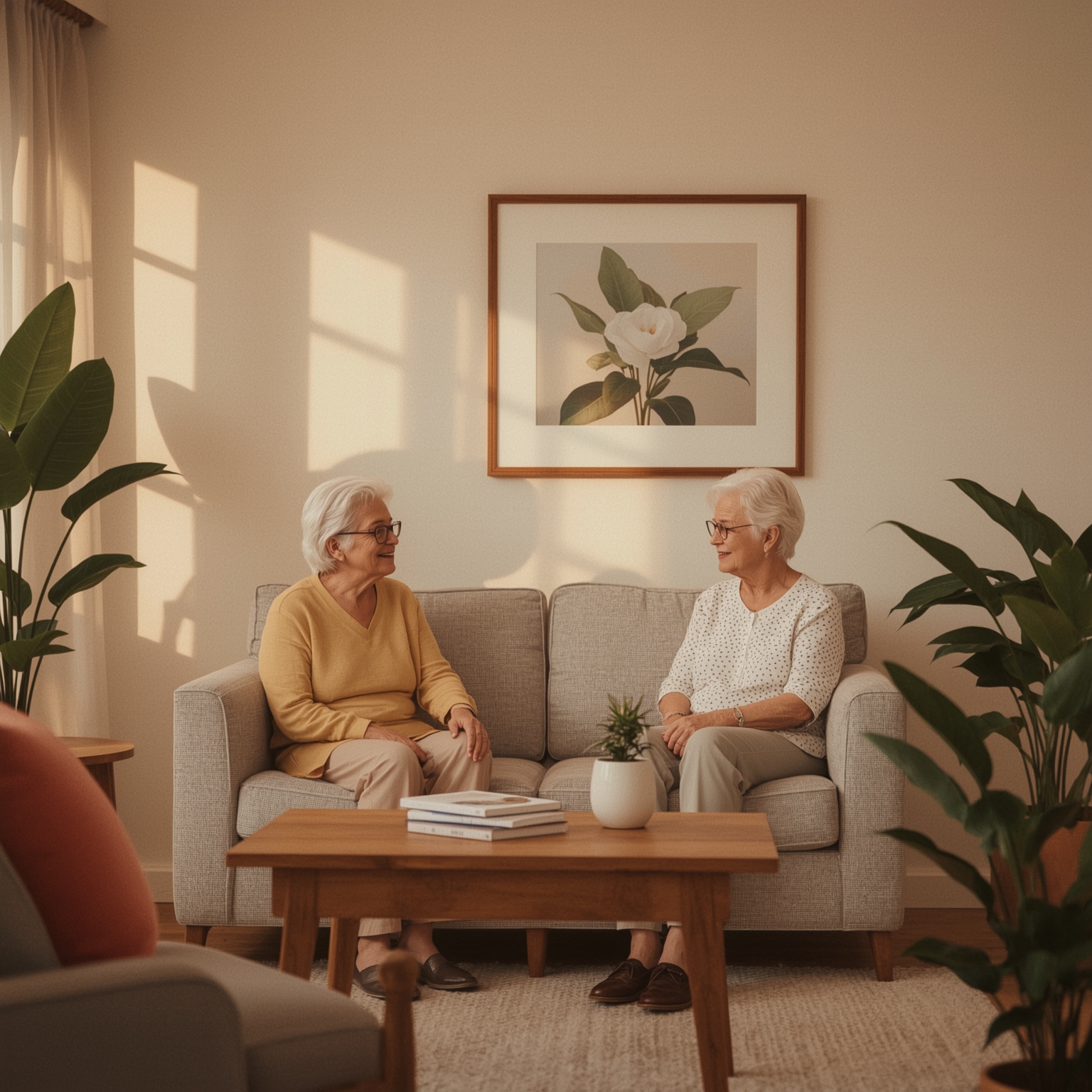
This first-person narrative is drawn from an interview with Jennifer Tapner, the Executive Director of The Watermark at Brooklyn Heights, an upscale retirement community in New York. The original conversation, though condensed and refined for length and clarity, reveals a deeply personal journey of professional transformation and human connection.
Approximately two years ago, Jennifer was overseeing the operations of ten senior living communities spread across the United States—a role that demanded strategic oversight but offered minimal personal contact with the residents whose experiences her leadership ultimately shaped. Over time, she began to miss the direct human interaction that had originally inspired her career in senior care: the genuine relationships with older adults whose stories, wisdom, and emotional vitality had always animated her sense of purpose. So, when an Executive Director position opened within her organization, she recognized an opportunity not to advance hierarchically but to realign her work with her deeper values. While some of her peers interpreted this move as a step backward—a departure from corporate management toward on-the-ground engagement—Jennifer perceived it as a meaningful progression. She eagerly volunteered for the post, motivated by the desire to engage once again in the daily rhythms of life with the residents she served.
The new role happened to be located in Brooklyn Heights, New York, a considerable distance from her home near Philadelphia. Understanding that the commute would be impractical, she made the significant decision to relocate, bringing along her loyal German Shepherd–Chihuahua mix, Diego. During the workweek, Brooklyn is her home, and on weekends she returns to Pennsylvania to reunite with her husband. Her new residence is an apartment on the eleventh floor of the very same high-rise where approximately two hundred older adults live—the people she now both manages and lives among. Her professional responsibilities occupy her during the day, while the rest of her time unfolds side by side with her residents, sharing in many of the same experiences that weave the fabric of their daily lives.
Each morning begins at seven o’clock with a run through the city streets as part of her preparation for the New York City Marathon. The residents have taken an active interest in her training routine, often gathering in the lobby to cheer her on when she departs and to welcome her back afterward, regardless of cold, rain, or summer heat. They ask about her progress, her pace, and what she enjoys most about running, and their enthusiasm has become infectious. Many of them are even organizing a marathon-day cheer section, an idea that delights her—though she suspects that they might be more excited about the event than she is herself.
Although her apartment includes a full kitchen, Jennifer has yet to use the stove, preferring instead to dine in the community’s shared dining room. For her, these moments—sitting side by side with residents and sharing meals—represent more than convenience; they are opportunities for genuine human connection. In the evenings, she often joins fellow dog owners in the building as they take their pets for leisurely walks through the neighborhood. This informal “dog-walking club” has evolved into a lively social ritual, with residents adorning their dogs in tiny reflective vests to make the outings both festive and safe after sunset. These simple shared activities have deepened her bonds with those around her, transforming neighbors into friends.
Rather than withdrawing to her apartment once her administrative duties are over, Jennifer immerses herself in the community’s social life. She participates in card games, movie nights, baseball outings to see the Mets, and impromptu pizza parties organized on various floors. Through these shared experiences, she rediscovered the joy that first drew her to senior living work: a profound appreciation for relationships built on respect, empathy, and genuine fellowship.
The conversations she shares with residents have profoundly enriched her understanding of life. Listening to their recollections—stories of careers, families, triumphs, and losses—has offered her a deeper awareness of how fleeting life can be. Before living on-site, her interactions often revolved around problem-solving: addressing facility concerns such as low water pressure or inadequate heating in communal areas. Those encounters, though sincere, were functional and detached. Now, by living as one of them—walking the same halls, feeling the same daily rhythms—she perceives their world through their lens. That proximity has transformed not just her work but her inner life, strengthening her empathy and refining her capacity to listen with care and attentiveness.
One particular evening remains etched in her memory. Spotting a resident quietly leaving the restaurant without touching his dinner, she followed to ask if something was wrong. His candid reply—“I’m just really sad today”—captured the vulnerability that aging and solitude can bring. Rather than offering platitudes, she suggested they take a walk with Diego. During their twilight stroll through the serene streets of Brooklyn Heights, conversation flowed freely, eventually lifting his spirits. He returned transformed, lighter, and visibly comforted. To Jennifer, that evening symbolized the power of presence: the simple gift of being there to witness—and share in—another’s loneliness. It was an experience that would have remained inaccessible had she chosen to live elsewhere.
These instances reinforce her belief that older adults, particularly those without close family nearby, are too often marginalized or forgotten in the larger social narrative. She argues that society would benefit immeasurably if more people paused to genuinely listen to them—not as statistics or care recipients, but as individuals whose lives embody rich histories, complex identities, and meaningful lessons. By engaging deeply, she has discovered that her residents are also her mentors. Whenever she faces a challenge or seeks counsel, she finds wisdom all around her: one resident still teaches at Juilliard, offering creative insights; another, once a business executive, shares thoughtful strategic advice. These exchanges reveal the extraordinary talent and intellectual vibrancy that thrive within the walls of her community.
Despite her constant involvement, Jennifer has found that living among those she manages has not compromised professional boundaries. The residents respect her need for personal time, understanding that when she is “off duty,” she can simply exist as Jennifer—the neighbor, the runner, the dog owner—rather than the executive director. This mutual respect has created a healthy balance rarely seen in leadership roles tied so closely to residence.
Though the pace of this lifestyle can sometimes be taxing—keeping up with the residents’ lively social calendar is no small feat—Jennifer feels no regret. She acknowledges that she may not be able to sustain such a living arrangement indefinitely, yet for now, the experience has been both extraordinary and transformative. Living among those she serves has not only rekindled her sense of empathy and human connection but also redefined what leadership can mean in the context of care and community. For Jennifer Tapner, home and work have merged into a single, deeply meaningful space where compassion, understanding, and shared joy coexist in every moment.
Sourse: https://www.businessinsider.com/manage-senior-home-moving-in-was-the-best-decision-2025-10


