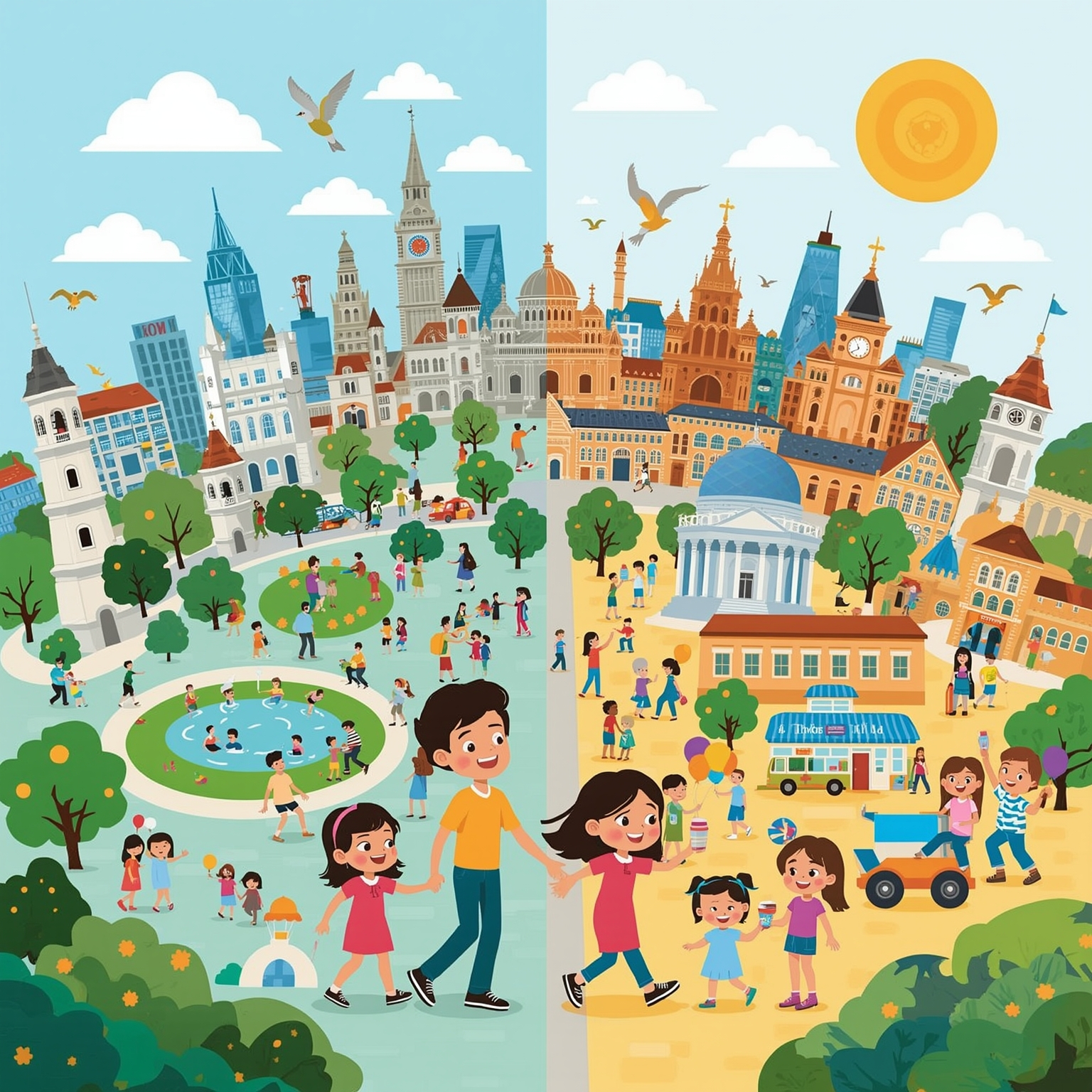
My children have had the privilege of exploring a remarkable portion of the world. Over the years, I have taken them to twenty-four countries—and counting—and through this shared experience, we have gradually discovered a reliable rhythm that makes our journeys smoother and more fulfilling. Our family’s good fortune to travel as often as we do is something I never take for granted, yet this privilege comes with its own unique challenges. Traveling with children demands constant adaptation; while I often feel energized by the excitement of discovering a new destination, my children do not always share my enthusiasm for every place we visit. Their attention spans, especially when it comes to traditional cultural attractions—museums, cathedrals, or centuries-old castles—tend to wane quickly, even though these sites frequently represent the artistic and historical heart of the cities on our itinerary.
Each time we embark on a new trip, I try to shape our activities around experiences that offer my children something genuinely different—activities far beyond what they could ever enjoy within the familiar routines of home. Even when they show resistance, I continue in my quiet mission to expand their perspectives and deepen their appreciation for the world’s diversity. I plan experiences that blend fun and education, allowing them to stand before masterpieces such as the famous portrait of the Mona Lisa, or to wander through monumental landmarks like the Palace of Versailles, whose grandeur tells stories that no textbook could ever fully capture. At the same time, I want them to feel the thrill of novelty and adventure—whether by riding camels through the desert sands or climbing the trails of a rugged landscape unlike any near our home.
Still, as any parent knows, successful family travel thrives on balance. To ensure that everyone remains in good spirits, I make a conscious effort to carve out space for the activities my children truly love. Unlike me, they do not share that relentless drive to seize every possible moment of exploration, to visit one new landmark after another. They often crave comfort through familiarity, even in the most exotic of settings. Thus, some of our most joyful family moments abroad have been surprisingly ordinary: the spontaneous decision to stop at a neighborhood playground in Austria or to satisfy their curiosity by sampling a McDonald’s meal in India, discovering how even a global fast-food chain subtly reflects local culture. And of course, I try to weave in excursions to more elaborate forms of play—the amusement parks that never fail to spark excitement.
These theme parks, once an occasional indulgence, have now become a defining feature of our travels. In the beginning, I was reluctant to allocate precious vacation days—and often considerable expense—to places that, in theory, we could visit closer to home. I had always seen theme parks as diversions rather than essential experiences. But over time, I came to realize that these outings serve a far more valuable purpose. My family, as it turns out, is full of unabashed theme-park enthusiasts. For years we held season passes to our local Six Flags near Washington, D.C., and there was even a period when we invested in an annual pass to Universal Studios in Orlando. Despite the twelve-hour drive, we made frequent return trips that year simply because it brought everyone unfiltered joy.
One particular trip transformed my perspective. While vacationing in Quebec a few years ago, my children discovered that there was a Six Flags amusement park—La Ronde—situated right in the middle of the city. They pleaded for a visit, an idea I initially resisted. Why, I wondered, should we spend a travel day at a park so similar to the one located less than an hour from our own home? Yet in the end, their persistence won me over. The day turned out to be extraordinary: we laughed ourselves breathless, and more importantly, I noticed that afterward my children approached the rest of our journey with renewed enthusiasm and patience. That single experience seemed to reset their spirits, replenishing their energy for the more educational stops that followed.
Since that eye-opening day, visiting amusement parks has become as regular a component of our travels as exploring local markets or tasting regional cuisine. We do not tailor our itineraries exclusively around these destinations, as devoted theme-park tourists might, yet whenever we find ourselves in a city with a park nearby, it almost inevitably earns a place on our schedule. Each visit injects joy and balance into our journeys and helps harmonize the differing desires within our family.
Beyond the obvious thrill of roller coasters and rides, these international amusement park outings have revealed themselves as uniquely cultural experiences. When we visited Six Flags La Ronde in Quebec, for instance, we discovered how even a seemingly familiar franchise can differ dramatically across borders. In place of generic popcorn buckets, we found enormous servings of poutine—those unmistakably Canadian combinations of fries, cheese curds, and rich brown gravy. Instead of the standard American music loop, the air resonated with French-language songs that instantly established a distinctly Quebecois atmosphere. Watching the Feux Loto-Québec fireworks light up the evening sky, a cherished summer ritual in that city, gave us a glimpse into local traditions that we might never have otherwise encountered.
Our trip to France further strengthened my conviction that theme parks abroad can provide deep cultural insight. During our visit to Disneyland Paris, we spent two days wandering through its enchanted lands. Instead of the iconic Cinderella’s castle we knew from Florida, we climbed the turrets of Sleeping Beauty’s castle—an entirely fitting homage to a French heroine from European lore. As we snacked on warm chocolate crepes instead of conventional theme-park food, we all agreed that this European twist elevated the entire experience beyond expectations.
On a more recent trip to Japan, our exploration of theme parks beautifully framed our entire adventure. Early in the journey, we spent a joyful day at Tokyo Disneyland, where the familiar charm of classic attractions mingled with distinctive Japanese aesthetics. Weeks later, after many days spent admiring temples and gardens, our visit to Universal Studios Osaka offered a lively finale. The anticipation of that day sustained my children’s enthusiasm even while we explored more solemn cultural sites. The parks themselves fascinated us with their creative integration of Japanese pop culture—from anime-themed attractions to the meticulous hospitality of staff members ensuring each visitor felt valued. Even the beverages, such as a refreshing lemon-infused drink we tried at Tokyo Disney, reminded us that familiar experiences can take on delightfully regional twists.
Every amusement park we have visited abroad evokes both recognition and discovery. There is always something comfortingly familiar—the laughter, the scent of sweets, the shared thrill before a roller coaster drops—but also something distinctly new that reflects the host culture. Through these experiences, I have come to appreciate amusement parks not merely as places of fun but as microcosms of cultural identity, where global entertainment meets local flavor. Though I once hesitated to include them, these parks have become some of my favorite stops, enriching our travels with joy, connection, and a sense of shared wonder that transcends geography.
Sourse: https://www.businessinsider.com/kids-get-bored-international-travel-fix-hack-tip-2025-10