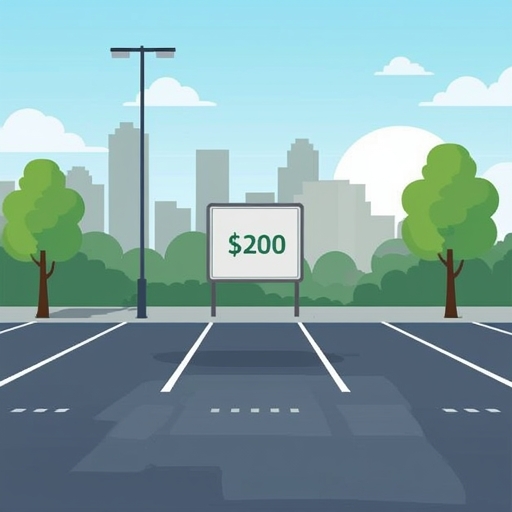
The story of Nick Copeland serves as a compelling illustration of how ordinary assets, when thoughtfully reimagined, can evolve into meaningful and dependable income streams. In an era where people often search for complex investment strategies or trendy digital opportunities, Copeland’s approach demonstrates that financial innovation can be rooted in something as practical and accessible as a parking space. By identifying an underused portion of his property—essentially a few empty spots that previously generated no value—he transformed dormant space into a consistent source of passive income amounting to $925 each month.
This practice highlights the overlooked potential within everyday surroundings. Many homeowners or apartment dwellers might possess similar, unoccupied resources—driveways, garages, or even storage areas—that could easily generate revenue with minimal effort once properly marketed. Copeland’s success not only underscores the practicality of his initiative but also reveals an important psychological shift: the realization that financial growth sometimes begins not through expansion but through optimization of what one already owns. Instead of pursuing complicated business ventures, he leveraged an existing asset and applied a simple system of listing and managing those spaces through modern rental platforms.
What makes his story particularly instructive is its balance of simplicity and sustainability. After an initial setup phase—identifying the market demand, listing the spaces online, and setting competitive pricing—his involvement became primarily supervisory. The recurring monthly income exemplifies true passive earnings, a steady flow that continues without requiring significant day-to-day management. This model embodies the essence of smart property utilization, blending technological accessibility with entrepreneurial foresight.
Beyond the financial gains, Copeland’s initiative conveys an empowering message about small-scale innovation. It invites others to reconsider the assets hidden in plain sight and challenges the assumption that successful side hustles require specialized skills or major investments. The driveway, a common and often overlooked element of domestic life, became a platform for financial independence and inspired others to view their environments through a more entrepreneurial lens.
Ultimately, Nick Copeland’s experience encapsulates a powerful truth: wealth creation often begins with recognizing value where others see emptiness. His parking-space venture stands as an eloquent reminder that, with a bit of creativity and resourcefulness, anyone can cultivate new income avenues from the spaces they already inhabit. #PassiveIncome #FinancialFreedom #EntrepreneurialMindset
Sourse: https://www.businessinsider.com/how-make-extra-passive-income-monthly-renting-unused-parking-spots-2026-1