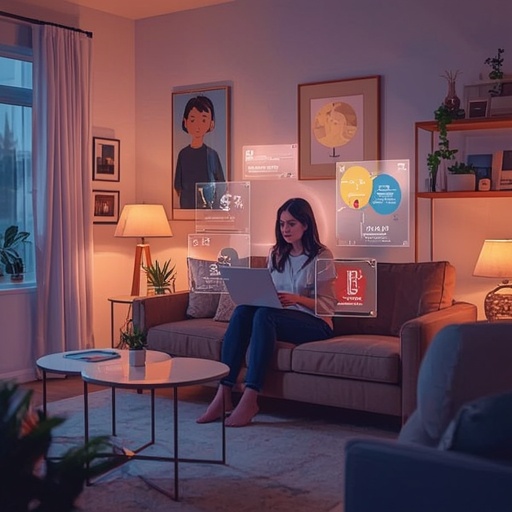
Artificial intelligence is no longer confined to the sterile environments of offices or laboratories—it has entered the heart of the home, transforming the way families manage their daily lives. For many working parents, and particularly for busy mothers who balance professional obligations with childcare and household demands, AI has become an invaluable ally. One such mother discovered that by strategically integrating AI-driven applications into her routine—for scheduling appointments, managing grocery lists, coordinating childcare logistics, and even assisting with meal planning—she could reclaim more than ten hours of her week.
These regained hours are not merely minutes saved on tedious tasks; they represent meaningful time that can instead be devoted to family, personal rest, or creative pursuits. The efficiency born from automation provides a rare form of balance—freeing working parents from the relentless time crunch that modern life imposes. Yet, despite this tangible improvement in quality of life, there remains an ongoing public skepticism about families embracing technology in such personal spaces. Critics often frame the use of AI as a form of overreliance, an attempt to replace human care or authenticity with machines.
However, this perspective misses an essential truth: using technology responsibly is not about replacement, but about enhancement. When a digital assistant reminds you of a school recital, automatically updates a shared family calendar, or predicts your recurring grocery needs, it isn’t diminishing human connection—it’s enabling it. The time saved from administrative tasks becomes space for presence, for patience, for conversation over dinner or bedtime stories that might otherwise be rushed. In this way, technology becomes a bridge between the relentless pace of modern life and the simple, meaningful moments we often lose to exhaustion.
The story of this working mom challenges cultural assumptions that technology is at odds with family values. On the contrary, it reveals that AI can serve as a quiet partner in nurturing those very values—offering structure, consistency, and relief from chaos. Instead of criticizing those who adopt these tools, it may be time to recognize them as pioneers of a new, balanced lifestyle—one that embraces innovation as an act of self-care and empowerment. After all, progress should not be measured solely by how advanced our tools have become, but by how thoughtfully we use them to make our lives richer, calmer, and more human.
Sourse: https://www.businessinsider.com/mom-uses-ai-manage-household-parenting-2026-6