Across today’s fast-evolving corporate landscape, a curious phenomenon is sweeping through offices that are simultaneously grappling with artificial intelligence transformations, relentless productivity demands, and widespread job insecurity. Under the weight of layoffs, automation anxieties, and mounting burnout, employees are seeking innovative ways to decompress — which has given rise to the surprisingly therapeutic concept of “rage room happy hours.”
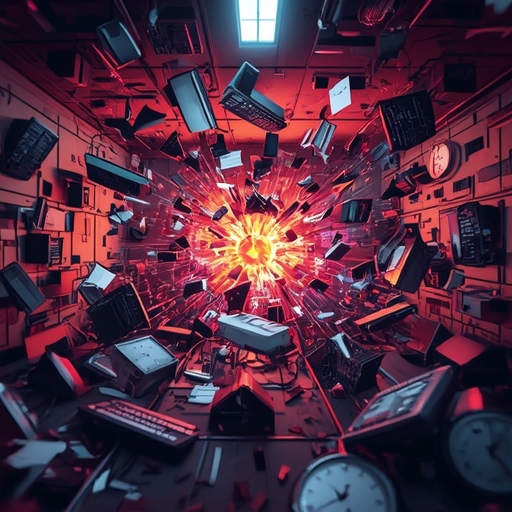
Unlike conventional wellness approaches such as meditation sessions or mindfulness workshops, this new trend invites participants to channel the raw intensity of workplace frustration into physical motion, smashing through symbolic barriers in controlled, safe environments. Teams gather not only to destroy office relics like outdated keyboards, shattered monitors, or clocks frozen at five o’clock, but also to release long-suppressed emotions that typically fester under the surface of professional composure. What might appear outwardly chaotic — walls reverberating with sound, glass fragments flying, laughter breaking through screams — in fact becomes a structured exercise in catharsis and community.
For many companies, hosting rage room happy hours is about acknowledging that employee wellness cannot always be addressed through quiet reflection alone. In an economy increasingly dominated by uncertainty and digital disruption, organizations are beginning to recognize the mental and emotional toll of such volatility. These events, often organized as team-building exercises, foster an atmosphere of solidarity and emotional renewal. Colleagues who once collaborated only behind screens can bond through a shared, visceral experience that temporarily dissolves hierarchy and invites authenticity.
Psychologically, the concept taps into something profound: the physical act of release can recalibrate stress responses, creating a sense of empowerment that persists beyond the walls of the rage room. As executives and interns alike don safety gear and wield baseball bats or mallets, barriers of formality give way to empathy and shared humanity. The act becomes metaphorical — a momentary rebellion against the pressure cooker of modern work and a tangible reminder that breaking down can sometimes pave the path to breakthrough.
Ultimately, rage room happy hours are not merely about destruction; they are about restoration. They symbolize the collective effort of a workforce striving to reclaim balance, vitality, and emotional autonomy in the age of automation. Whether seen as a cultural novelty or a meaningful new stress-management tool, this emerging ritual underscores a significant shift in how organizations perceive wellness: not as a luxury, but as an essential ingredient of a sustainable and human-centered workplace.
Sourse: https://www.businessinsider.com/stressed-at-work-rage-rooms-ax-throwing-layoffs-ai-burnout-2026-3