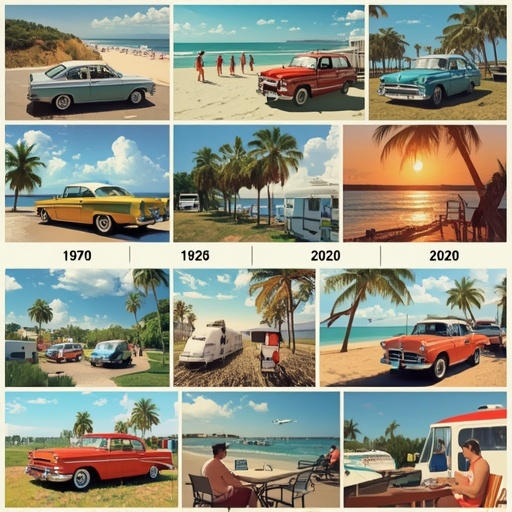
Over the course of the last century, the concept of the American summer vacation has undergone a profound transformation, evolving from humble beginnings rooted in simplicity to the multifaceted experiences that define modern travel today. In the early decades of the twentieth century, leisure time was often a rare privilege. Families would seize the opportunity to escape their routines with modest yet cherished activities such as picnics in local parks, day trips to nearby lakes, or weekend excursions to quiet country retreats. The idea of travel, though limited by both cost and accessibility, carried a sense of wonder that connected families to nature and to one another. These early vacations prioritized togetherness and the restorative effect of the outdoors rather than luxury or far-flung adventure.
As the automobile revolution gained momentum during the mid-twentieth century, the boundaries of summer exploration expanded dramatically. Roadside motels, drive-in diners, and the growing network of interstate highways turned the open road into a new symbol of freedom and discovery. Families could now traverse states in their own vehicles, embarking on long road trips that stitched together small-town Americana with iconic landmarks such as national parks, beaches, and amusement centers. The era of the classic American road trip defined a generation’s understanding of adventure — spontaneous, affordable, and full of possibility.
By the latter half of the century, technological advancements and the emergence of commercial air travel reshaped the vacation landscape once more. Jet-setting became a glamorous pursuit, allowing travelers to reach distant destinations in a fraction of the time. Theme parks such as Disneyland and coastal resorts flourished, offering curated escapes complete with comfort and spectacle. The vacation industry, fueled by rising consumerism, turned leisure into a marketable commodity. For many, summer trips shifted from slow, exploratory journeys to well-planned holidays filled with convenience, entertainment, and indulgence.
As the twenty-first century unfolded, the very definition of a summer vacation expanded yet again to accommodate the rhythms of a digital and globally connected world. The rise of the gig economy and remote work blended boundaries between labor and leisure, giving birth to a new archetype — the digital nomad who carries their livelihood wherever Wi-Fi reaches. Meanwhile, environmental awareness and sustainability have begun to influence travel decisions. Terms like eco-tourism, glamping, and carbon-neutral getaways entered the mainstream vocabulary, reflecting a growing desire to experience the world responsibly without forsaking comfort.
Contemporary travelers now crave immersion rather than escapism. Instead of merely visiting a place, they seek to experience its culture, cuisine, and community — whether by staying in locally owned accommodations or supporting conservation-driven tourism efforts. Technology, too, plays an unprecedented role: smartphones serve as guides, translators, cameras, and storytellers, turning every vacation into an experience meant to be documented and shared instantly.
Despite these sweeping transformations, a poignant continuity remains at the heart of the great American summer vacation — the timeless pursuit of freedom, rest, and connection. Whether through a nostalgic drive along historic Route 66, a seaside retreat filled with digital detox, or an eco-conscious trek through the mountains, each generation redefines what it means to recharge and rediscover the joy of movement. Our evolving approach to summer leisure mirrors the broader shifts in society itself — from industrial to digital, from local to global, from passive consumption to mindful engagement — rendering the story of vacation both a personal and cultural chronicle of change.
Sourse: https://www.businessinsider.com/summer-vacation-evolution-over-the-years-photos-2019-6